

Clash Force
Developer: Spicy Gyro Games | Publisher: Shiny Dolphin Games LLC | Release Date: 2017 | Genre: Retro / Platformer / Indie | Website: Official Website | Purchase: Steam
The popularity of retro titles has seen many indie developers try to offer players their takes on the genre. Some have tried to be as authentic as possible, while others try to capture the spirit of retro titles without getting hung up on the technical limitations. Platform games, in particular, remain a favorite amongst both developers and players, although many recent titles lean more towards the Metroidvania side of things. Clash Force is an 8-bit-style retro platformer that is all about running and gunning. According to the developers, it was inspired by Saturday morning cartoons of the 1980s, which would explain why the three playable characters are a rhino, scorpion, and echidna. These three, named Voom, Scorpio, and Echid, respectively, are called to action when the Evil Crackman unleashes his robotic minions on the world. That is the extent of the story, though, and players simply pick their character before traversing over 20 stages of enemies and bosses.
Retro-style platformers can be incredible when done correctly, and there are plenty of titles to choose from these days. Unfortunately, Clash Force falls far short of the best that the genre has to offer. Not only is the story bare bones, but the differences between the three playable characters are purely cosmetic. The game offers a short tutorial level that teaches players the basics, but it simply amounts to jumping and shooting. Clash Force plays somewhat like a mixture between Mega Man and Contra but lacks the charm of these titles. It is a single-player-only experience and players can take three hits before they have to restart the level. This can be done until the level is completed and the game auto-saves after each level, but most players should be able to finish Clash Forces in one session. The levels don’t have any checkpoints but are short enough that it is easy to breeze through them. However, the difficulty does ramp up rather drastically towards the end, which results in a few levels that are more frustrating than fun or challenging. This is mostly due to enemies that cannot be killed and projectiles flying everywhere.
Visually, Clash Force aims for the 8-bit aesthetic, so it features the usual chunky sprites, garish color palette, and plenty of straight lines reminiscent of the era. However, players familiar with actual 8-bit games will immediately notice that this game has a lot more colors and runs a lot smoother. A CRT filter that can be toggled on or off adds a layer of authenticity to the visuals and the levels follow the familiar forest, desert, and underground mines themes so common in the genre. Clash Force also runs in a 3:4 aspect ratio with large black bars on the sides of the screen if players opt for the fullscreen mode.

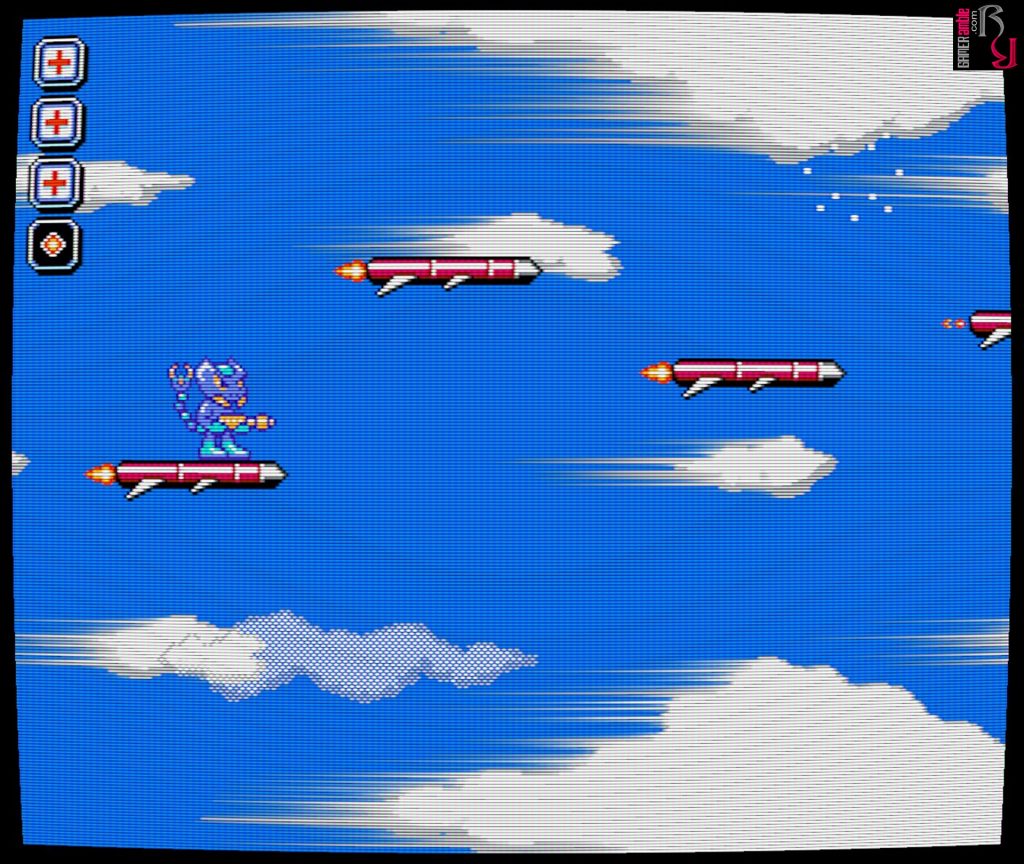
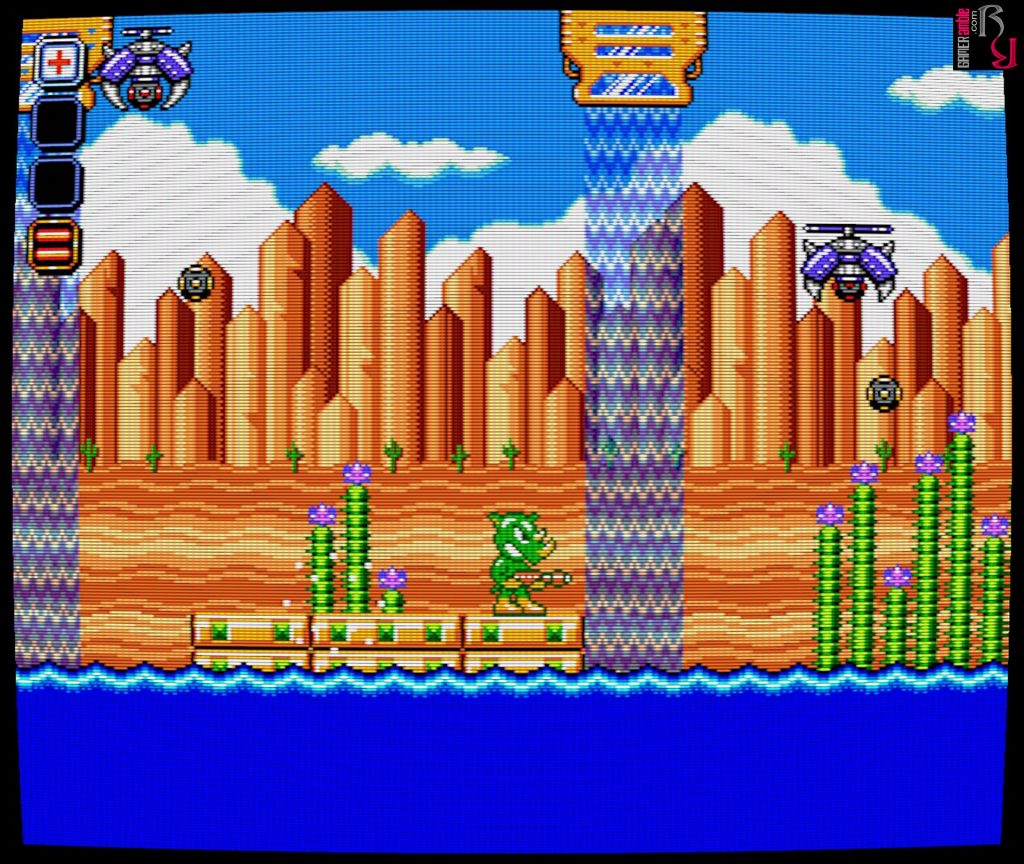


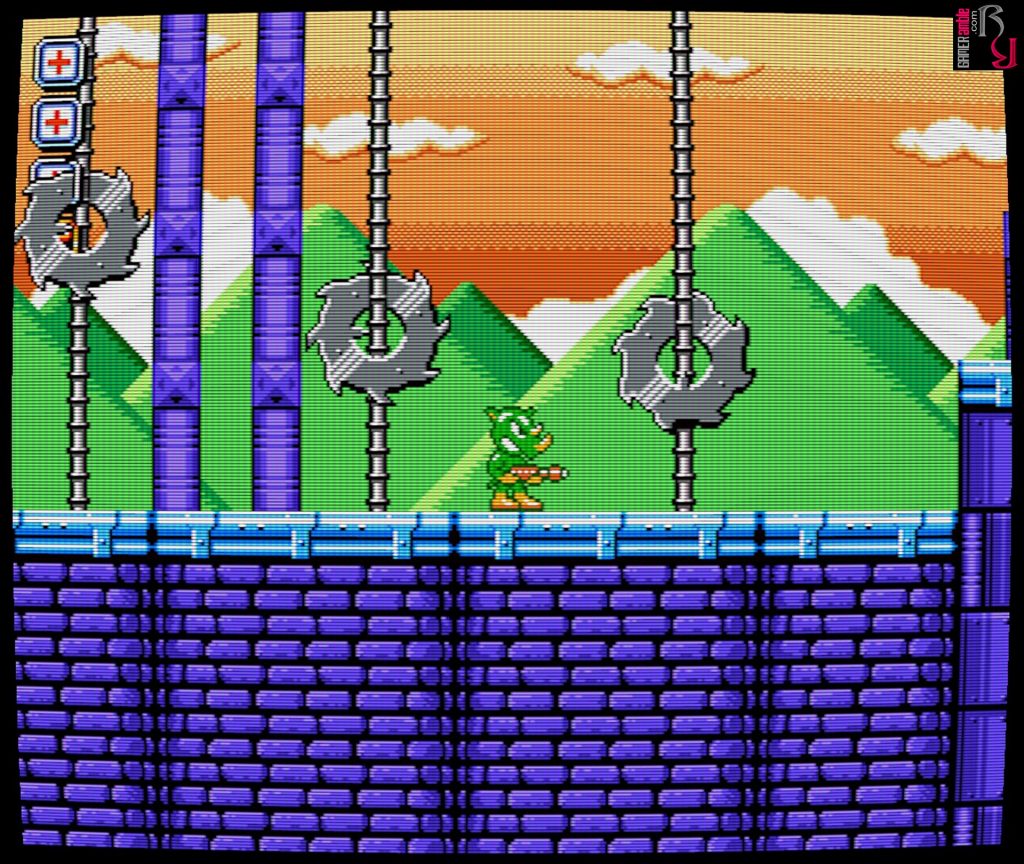
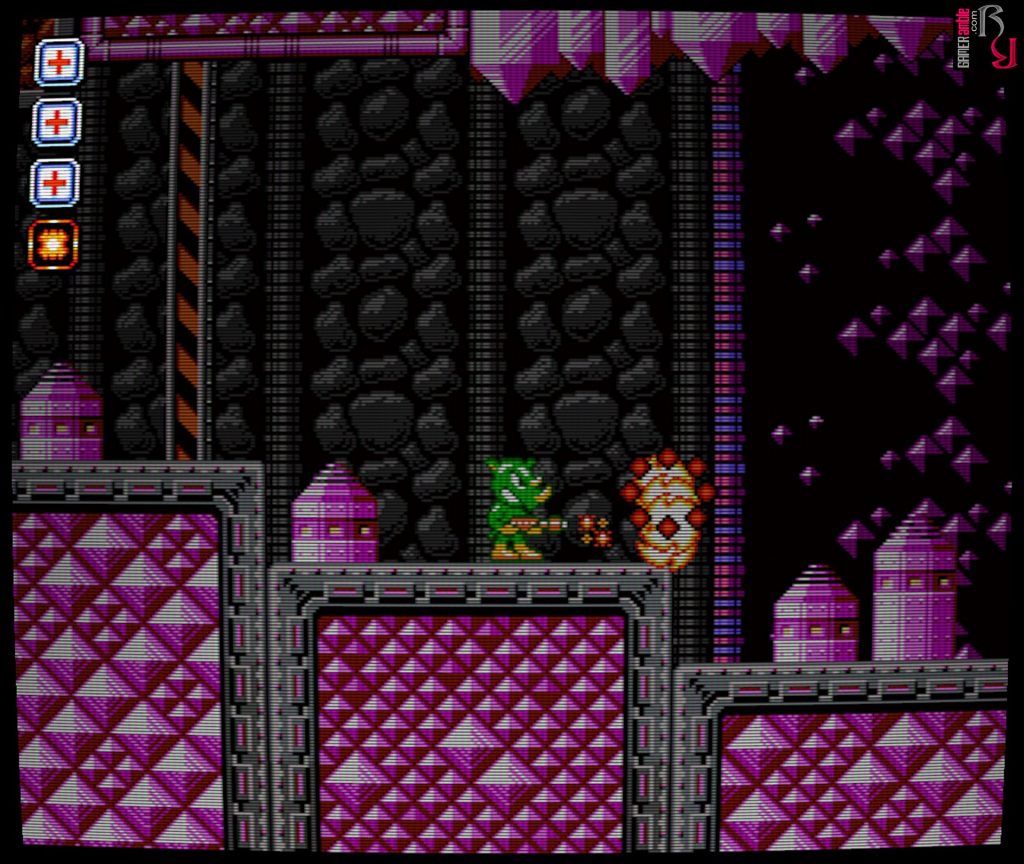

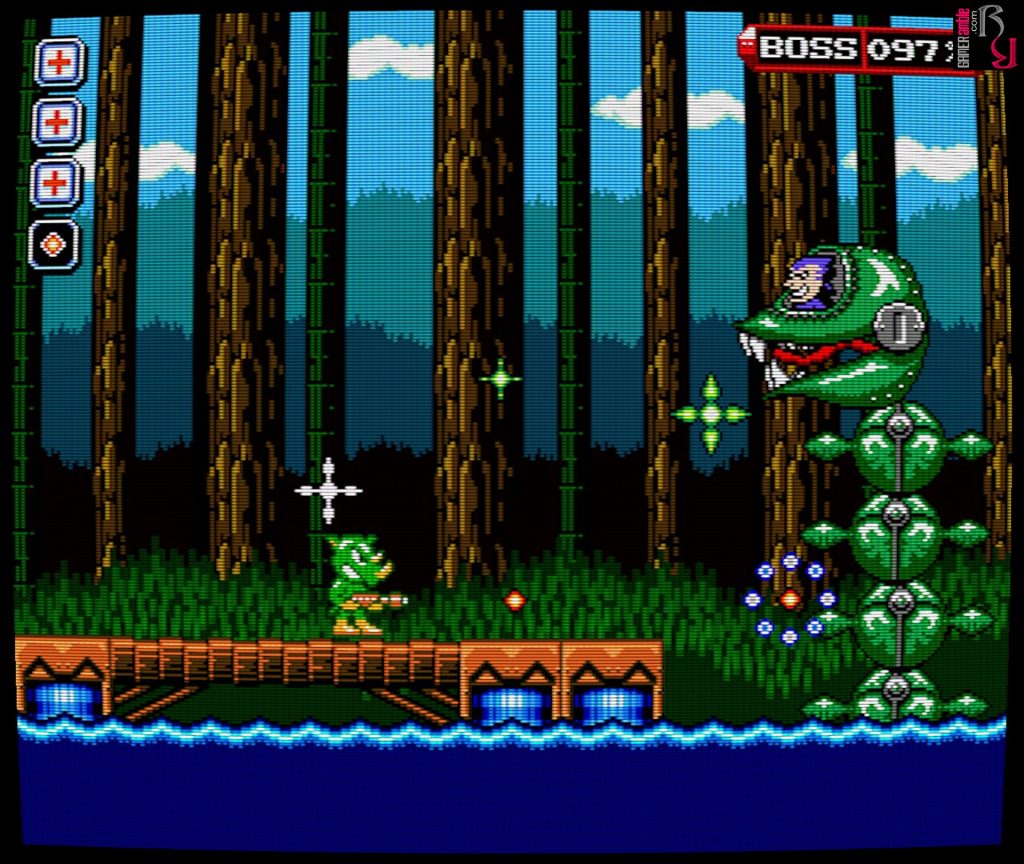
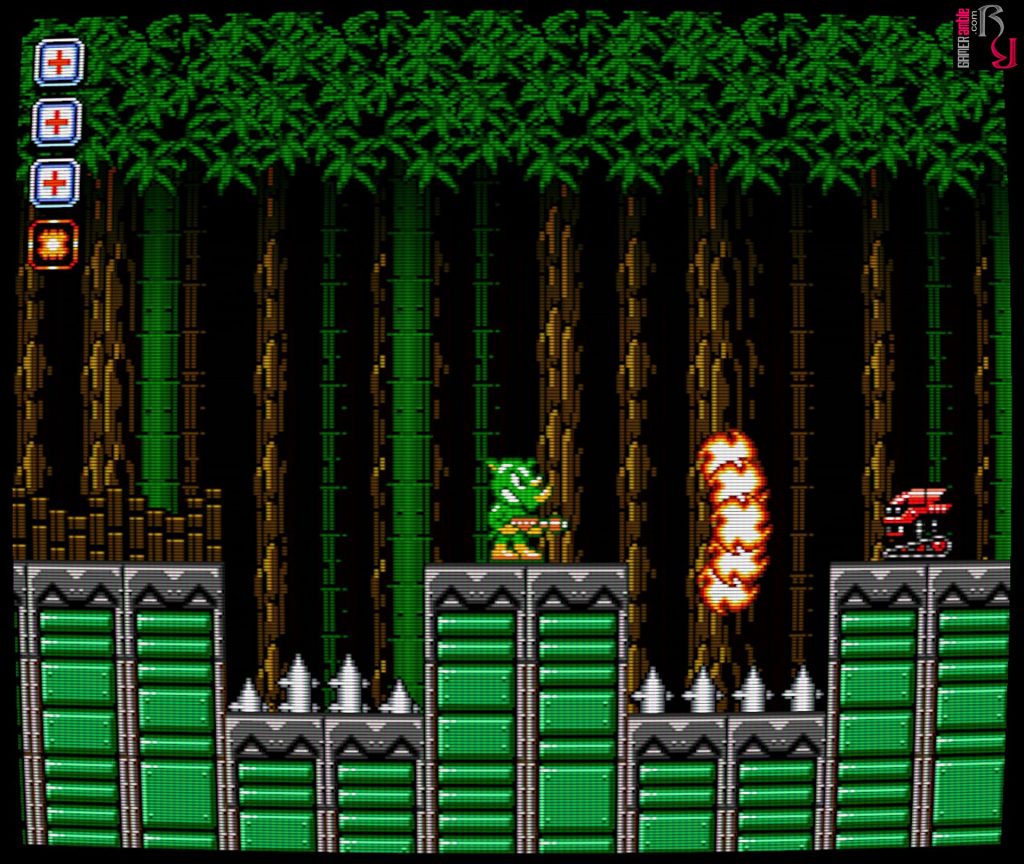
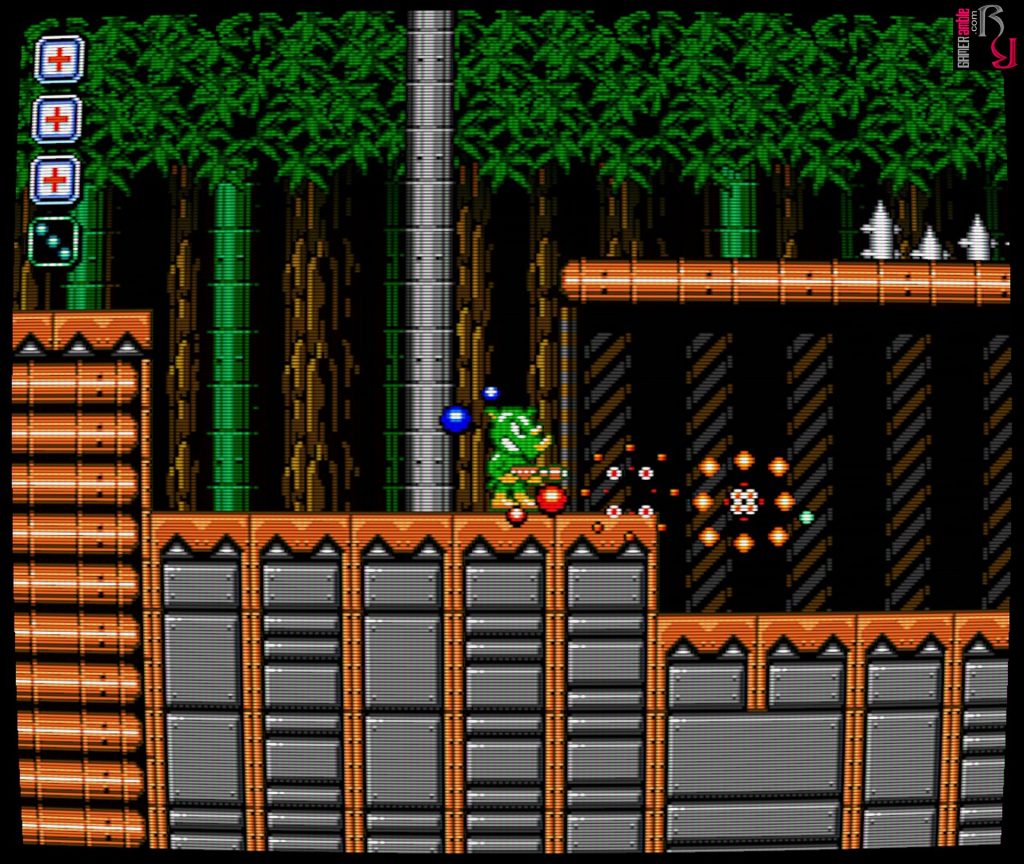
Clash Force features a decent, if unremarkable, soundtrack that sounds like it could have come from the 1980s. The sound effects are minimal, apart from the sounds made by your character’s weapon. Unfortunately, there’s no way to adjust the sound volume or disable the sound effects. The controls are straightforward, with one button for jumping and one for shooting. As mentioned earlier, there’s no difference between the three characters, and they all use the same primary weapon. Players can only shoot forward or backward, with no charged shot or auto fire. Enemies can only be killed by shooting them, so don’t try and jump on the head of anything. Most enemies die from one shot, but players can shoot down special enemies to grab weapon power-ups. None of these appear to increase the damage, though, only the speed and spread of the bullets. Annoyingly, it only takes one hit for players to lose their weapon power-up, which is a real pain when facing the bosses. There is at least a shield power-up that can be found to safeguard players against one hit. Clash Force uses a Contra-style jump whereby players can jump higher by holding down the button. Levels are very straightforward, though, and simply involve moving from left to right while shooting. There’s the usual assortment of bottomless pits that spell instant doom if you fall into them, and some levels also have obligatory moving platforms or minecart rides.
Despite having more than twenty stages, Clash Force is a very short game and can be beaten in less than an hour. In addition to the Normal mode, there are also Hard and Expert difficulties, which add more hazards and decrease players’ health. The harder difficulties also cause the bosses to switch to more aggressive attacks sooner. Crackman is the boss of the final area of each group of levels, and in Dr. Wily fashion, he is usually in some type of vehicle or weapon. However, these boss battles are pretty unremarkable, as the bosses often barely move, and whittling away their health with the primary weapon is tedious.
Apart from the greater challenge of playing at higher difficulty levels, there’s little reason to return to Clash Force after completing it. Levels are short and linear, with no secrets or hidden areas to find. The story is also practically non-existent, and there’s no incentive to complete the game with different characters. Players not already tired of retro platformers might have some fun with Clash Force, but with so many better titles available, it is hard to recommend it unless it has a steep discount. While it isn’t completely terrible, it just doesn’t excel in any particular area, and even the retro titles that inspired it have more depth and enjoyment to offer.
System Requirements
- OS *: Windows XP or later
- Processor: 2 GHz or Higher
- Memory: 256 MB RAM
- Graphics: 256 MB or Higher
- DirectX: Version 9.0
- Storage: 170 MB available space
- Sound Card: Any


