Game of Thrones – A Telltale Games Series – Episode 02: The Lost Lords
Gameplay 8
Graphics 8
Sound 9

Previous attempts at turning game of Thrones into a traditional gaming experience has had mixed results, but this adventure from Telltale Games hits all the right marks. It’s got a cast of intriguing characters, gripping storyline and plenty of drama to keep you on the edge of your seat throughout its two hour runtime. Interaction is rather limited, but the overall experience is very true to the source material.

Gameplay: Basically a few quick time events and dialogue choices.

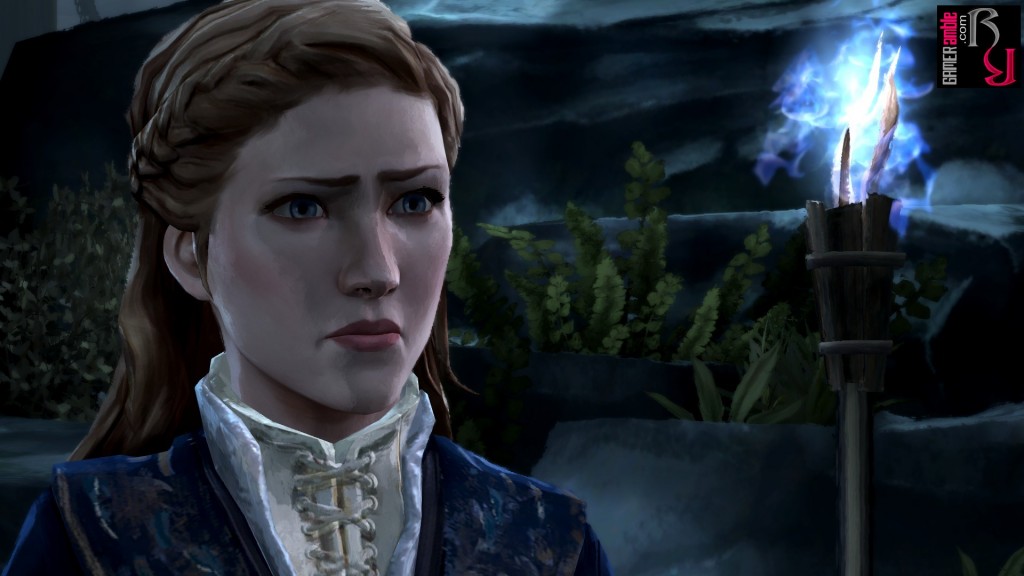
Graphics: The game uses a stylish painterly look for its characters and locations.

Sound: Great music and top notch voice acting especially from the television show actors reprising their roles

Summary 8.3 Outstanding

Game of Thrones – A Telltale Games Series – Episode 02: The Lost Lords

Developer: Telltale Games | Publisher: Telltale Games | Release Date: 2014 | Genre: Adventure | Website: Official Website | Format: Digital Download

*Players who have yet to experience the first episode of Game of Thrones – A Telltale Game Series are well advised to play it before reading this review to avoid any potential spoilers.*

After the roller coaster ride that was Iron From Ice, Game of Thrones – A Telltale Games series is back with episode two, The Lost Lords. The first episode did a great job of introducing us to House Forrester before proceeding to gleefully break it down. The Lost Lords is set after the shocking conclusion of the first episode, but is thankfully not quite as bleak.

The game opens with Asher Forrester, the exiled son, causing a bit of havoc in Yunkai. It seems that Asher, along with his close friend Beskha, is enjoying the action packed life of a mercenary. It doesn’t take long for him to get into trouble, which gives Telltale a good excuse to deliver a quick-time laden fight sequence. Although you can easily get killed if you are not paying attention, it is a nice diversion from all of the doom and gloom in the first episode.

The Lost Lords also place you in the role of another new character in Ironrath, where things are understandably a bit tense after what occurred in episode one. The Ironrath scenes are slower paced for obvious reasons, but depending on your choices, just as tense. Mira Forrester, the handmaiden in King’s Landing also makes a return and offers a nice glimpse into the political intrigue of the city. With the future of her house hanging in the balance, the game constantly asks you how far you are willing to push your luck to save your family. Finally, we have Gared Tuttle, who has made his way to The Wall in order to begin his training with the Night’s Watch. Despite a nice cameo from John Snow, the scenes with Gared don’t really feel like they are adding much to the overall story, but I hope to be proven wrong by future episodes. Overall I really liked the new characters and they are a good match for the existing ones.

Although The Lost Lords doesn’t have quite as many stand out moments as the first episode, the more optimistic tone makes for a nice breather. I have no doubt that things will probably get a lot darker in future episodes again if the books and television show are anything to go by though. There were also a couple of scenes where I was dreading that someone would randomly get killed purely for the shock value, but thankfully Telltale refrained from overusing this ploy.

Visually the game looks the same as the first episode and the “painted” art style still makes for some very nice screenshots. Asher’s scenes in Yunkia make for a nice contrast to the icy chill of The Wall and the gloom of Ironrath. The animations are done fairly well and it is only the facial expressions that don’t always quite match up with the voice acting. The voice acting by the way is once again superb and Kit Harrington proves that he can play John Snow just as convincing in a game as in the television series. Peter Dinklage is also in fine form despite only making a brief appearance. The episode is only about 90 minutes in length, but thankfully doesn’t feel like it is rushed.

If you have already played the first episode, then stop reading this and start playing The Lost Lords. It is a fine follow-up to an explosive start and also sets the scene for plenty of intrigue in future episodes.

System Requirements

  • OS: Windows XP Service Pack 3
  • Processor: Core 2 Duo 2GHz or equivalent
  • Memory: 3 GB RAM
  • Graphics: ATI or NVIDIA card w/512 MB RAM
  • DirectX: Version 9.0
  • Hard Drive: 3 GB available space
  • Sound Card: Direct X 9.0c sound device
  • Additional Notes: Not Recommended for Intel integrated graphics
  • OS: Snow Leopard (10.6.X)
  • Processor: 2.3 Ghz Intel
  • Memory: 4 GB RAM
  • Graphics: 512 MB NVidia or ATI graphics card
  • Hard Drive: 3 GB available space
  • Additional Notes: Not recommended for Intel integrated graphics or Mac Minis or early-generation MacBook
logo

Related posts

Marble Muse

Marble Muse

Marble Muse is a deceptively simple-looking game, but thanks to the challenging controls and excellent level layouts, it is actually quite addictive. It might only feature 24 levels, but the additional challenges and secrets definitely boost the replay value. Players looking for something casual but with a bit of a challenge shouldn't miss out on this game. Gameplay: The game features well-designed boards and addictive gameplay. Graphics: Although not stellar, the visuals look decent enough. Sound: The upbeat audio is a good match for the gameplay

Bloodstained: Curse of the Moon 2

Bloodstained: Curse of the Moon 2

Like its predecessor, Curse of the Moon 2 emulates the classic 8-bit Castlevania titles, particularly Castlevania III. It looks, sounds, and plays very much like an NES title, but unfortunately, this means that it is also frequently very unfair and unforgiving. The increased amount of enemies during the platforming sections makes for a more frustrating experience than the first game and the playtime is also padded out by having to repeatedly complete all the levels to experience all the endings. As a sequel, it makes some improvements but also stumbles a few times, which is disappointing. It's certainly not a bad game but loses some of the magic and novelty that the original had. Gameplay: Very challenging, but also a little too frustrating at times. Graphics: Great sprite work and once again very true to the 8-bit Castlevania era. Sound: Authentic, but doesn't come close to the Castlevania titles in this regard.

Mokoko

Mokoko

Mokoko is a fun Qix inspired title that fuses addictive gameplay with some lewd visuals. It shares a lot of similarities with the Gals Panic series by Kaneko, but adds enough wacky elements of its own so that it doesn't just feel like a cheap clone. The free nudity patch is completely optional, but even without it, Mokoko is not exactly a family-friendly game. Nevertheless, it's a fun game and definitely offers a lot of value for money. Gameplay: It uses the tried and tested Qix formula, so you know it's addictive and fun. Graphics: Nothing spectacular, but the art is decent overall. Sound: The soundtrack is decent and the voice acting is pretty good.

Mystic Gate

Mystic Gate

Mystic Gate is a colorful roguelite twin-stick shooter where players battle through randomized dungeons in search of treasure and a wish-granting reward. The game features a large arsenal of weapons, permanent skills, missions, bosses, and local co-op where a second player controls the robot companion. While it lacks the depth and personality of the genre’s best titles, the core gameplay is enjoyable, accessible, and addictive enough to make it worth checking out. Gameplay: Fast and addictive twin-stick shooting with plenty of weapons, skills, missions, and roguelite progression. Graphics: Colorful pixel art that is simple but readable, although the environments could have used more personality. Sound: A surprisingly good soundtrack and solid effects that fit the arcade action well.

GetsuFumaDen: Undying Moon

GetsuFumaDen: Undying Moon

GetsuFumaDen: Undying Moon is an intense roguelike hack-and-slash action game with a stunning traditional Japanese art style. The game features plenty of action and a variety of enemies, but a lot of grinding is required to make the most of them. The upgrade and crafting system is also a little convoluted, but overall the game is very addictive. It is not a title for players who dislike grinding, but those willing to put in the hours will find the experience very rewarding. Gameplay: Progression is a little slow, but there's plenty of action and great boss battles. Graphics: The ukiyo-e style artwork is beautiful, to say the least. Music: The soundtrack is excellent and features a nice variety of tunes.

Tengami

Tengami

The standout features of Tengami are the unique visuals and great soundtrack, but the tranquil gameplay is also quite good. It has no epic story or action, but the gentle, puzzle-solving, relaxing atmosphere makes for an interesting experience. The game doesn't have a lot of freedom, challenge, or replay value, but it is pretty enjoyable while it lasts and leaves an impression. Gameplay: The puzzles are relatively straightforward and not very numerous, but interacting with the game world by pulling or sliding parts of the scenery is quite neat. Graphics: The pop-up book world visuals are simply beautiful. Sound: The game features an atmospheric and very appropriate soundtrack by David Wise.

Leave a comment