Imprint-X
Developer: Morgondag | Publisher: Morgondag | Release Date: 2017 | Genre: Adventure / Casual / Indie | Website: Official Website | Purchase: Steam
When mysterious Nano Bots, called Wardens, begin enslaving people there is only way to stop the robotic virus scourge. As a hacker clone, it is your responsibility to hack into the brains that have been infected by the Wardens and clear them out using correct button sequences. There are seven intellects to save, but standing between you and success are 100 Wardens. This is the unique story of Imprint-X, a new puzzle game from developers Morgondag. They boast that the game features 700 buttons to press, which sounds simple enough, but it doesn’t take long for the challenge to ramp up considerably.
The gameplay of Imprint-X is indeed based entirely around buttons and initially all you have to figure out is what the correct sequences are. Each time you press a button it counts as a “function” and you only have a limited amount of these per level. However, you can recover functions by pressing the correct buttons, although your functions can never exceed the amount you started the level with. After a while you will also begin to encounter levels that are based around memorizing sequences or having to figure out patterns, all requiring you to press buttons of course. Then there are the “boss” levels where the focus shifts to timing as you need to watch the movements of moving boxes and frames before clicking the exact moment they overlap. Since they typically move on completely different paths and only intersect very briefly these levels are a real test of your reflexes.
The game continues to cycle through these puzzle variations, but things obviously become more complicated as you progress. The button sequences you have to memorize become longer and more complex while structures begin rotating and shifting to confuse you even more. The boss levels also begin to feature more and more boxes and frames with increasingly erratic paths and overlapping orbits, all moving at speeds that will leave your head spinning. However, don’t despair as the developers have also included a few power-ups to even out the odds a little bit. The first slows down time, which is very useful for boss battles or timing based puzzles. The second refills all your functions for one level while the last allows you to skip a level completely and move on to the next. These power-ups can only be activated by hearts, which are awarded for completing levels or by clicking on them when they occasionally float past during play.
Imprint-X can be completed quite quickly if your only goal is to get to the end. Progress only requires defeating the last boss for each intellect you are saving, so you can easily skip a lot of levels along the way. However, you can also aim to complete all the puzzles per level or go back and redo previously conquered puzzles more efficiently for the personal satisfaction and Steam Achievements.
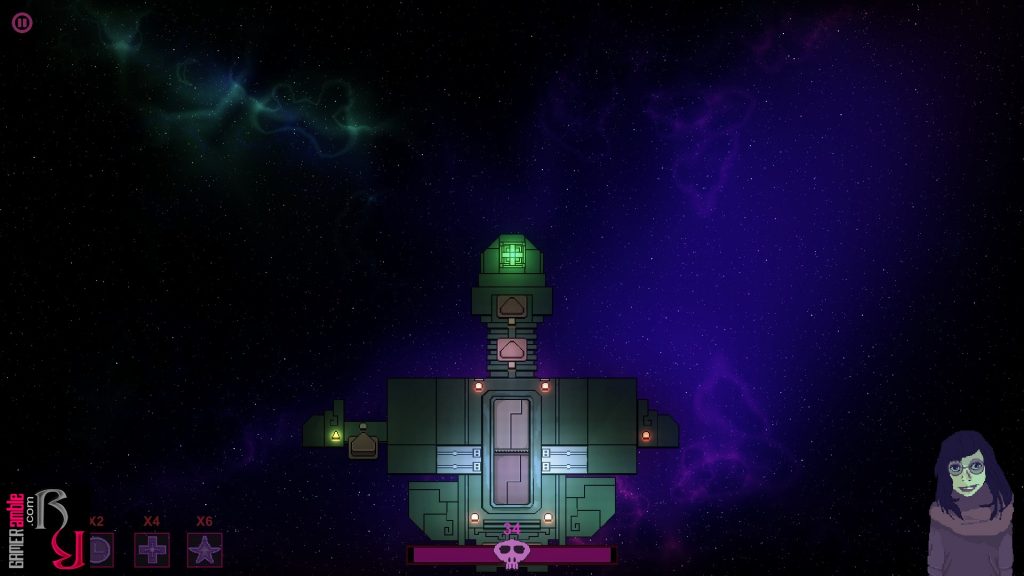
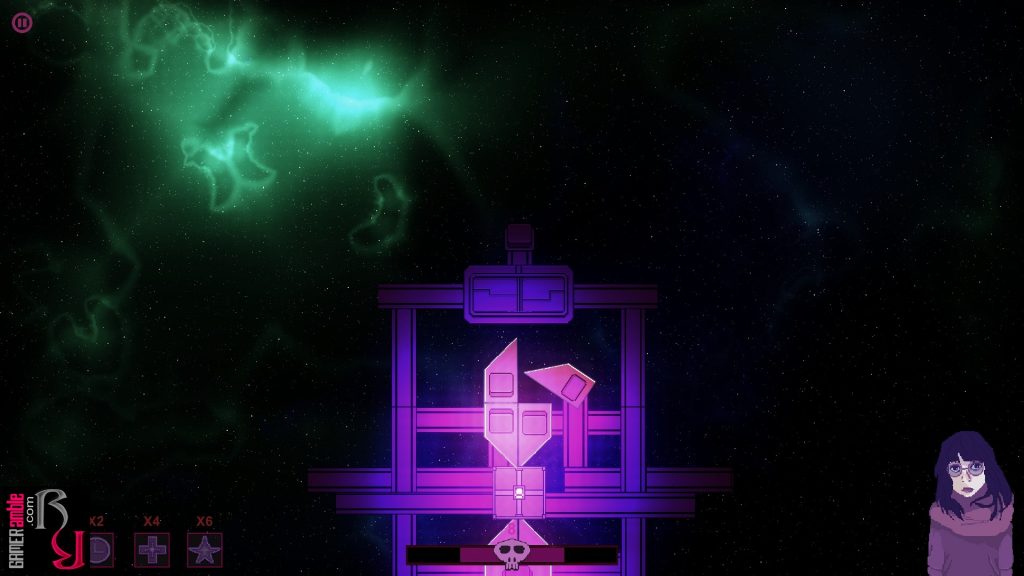

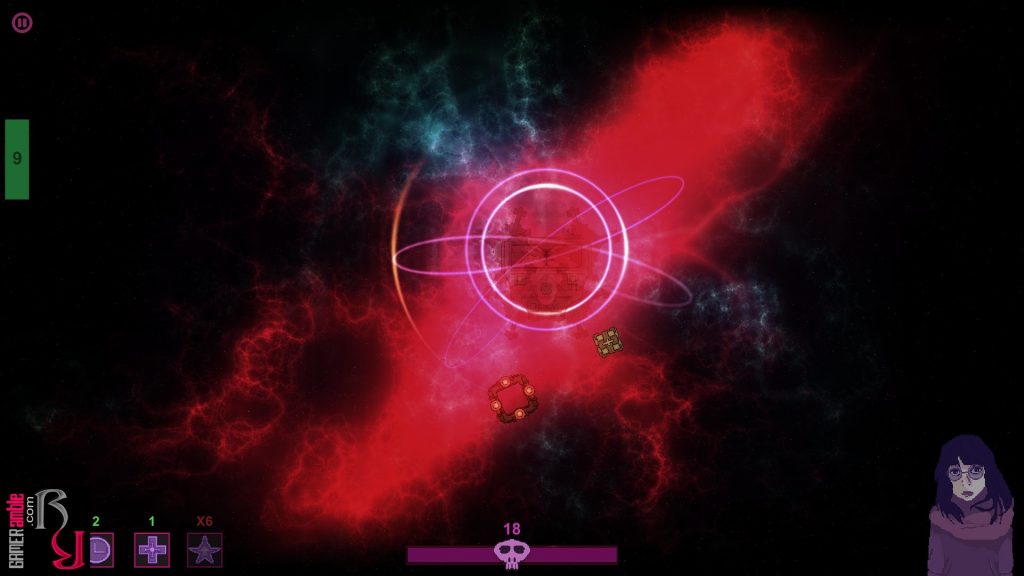
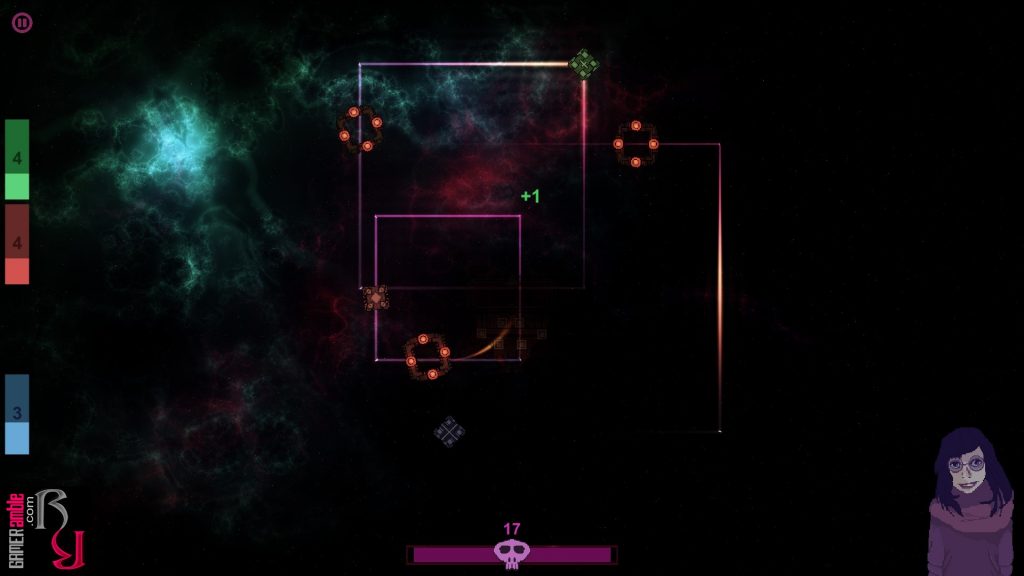

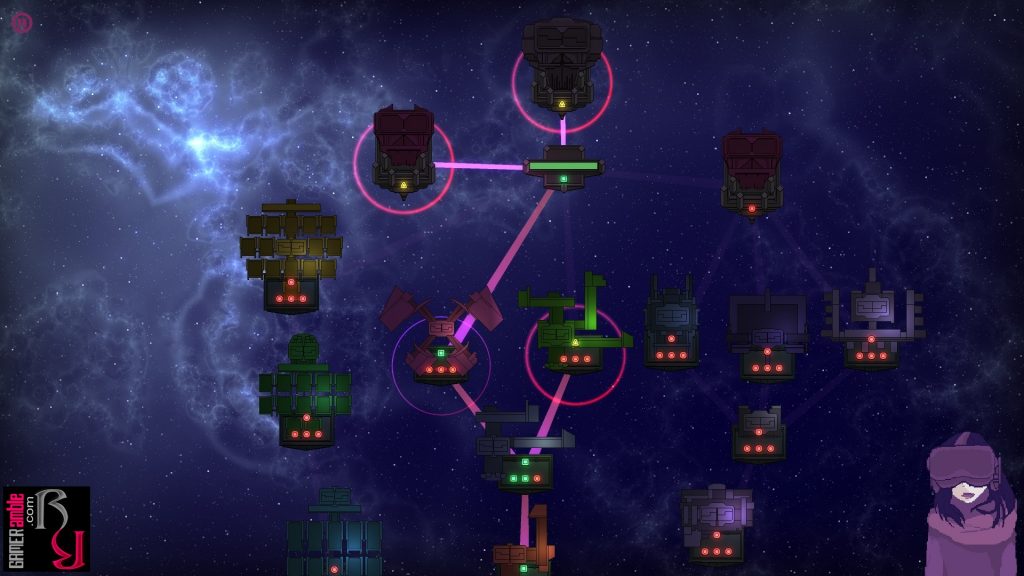
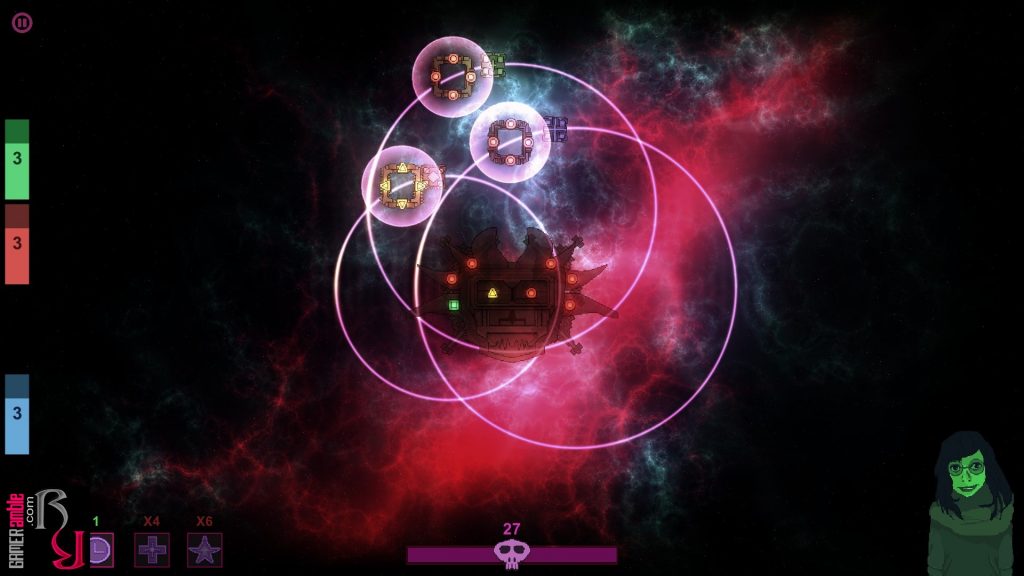
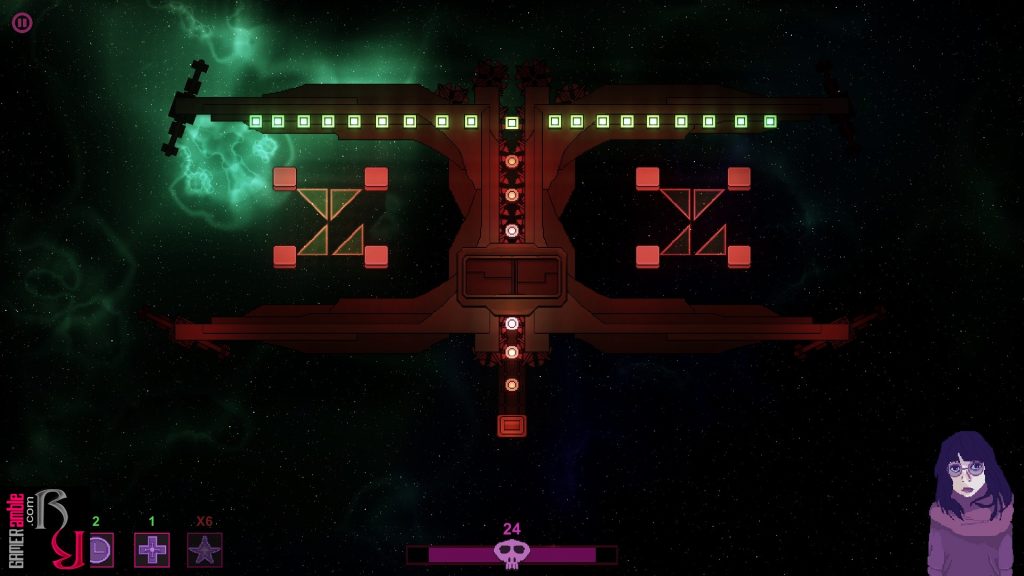
Although Imprint-X features quite a unique concept, it isn’t quite as addictive as we would have liked for a puzzle game. It is great when you are on a roll and solving puzzles are very rewarding, but the difficulty feels a bit erratic at times. The game is certainly very easy to jump in and out for short bursts, but later levels can become quite repetitive and tedious. Using up all your functions means having to restart a level, which on some of the later boss levels is quite a chore.
It is not just the gameplay of Imprint-X that is quirky and different, but the visuals as well. The game opens with a long intro explaining the story, but instead of any text you get to watch some pixel art visuals. The art style is definitely of the love/hate variety as some people think the pixel art looks unique while to others the drawings look like MS Paint scribbles. Regardless of what you think of the character art, the levels look rather nice and makes good use of color to enhance what are a basically just metallic structures floating in a void. You can zoom in or out on these structures for a better look and the starry nebula’s in the background adds some nice depth. The boss levels, with their swirling patterns, look particularly hypnotic and psychedelic. The audio is definitely the highlight of the game, with some atmospheric music tracks composed by Tom Croke. We definitely recommend playing with a good set of earphones to really appreciate the relaxing synth heavy tunes playing in the backgrounds. Sound effects are of the 8-bit variety, along with squeals of delight or dismay from your hacker clone, depending on how well you are doing. You’ll also get a smattering of applause if you manage to perfect a level.
Imprint-X scores high for originality, but it doesn’t quite measure up to some of the best titles in the genre. It is very hard to argue with its price though, and you’ll certainly get your money’s worth if you are a fan of puzzle titles. However, players struggling with games that require quick reflexes might have a hard time with Imprint-X. While it is not the type of game that is going to hook you for hours on end, it definitely offers an entertaining way to kill some time.
System Requirements
- Minimum PC System Requirements
- Recommended PC System Requirements
- Minimum Mac OS X System Requirements
- Recommended Mac OS X System Requirements
- Minimum SteamOS + Linux System Requirements
- Recommended SteamOS + Linux System Requirements
-
- OS: Windows 7
- Processor: Intel Core i5
- Memory: 4 GB RAM
- Graphics: OpenGL2 compatible video card
- Storage: 1 GB available space
-
- Processor: Intel Core i7
-
- OS: 10.6
- Processor: Intel Core i5
- Memory: 4 GB RAM
- Graphics: OpenGL2 compatible video card
- Storage: 1 GB available space
-
- Processor: Intel Core i7
- Memory: 6 GB RAM
- Storage: 2 GB available space
-
- OS: Steam OS or Ubuntu
- Processor: Intel Core i5
- Memory: 4 GB RAM
- Graphics: OpenGL2 compatible video card
- Storage: 1 GB available space
-
- Processor: Intel Core i7
- Memory: 6 GB RAM
- Storage: 2 GB available space