The Plague Doctor of Wippra
Gameplay 8
Graphics 8
Sound 9

The Plague Doctor of Wippra is a brief point-and-click adventure with an interesting setting and characters. The game features neat pixel art visuals and a great soundtrack. The experience is very linear, though; veterans of the genre should have no trouble with the puzzles. However, it is refreshing to take on puzzles with real-life historical and medical context that isn’t too esoteric.

Gameplay: The game is short but engaging throughout and doesn’t overstay its welcome.

Graphics: The hand-drawn pixel art has a certain charm and is a good match for the game’s tone.

Sound: The game features a beautiful soundtrack with many wistful or melancholic tunes

Summary 8.3 Outstanding
Gameplay 0
Graphics 0
Sound 0
Summary rating from user's marks. You can set own marks for this article - just click on stars above and press "Accept".
Accept
Summary 0.0 Terrible

The Plague Doctor of Wippra

Developer: Electrocosmos | Publisher: Application Systems Heidelberg | Release Date: 2022 | Genre: Point & Click Adventure / Indie | Website: N/A | Purchase: Steam

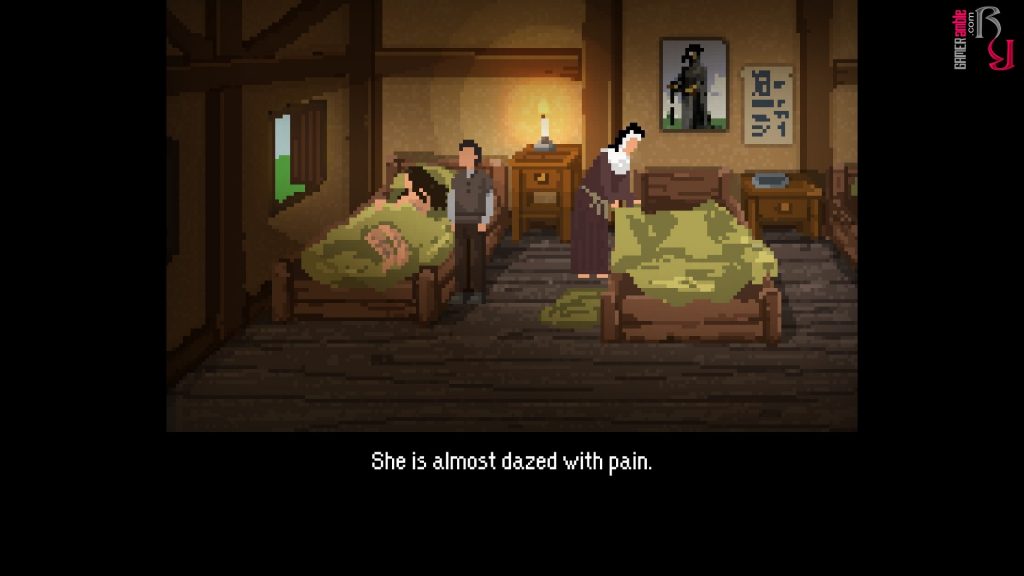
The Plague Doctor of Wippra transports players back to when the bubonic plague broke out, and ignorance and superstition were rife. The setting is the small German town of Wippra, where doctor Oswald Keller arrives to bring healing and relief after the previous doctor succumbed to the plague. Doctor Keller is tasked with assisting the Sisters at the local church but cannot stand by idly while those who contract the plague are boarded up in their own homes and left to die. Unfortunately, the church is profiting from selling salvation to the people and doesn’t take too kindly to the doctor’s more pragmatic approach.

Taking the form of a short retro point-and-click medieval adventure, The Plague Doctor of Wippra offers players a more somber take on the genre. Instead of the usual wisecracking protagonist and obscure puzzles, this game focuses on medieval period detail and puzzles that have real-life historical and medical context. It is the work of Electrocosmos, the studio of solo developer Alexander Leps, who also made Runic Rampage. Although TPDoW is short enough to complete in one sitting, it is a game where choices matter, and players can experience different endings based on their actions.

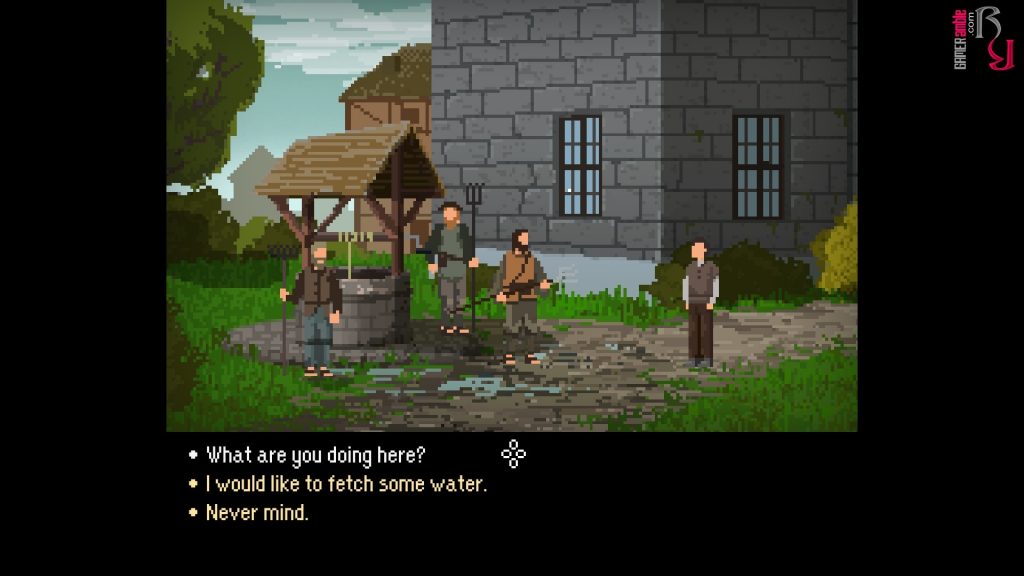
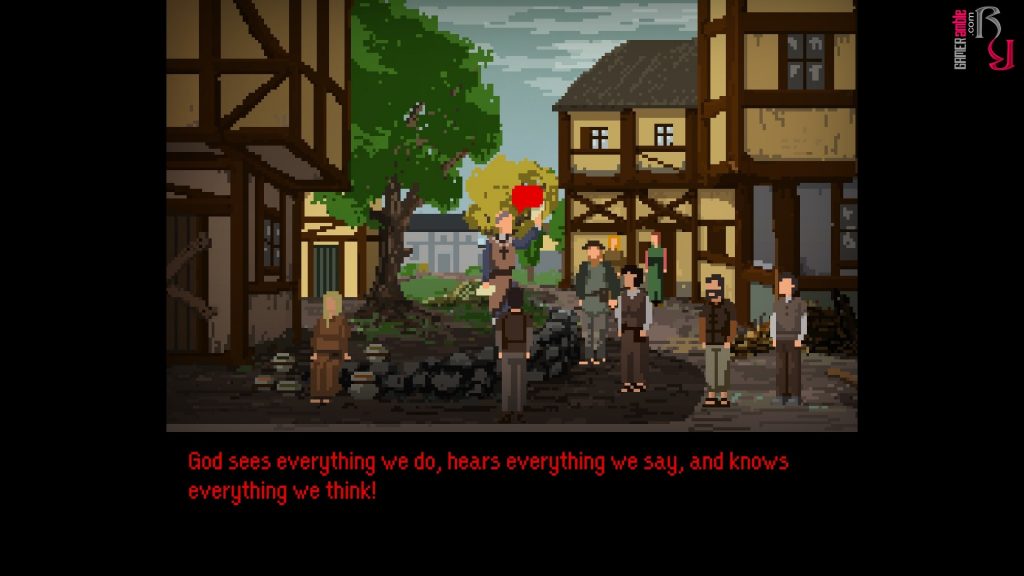
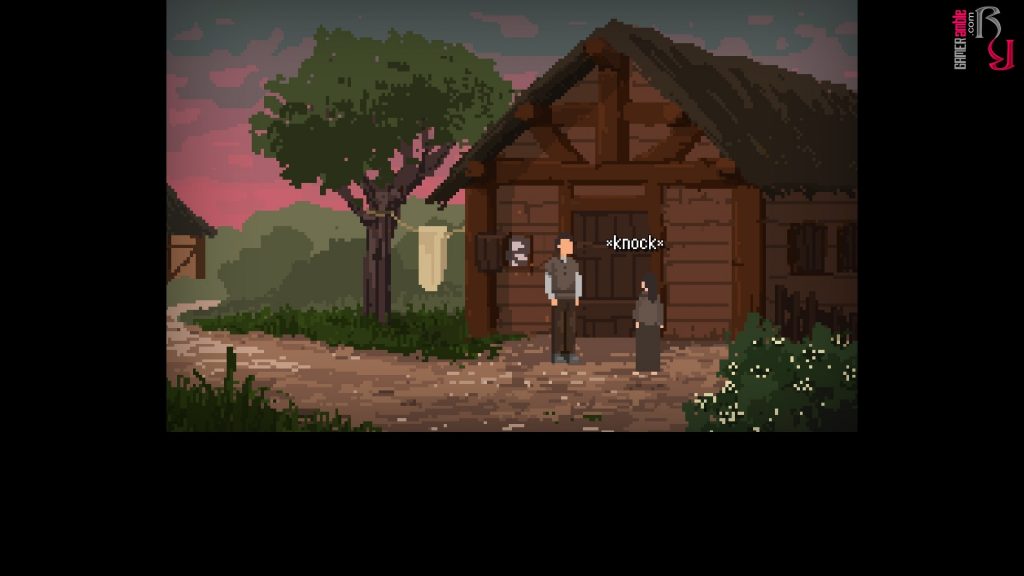
The moody medieval setting of the game is brought to life thanks to low-res pixel art that gives it a painterly look. Players are restricted to only a handful of locations in and around town, but each one looks good, and the art style never detracts from the gameplay. The game also uses the choice of not animating all the actions and movements of NPCs, but enough is depicted so that it is always clear what is happening. While Alexander handled all the art, code, and writing, the soundtrack for the game was done by Titus Drissen. The music features string and piano sounds, which fit the rather bleak tone of the game perfectly. There’s an excellent selection of tracks, and the music is good enough that we recommend picking up the Collector’s Edition of the game, which includes the soundtrack and artbook. Although it does not feature voice acting, the game has a handful of sound effects for important scenes or background ambiance.

The Plague Doctor of Wippra sticks closely to the conventions of the point-and-click adventure genre, so most players should have no trouble making their way through the game. The game is controlled via a mouse, and moving the cursor over interactive objects will reveal an icon indicating whether players can examine or collect the thing.
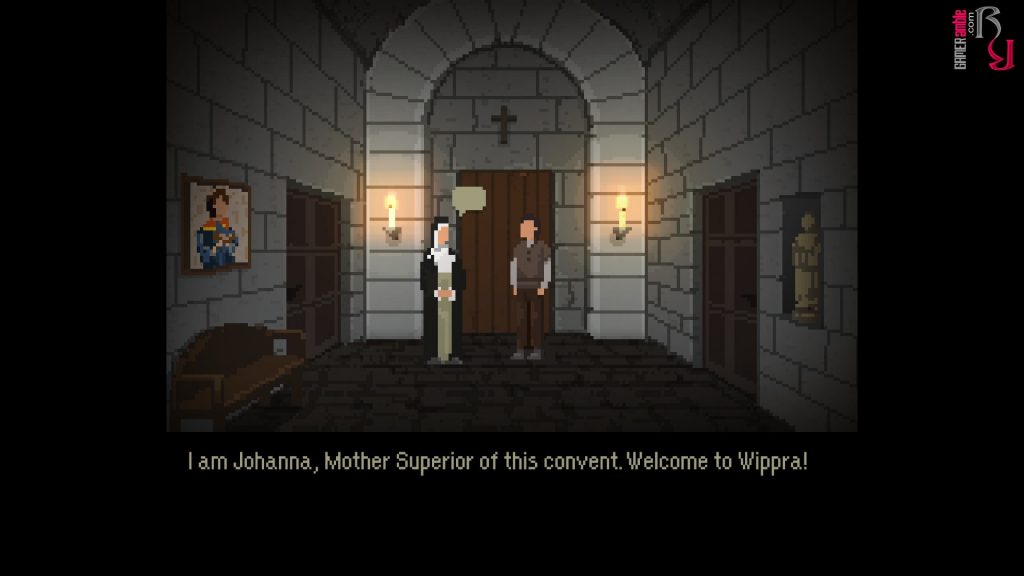
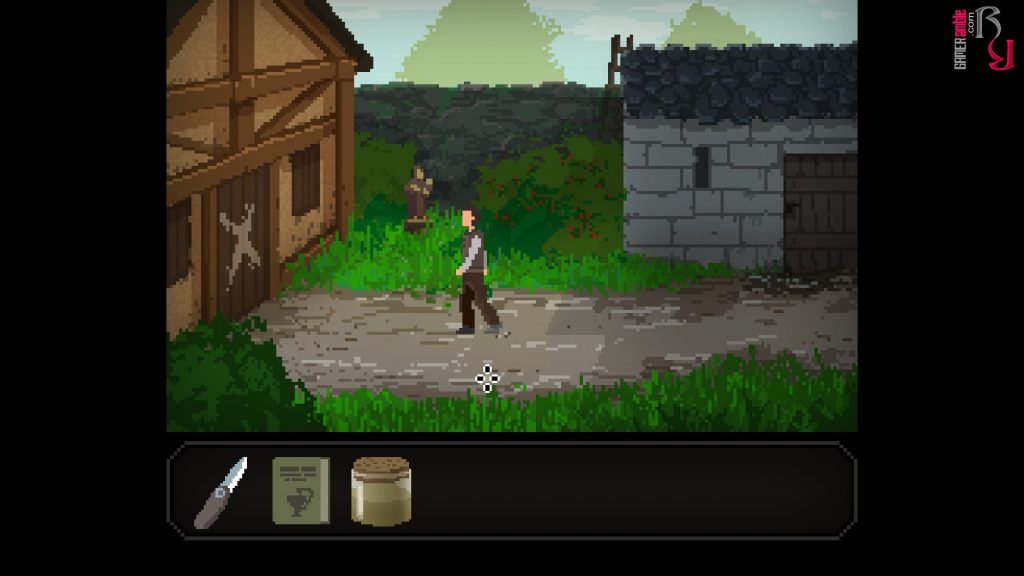
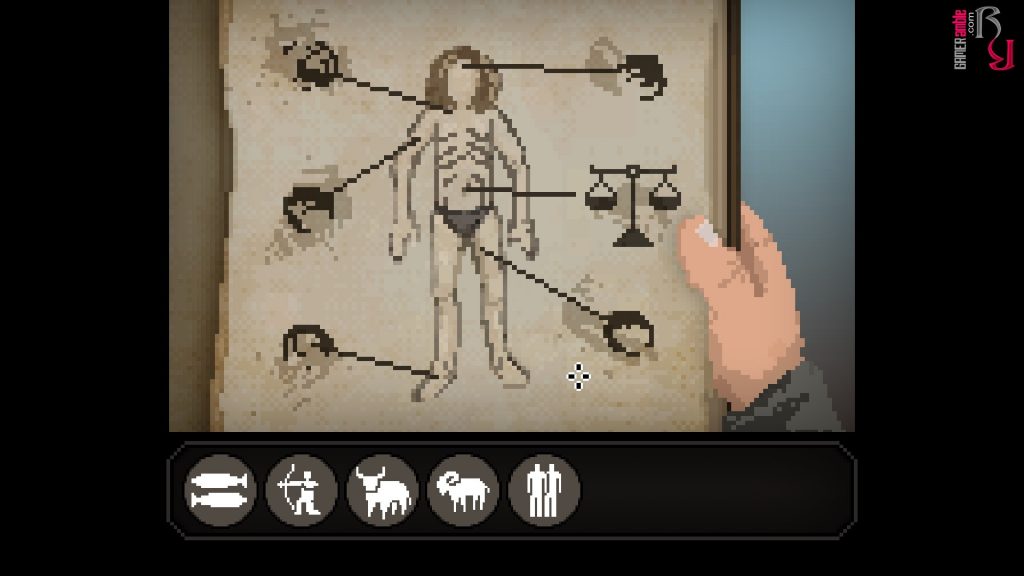
Doctor Keller will only encounter a handful of useful objects over the course of his adventure, and these are all stored in an inventory displayed at the bottom of the screen. Items cannot be wasted or misused, and objects that are no longer useful are removed. Since the game attempts to use realistic puzzles, there is rarely a need to try and combine objects in obscure ways. In fact, the only puzzle that really left us scratching our heads for a bit involved retrieving a feather from a bird. Players can also consult a medical journal for advice on puzzles that involve creating medicine, but it is possible to complete the game without ever looking at it.

The game is mostly quite linear, and Doctor Keller will refuse to leave certain areas if there are still puzzles that need to be solved first. The pixel art visuals can make it tricky to spot certain items, such as a rake lying in the grass, but the game does offer the option to highlight hotspots at the press of a button. This is off by default and must be enabled via the options menu, but it is convenient for players who don’t want to pixel-hunt each screen. We would have liked the option to have manual save slots, but the game is short enough that starting from scratch to see the different endings is not too time-consuming.

The Plague Doctor of Wippra began as a submission for the $105 Adventure Game Challenge, where it earned praise for its visuals and historical yet contemporary setting. Based on this positive reception, Electrocosmos decided to develop it into a complete game and give the story more depth. Unfortunately, it does feel like the game is over just as it begins to pick up Steam, which might leave some players wanting more. However, anyone searching for a point-and-click adventure that doesn’t overstay its welcome or relies on obscure puzzles to pad things out will enjoy this one.

System Requirements

  • OS: Ubuntu 14.04
  • Processor: Intel Core i5 2.8Ghz or equivalent
  • Memory: 4 GB RAM
  • Graphics: NVIDIA GeForce 450, AMD Radeon HD 5670 or better
  • Hard Drive: 3 GB available space
  • OS: Windows 7 SP1
  • Processor: Intel Core 2 Duo or equivalent
  • Memory: 2 GB RAM
  • Graphics: DirectX compatible graphics card
  • DirectX: Version 10
  • Storage: 300 MB available space
  • OS: High Sierra 10.13+
  • Processor: Intel Core 2 Duo or equivalent
  • Memory: 2 GB RAM
  • Graphics: OpenGL 3.2+ or Metal capable
  • Storage: 300 MB available space

Related posts

The Infectious Madness of Doctor Dekker

The Infectious Madness of Doctor Dekker

The Infectious Madness of Doctor Dekker is an FMV game where you get to play as a psychiatrist, questioning a host of patients about their problems and the murder of your predecessor. This is all done via keyword-based text input, but the high-definition, full-screen video responses will quickly draw you into the mystery. Add in some superb acting along with a genuinely fascinating story and you are looking at a surprisingly good title. It's not perfect, and the genre obviously has a lot of limitations, but overall, this is one not to be missed. Gameplay: The keyword-based questioning obviously has some limitations but makes for an engaging experience. Graphics: The quality of the full-motion video responses is very good. Sound: The game features an atmospheric soundtrack, and the quality of the acting is also of a very high standard.

Koumajou Remilia: Scarlet Symphony

Koumajou Remilia: Scarlet Symphony

Koumajou Remilia: Scarlet Symphony is an action side-scroller based on the Touhou Project that was originally released in 2009. This enhanced version spruces up the visuals and adds brand new Japanese voice acting as well as a few other features. However, it is still a very short game, and the bullet hell-style boss battles can be frustrating for those who want a pure platforming experience. The game is definitely fun but also a niche title that will not appeal to everyone. Gameplay: Levels are short, but the bullet hell elements and tricky bosses can sometimes be frustrating. Graphics: The pixel art visuals have a filter applied when scaled up to modern resolutions, but the results might not be to everyone’s liking. Sound: The soundtrack is great, and the Japanese voice acting is a welcome addition to the game.

Paratopic

Paratopic

Paratopic is a game about smuggling VHS tapes across the border, but how it presents itself is more like a fever dream than a traditional adventure. To unnerve players even further, the visuals look like they are straight from the 32-bit era of horror titles, and the distorted speech sounds as creepy as can be. Even the story is split between three characters and plays out in disjointed vignettes that abruptly cut between each other. Despite all this and the short length of the game, it is a memorable experience and will definitely find an audience amongst certain players.  Gameplay: Paratopic is short, baffling, unnerving and somehow also very compelling and memorable.  Graphics: The 32-bit visuals look like they wouldn't tax a Playstation One, but the frame rate is smooth, and the low-poly aesthetic really fits the game's style.  Sound: The soundtrack consists of silence punctuated by synthesizers and droning sounds, while the distorted speech is unsettling, to say the least. 

Forward to the Sky

Forward to the Sky

Help a sword-wielding princess take on the skeletal enemies and traps of the sky tower in this third-person title by Animu Game. The visuals and audio are decent, but the game is just way too short and simple. It can be completed in less than two hours and most of it will be spent solving some basic puzzles along with the occasional bit of combat. With a bit more polish and a few more levels Forward to the Sky could have been great, but as it is there are much better options available. Gameplay: The controls could definitely have been tighter and the overall experience is very short. Graphics: Bright and colorful, but not much in terms of variety. Sound: Passable background music and voice acting.

Planet of Lana

Planet of Lana

Planet of Lana is a cinematic puzzle adventure where players must help a young girl find and save her sister from the alien robots that have invaded. The only real challenge in the game comes from the puzzles, but it also features some platforming and stealth sections. Planet of Lana is a beautiful-looking game, but the gameplay can feel slightly shallow compared to similar titles. While Lana herself is not a particularly memorable protagonist, it's hard not to love her little alien cat companion, Mui, who is an invaluable asset during her quest. Gameplay: Planet of Lana is very short and the platforming as well as puzzles are not too taxing. Graphics: The game's visual style is superb, and a big reason to keep playing is to see where the adventure will take Lana next. Sound: The soundtrack is excellent, and while the voice acting is sparse, it perfectly conveys the emotions Lana is experiencing.

Left in the Dark: No One on Board

Left in the Dark: No One on Board

Left In The Dark: No One On Board is yet another hidden object puzzle adventure with a supernatural storyline and some spooky locations to explore. Unfortunately, it faces some stiff competition and feels a bit lacking compared to other similar titles in terms of puzzles and hidden object scenes. It is certainly not a bad game, but being short and average definitely counts against it when there are so many other titles sharing the same genre. Only considering picking it up if you are a big fan of the genre or find it on sale at a great price. Gameplay: The story failed to really grip us and feels a bit generic. Graphics: Decent enough artwork, but not that really sets it apart from similar titles. Sounds: The music is unmemorable and some of the dialog sounds very unconvincing.

Leave a comment

six + seven =