

Bus Simulator 21
Developer: stillalive studios | Publisher: astragon Entertainment | Release Date: 2021 | Genre: Simulation | Website: Official Website | Purchase: Steam
Bus Simulator 18 surprised us with how much fun it is to slide behind the wheel of a bus and take it for a ride. The game had some rough edges, and the interface was a little daunting, but it kept us coming back for more. After three years, stillalive studios returned with Bus Simulator 21, which promised to be bigger and better than the previous game in every way.
Bus Simulator 21 transports players to the brand new US map of Angel Shores with the objective of becoming a bus tycoon. Players once again start with just enough cash for a single bus, but with a bit of luck and planning, they will quickly find themselves in charge of an entire fleet. Angel Shores has a multitude of bus stops but no buses, which means the market is wide open for the taking. It is up to players to plan profitable routes and then take the wheel to show the AI bus drivers how it is done. After successfully completing a route, players can either keep going or relinquish control and let an AI driver take over. Their efficiency is based on how well the player drove the route, which is a neat touch. Players can even tag along for the ride while doing things like scolding passengers who are listening to loud music or keeping an eye out for fare dodgers.
Players are also free to set up additional routes, buy new buses, or customize their existing fleet with new paint jobs, decals, and even advertising. In addition, players can roam the entire city on foot, which is perfect for occasions when a break from managing or driving buses is needed. So far, this should all sound very familiar to fans of Bus Simulator 18, but the new game does have some improvements to offer.
The best part of Bus Simulator 21 is the ease with which it is now possible to create new routes. Routes can be assigned with just a few clicks, and factors, such as peak operating hours and the time of day now also play an important role. As with the previous game, the city slowly opens up by completing missions and unlocking new neighborhoods. Bus stops can now also be upgraded, allowing them to be incorporated into more routes, and the number of officially licensed buses has swelled to 30. These include some new additions, such as double-decker and electric buses, too.
Bus Simulator 21 features a new character creator boasting over 15,000 design combinations to customize everything from your bus driver’s body shape to clothes, hair, and more. These combinations also appear to have extended to the NPCs roaming the world, allowing for much more variety than in the previous game. It means that most of your passengers look a little strange with their garish hair colors and outfits, but it’s much better than the clones from Bus Simulator 18.

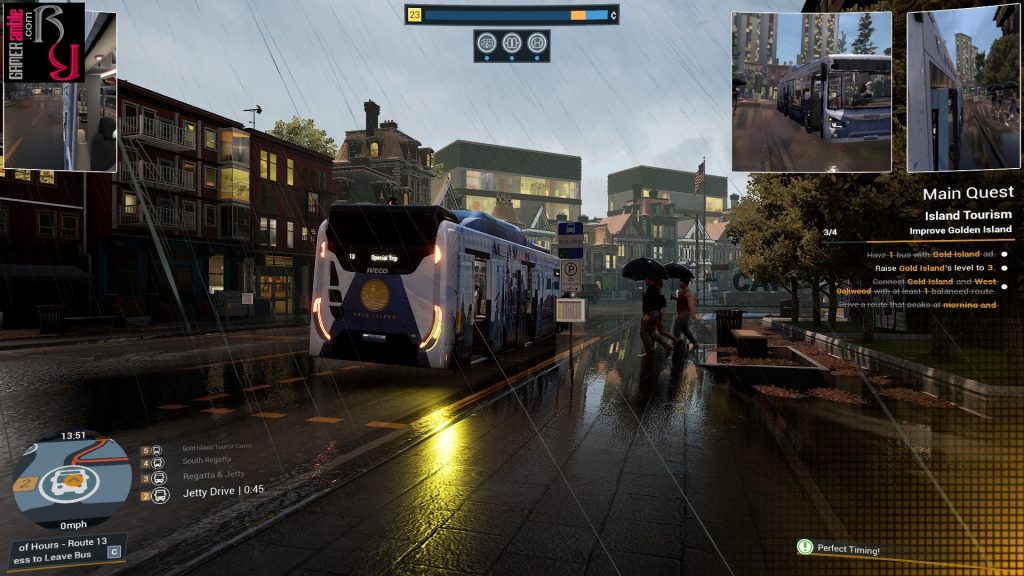
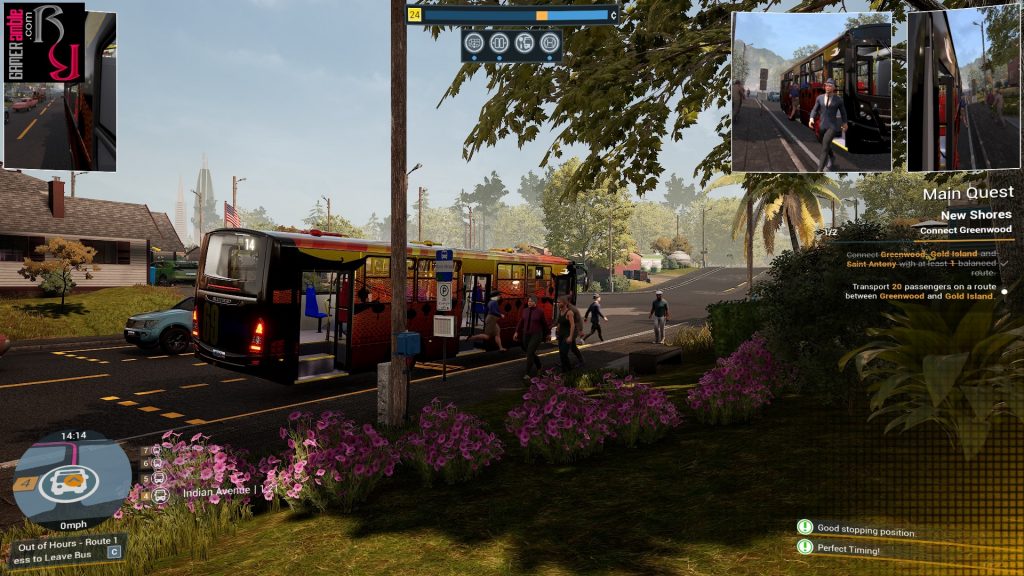
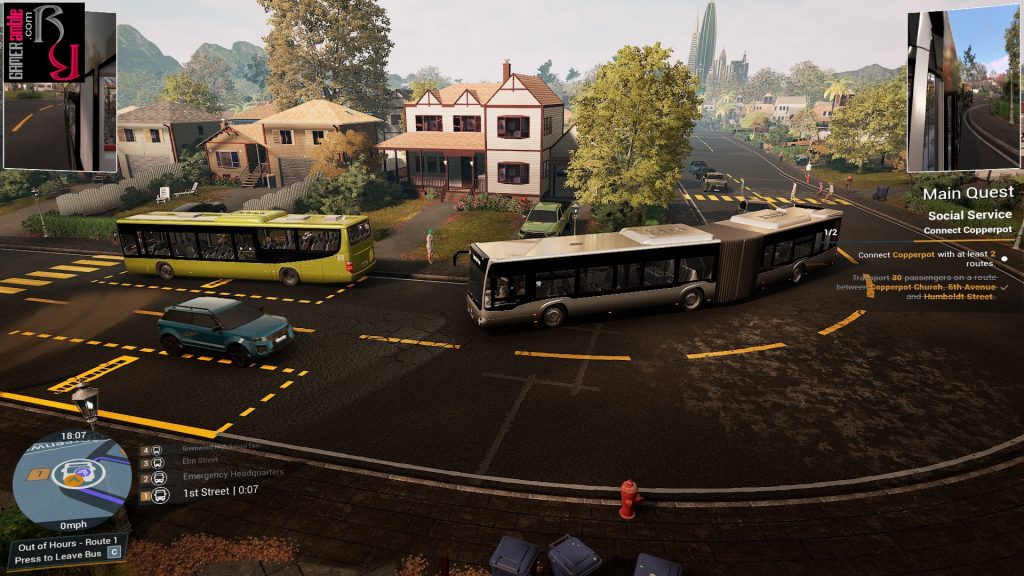
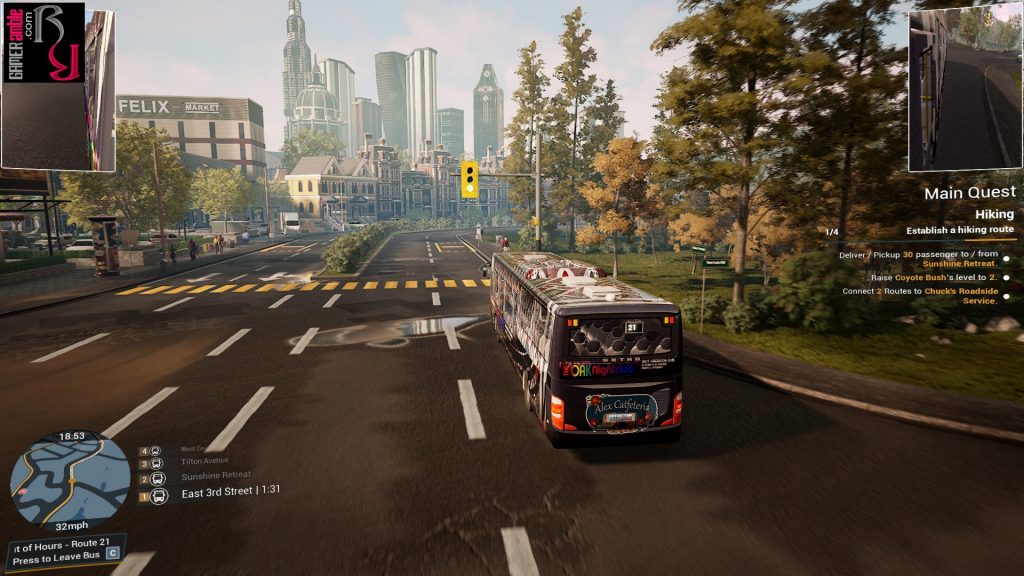
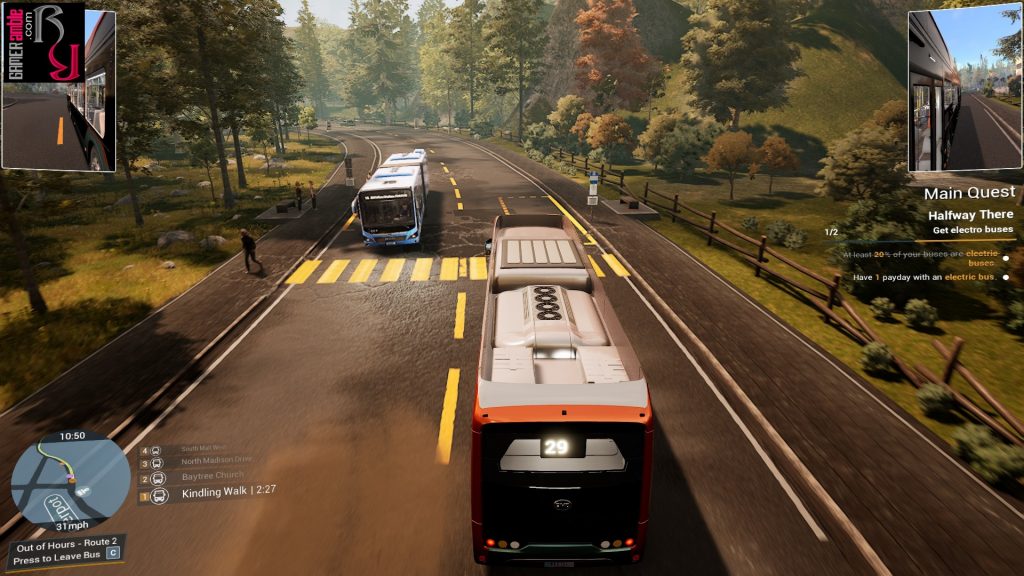

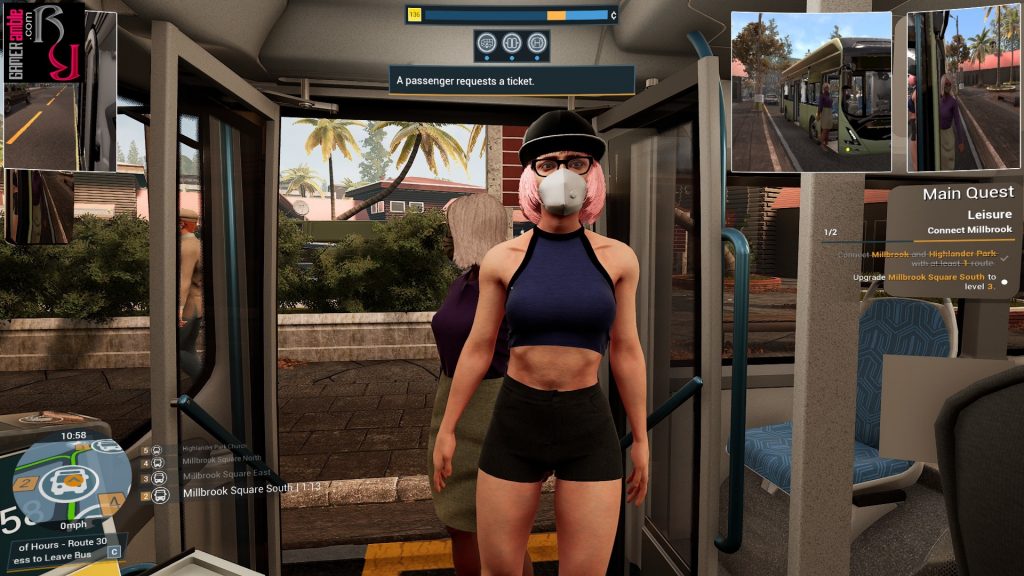
Players who don’t like spending time in menus will also appreciate the streamlined approach the developers took to this game. In addition to difficulty settings that make the game accessible to a broad audience, Bus Simulator 22 features fast travel, the ability to fast-forward time, and the option to take over AI buses in your own fleet.
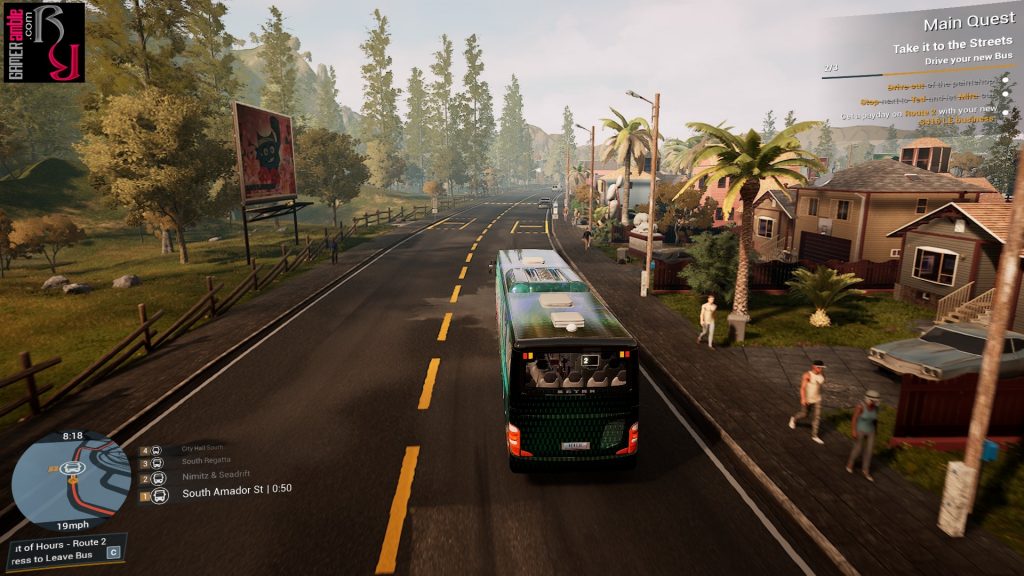
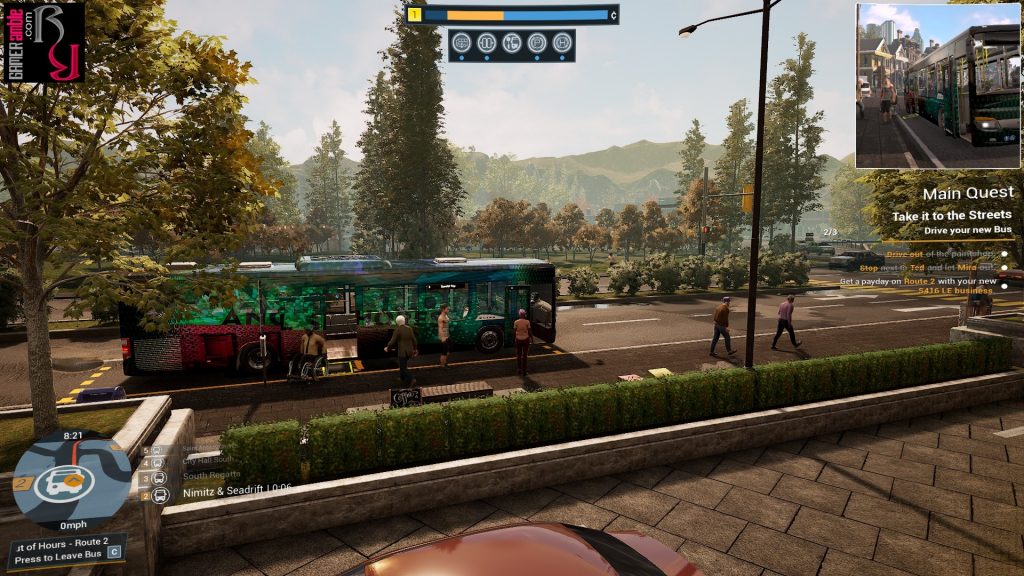
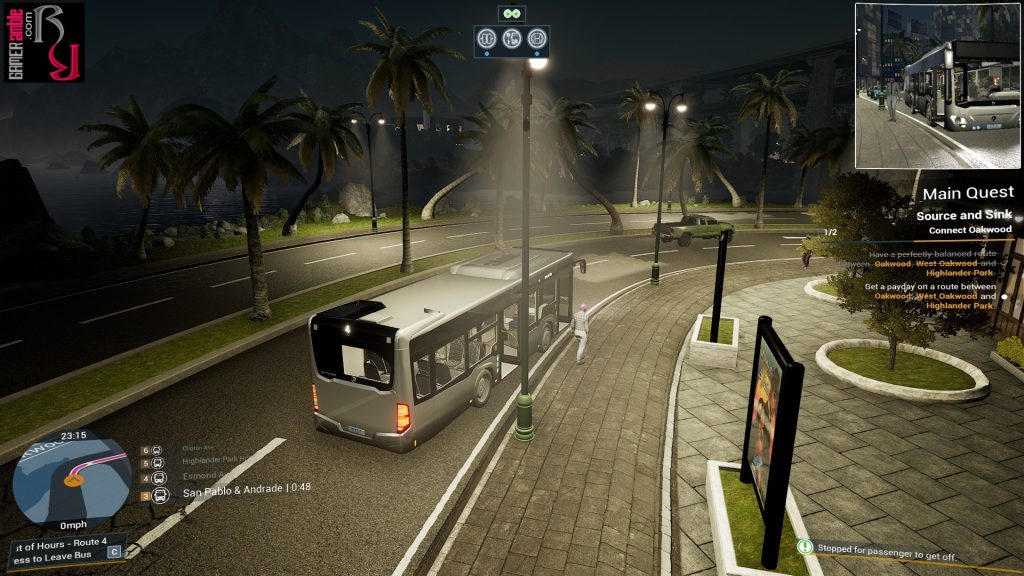
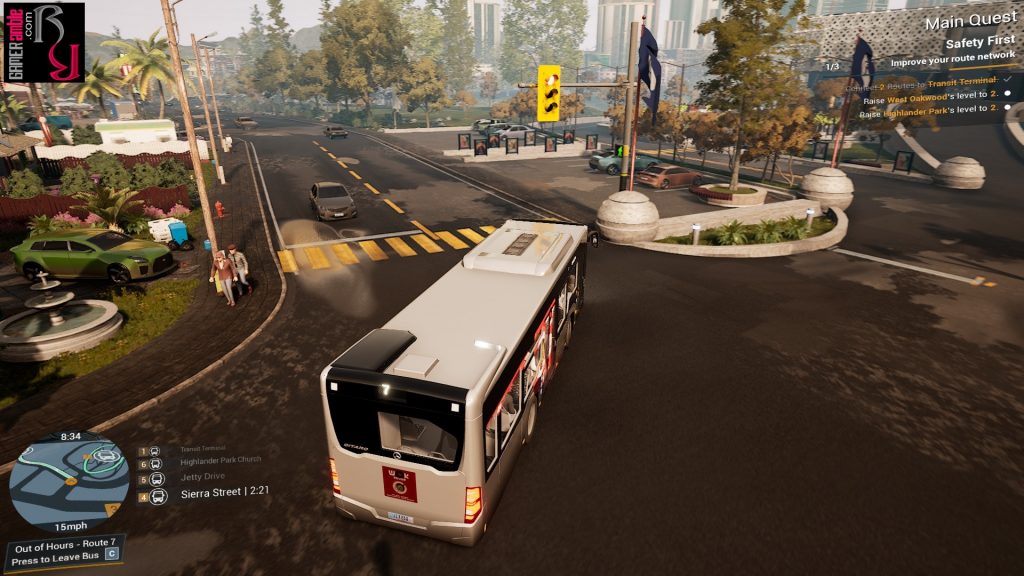
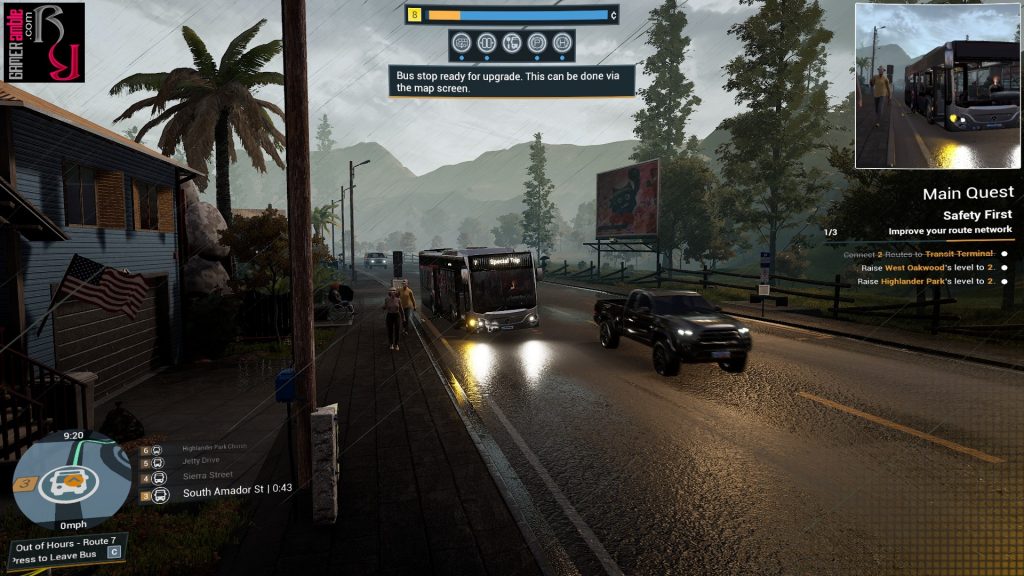
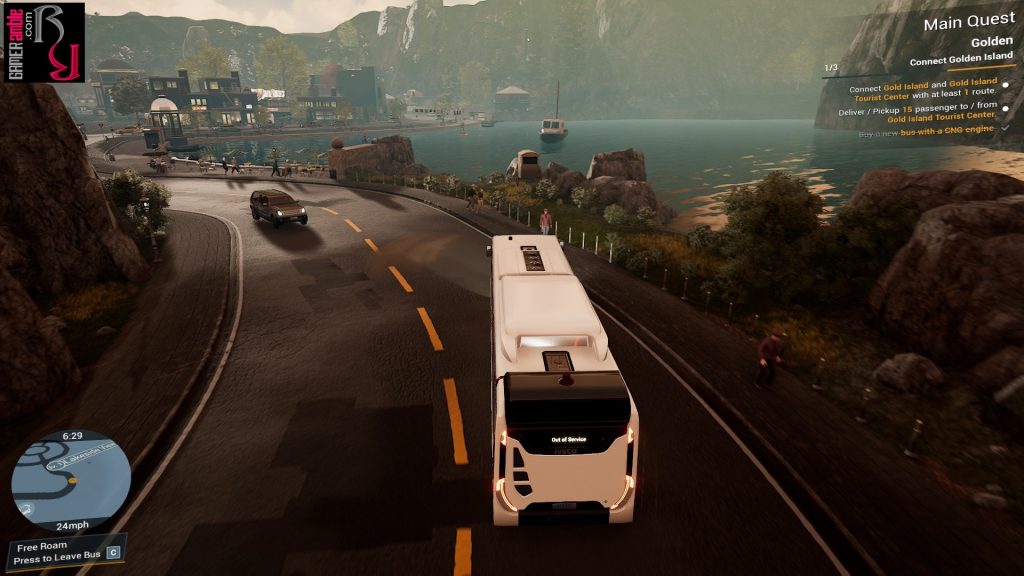
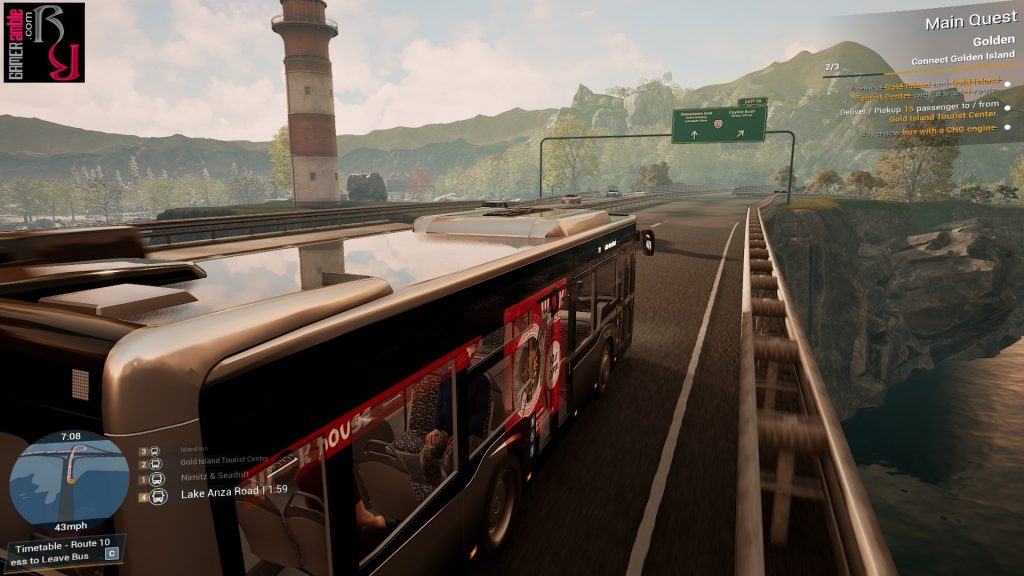
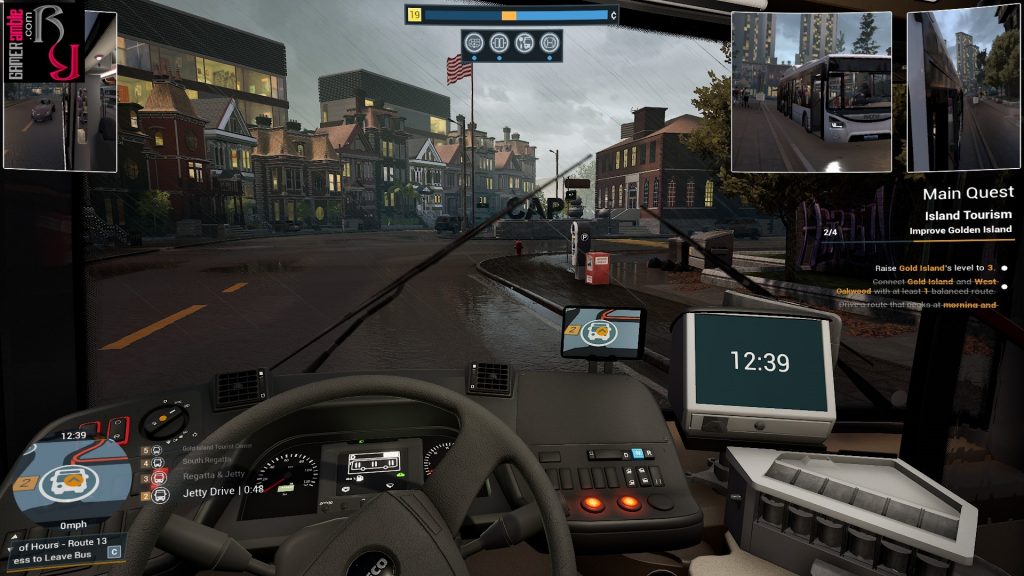
Visually, the game is pretty impressive, and Angel Shores is not only massive but also has plenty of variety between its different districts. After spending hours driving through the city, we still managed to spot new and interesting areas. Unfortunately, there are still some rough edges, too, with character animations, in particular, needing more polish. Also, while the city looks great from a distance, plenty of very low-res textures stand out when players venture too close to certain buildings. Usually, this wouldn’t have been an issue if players were confined to their buses, but the free-roaming aspect that invites players to scour the open-world city for collectibles makes it very obvious. This aspect of the game is entirely optional, though, and the maps are still much better to traverse by bus than on foot.
While Bus Simulator 21 features plenty of new dialog, it is, unfortunately, the type of game that can keep players busy for hours, which means, eventually, a lot of it will be repeated. The bus and city sounds are realistic, though, and it is also the perfect game to play while listening to your own music or a podcast. We found that a steering wheel is the most immersive way to play, but using a keyboard and mouse works surprisingly well, especially with the third-person view.
Along with the brand-new US map, Bus Simulator 21 also sees the return of Seaside Valley from Bus Simulator 18. Not only has it been revamped, but it also includes its map extension. This is great for players who enjoyed the map in the previous game but want to take advantage of the improvements and updates Bus Simulator 21 brings to the table. Regarding gameplay Bus, Simulator 21 sticks closely to the formula established by its predecessor. However, the addition of brand-new buses does add some excitement, especially when trying to traverse narrow streets or traffic jams in a massive double-decker or articulated bus. After this review was published, the developers also released additional updates, such as a modding kit enabling players to create maps, buses, skins, and decals.
The developers have stated that the game features new AI for pedestrians and traffic, but we have noticed that both are still prone to doing stupid things. This was rectified in subsequent updates, making the pedestrians behave much more realistically. The new dynamic weather and day-night cycle are welcome additions that make for a more immersive experience. However, for the rest, it’s business as usual as players try to stick to the rules of the road while keeping to a schedule. The process of getting to a bus stop on time, remembering to kneel the bus and open the doors and extend the handicap ramp if needed, and so on also quickly becomes second nature. Fines for speeding, running red lights, not using turn signals correctly, and hitting objects are also still very costly, so players must pay attention to their surroundings while driving.
Overall, Bus Simulator 21 improves many things compared to its predecessor, but upon initial release, it could still have benefited from some polish and optimization. Thankfully, the developers paid attention to this and released plenty of hotfixes and updates to the game. Since this review was published, the game has received some DLC, like the IVECO Bus Pack, VDL Bus and Coach Pack, free skins, and more. The most impressive is the “Next Stop” update, which added a brand-new career mode to the game, a free map extension with numerous new tasks and crossplay for PC players. The career mode differs from the campaign mode as everything players need is unlocked from the start, with the only thing limiting players being money. The free map extension added three brand new city districts and featured a mountainous nature park with idyllic lakes, forests, and villages. In terms of paid DLC, the game has received an official tram extension pack with new story missions and six playable trams, a school bus DLC, and more.
Like Bus Simulator 18, we were quickly hooked by Bus Simulator 21. Despite the similarities, the game has enough new features and improvements to keep players invested. It’s still a very niche title, but even if you are not a simulation fan, it has enough settings to tweak to make it a fun experience for anyone.
System Requirements
- Requires a 64-bit processor and operating system
- OS: Windows 10 64-Bit
- Processor: Intel Core i3-2120 / AMD Phenom II X4 830 or equivalent
- Memory: 8 GB RAM
- Graphics: NVIDIA GeForce GTX 760 (2GB VRAM) / AMD Radeon R9 280 (2GB VRAM) or higher
- DirectX: Version 12
- Network: Broadband Internet connection
- Storage: 18 GB available space
- Requires a 64-bit processor and operating system
- OS: Windows 10 64-Bit
- Processor: Intel Core i5-4440 / AMD FC-8140 or equivalent
- Memory: 8 GB RAM
- Graphics: NVIDIA GeForce GTX 1070 (8GB VRAM) / AMD Radeon RX Vega 56 (8GB VRAM) or higher
- DirectX: Version 12
- Network: Broadband Internet connection
- Storage: 18 GB available space


