

Furi
Developer: The Game Bakers | Publisher: The Game Bakers | Release Date: 2016 | Genre: Action | Website: Official Website | Purchase: Steam
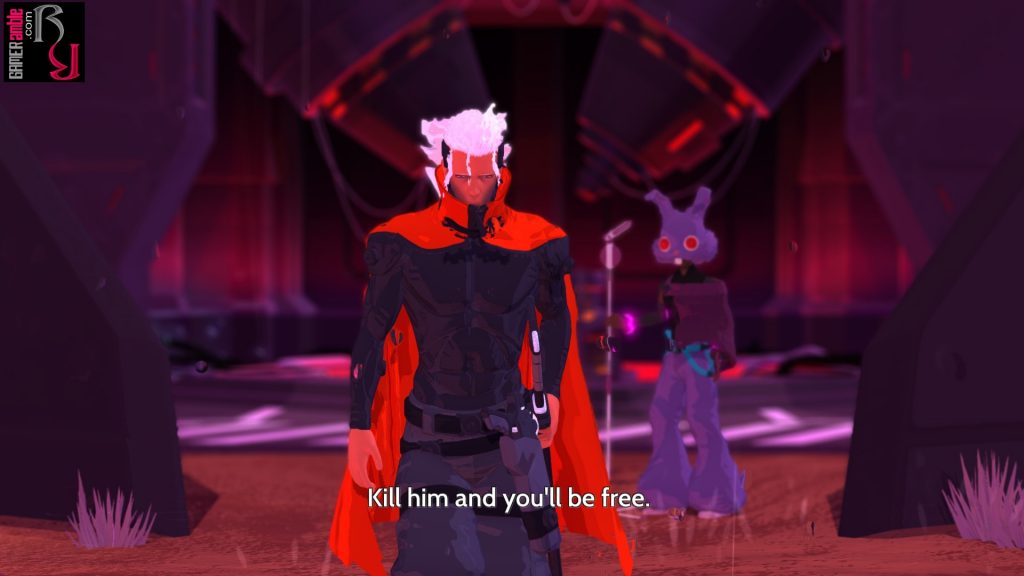
Within seconds of starting Furi by The Game Bakers, it becomes clear that the protagonist is not exactly a likable person. Not only is he a captive in some sort of high-tech prison, but his jailer seems to be relishing the prospect of torturing the Stranger for all eternity. Fortunately for the Stranger, and unfortunately for everyone in his way, freedom comes courtesy of a man dressed up as a giant bunny. Your mysterious liberator appears to have some grudges of his own against the prison wardens and accompanies the Stranger on his quest to destroy anyone in the way of his freedom.
Furi is basically a sequence of fast-paced boss fights interspersed with slow, walking sections. There are ten opponents to face in the game, and they all fight as if their lives depend on ending yours. While the bunny man is happy to ramble away as you walk between one boss fights, he makes himself scarce during the actual battles, so victory is entirely up to you. What makes Furi unique is that the character who leaves his cell at the start of the game will be exactly the same one exiting the prison after the final battle. No new skills will be gained in between, no abilities upgraded, and weapons added or enhanced. This is a rather sobering realization, especially when the very first boss, “The Chain,” can wipe the floor with you if you are not careful. Furi is not the type of game where you can go grind some levels or purchase better gear and then come back to try again. Instead, the bosses are the only opponents you will face in the game, and your own skills are the only way to beat them. This also means some players will relish the challenge while others will quit the game in frustration.
The bosses in Furi, which Afro-Samurai creator Takashi Okazaki designed, are a varied bunch with access to many ways to end your life. On the other hand, the Stranger can perform a melee attack with his sword, a ranged attack with his pistol, and parry as well as dodge. All of these abilities, apart from parrying, can be boosted by holding down the corresponding button, but that’s it. Each boss also has multiple phases during battle, and their attacks become increasingly desperate (not to mention powerful) as you begin to wear them down. What is even worse is that they get a full health bar for each phase of the fight, and having to deplete these up to seven times while keeping a careful eye on your own can be stressful, to say the least. Furi doesn’t coddle players either, so while you get three “lives,” the boss will also replenish their health if you lose a life. Lose all three lives, though, and you lose the battle, which means restarting the whole ordeal from scratch. It can be pretty soul-crushing to get to the final phase of a long fight, only to succumb to a barrage of bullets or a flurry of laser beams. Having to redo all the previous phases just to get back to the point where you died can be a rage-inducing experience, especially if you get caught off-guard again by another unexpected attack.

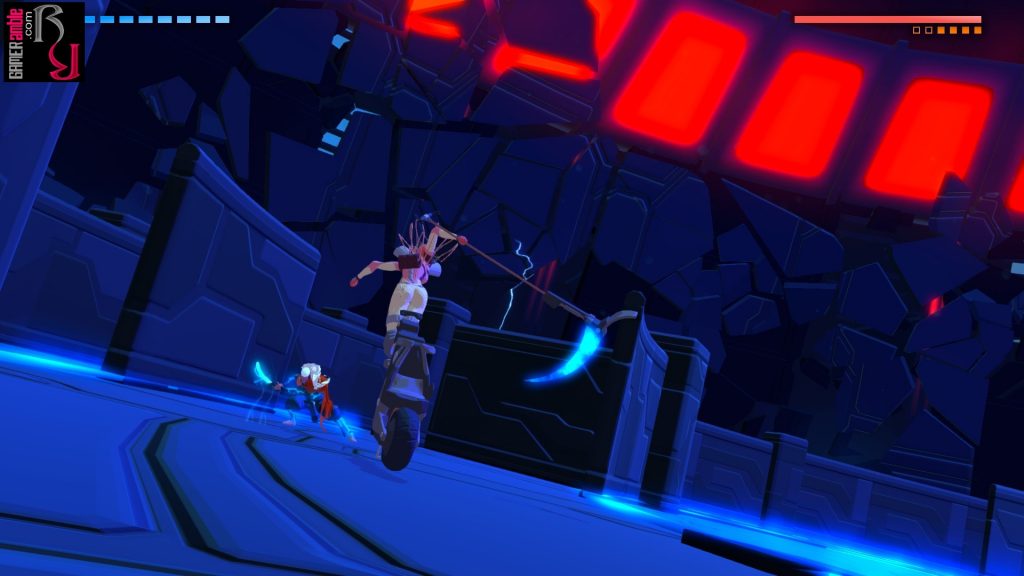

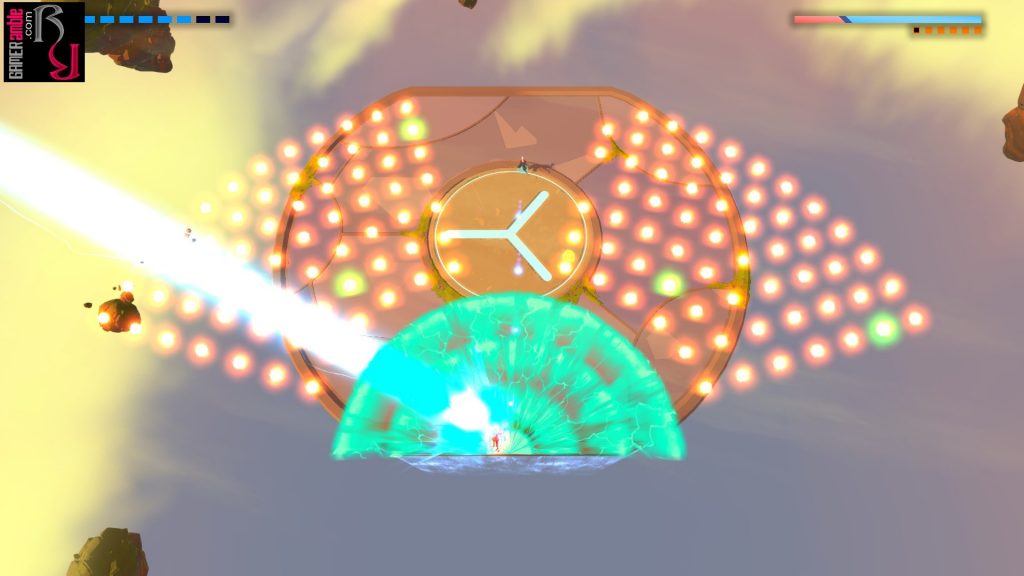

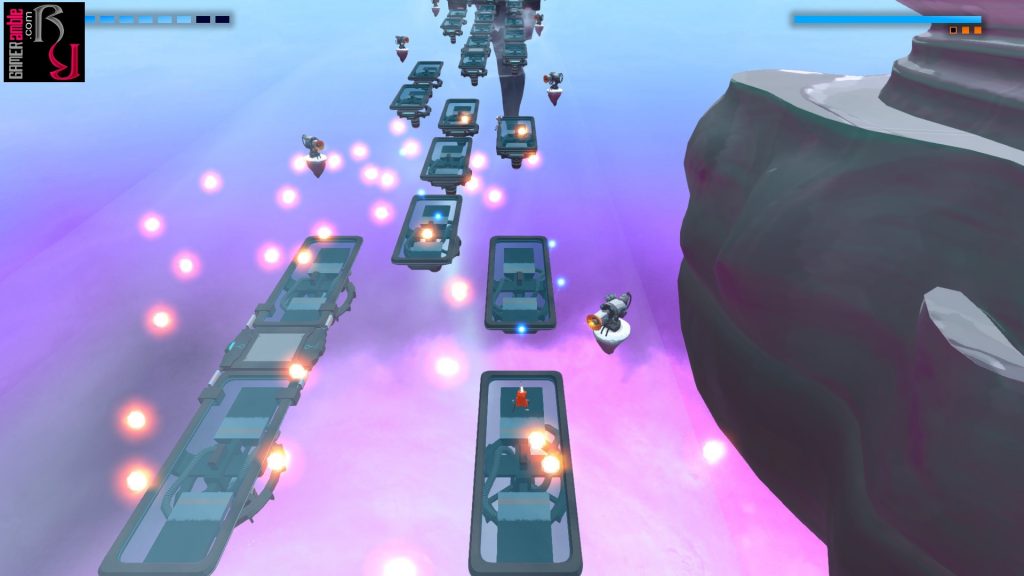

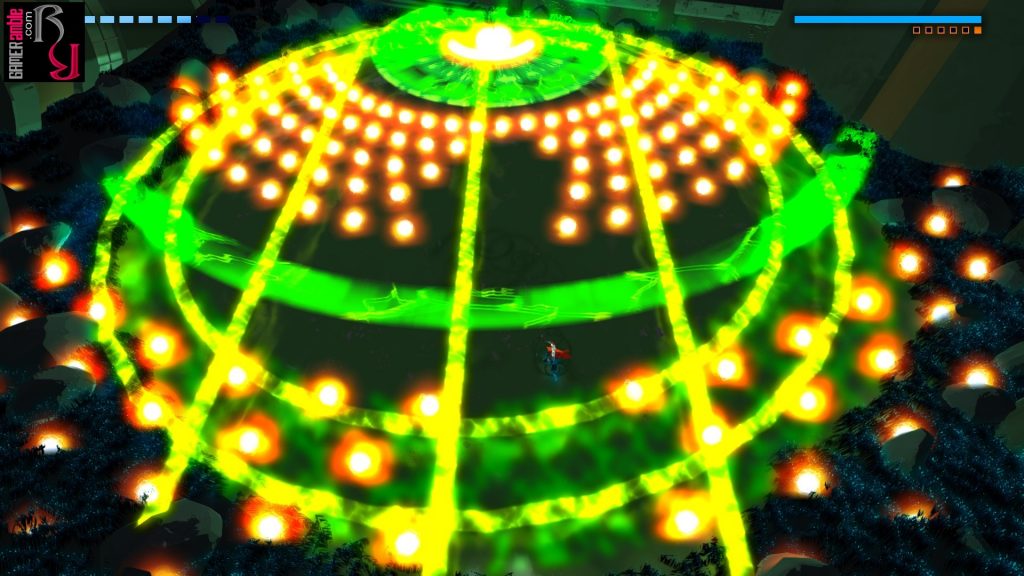
One thing is for sure, Furi is not a game aimed at button mashers. The boss fights tend to be carefully scripted affairs where memorizing patterns will get you much further than flailing away at the attack button. We found that playing defensively works the best, mainly as successful parries replenish some of your health. Furi is difficult but not completely unfair, as the game does give you a split-second warning before each attack by the bosses. Parrying strikes is definitely a skill that needs to be honed, but it is very satisfying when pulled off successfully. Unfortunately, our biggest bane in the game ended up being the dodge button, which causes the Stranger to teleport a short distance. Mastering this move is essential for evading the massive amounts of projectiles being thrown at you. However, too many times, we found ourselves teleporting straight into another projectile or messing up the timing of the dodge and getting hit anyway. The Stranger only performs the dodge after the dodge button is released, and holding it down longer increases the distance of the move. It is something that gave us trouble right to the very end, but other players might find it more intuitive than we did.
Furi can be played with a keyboard and mouse, but we recommend taking the developers’ advice and using a controller instead. The combination of melee fighting and twin-stick shooter mechanics is just a little too cumbersome on anything except a controller. Apart from the dodging, we found everything else very responsive, and switching between melee and ranged attacks feels seamless.
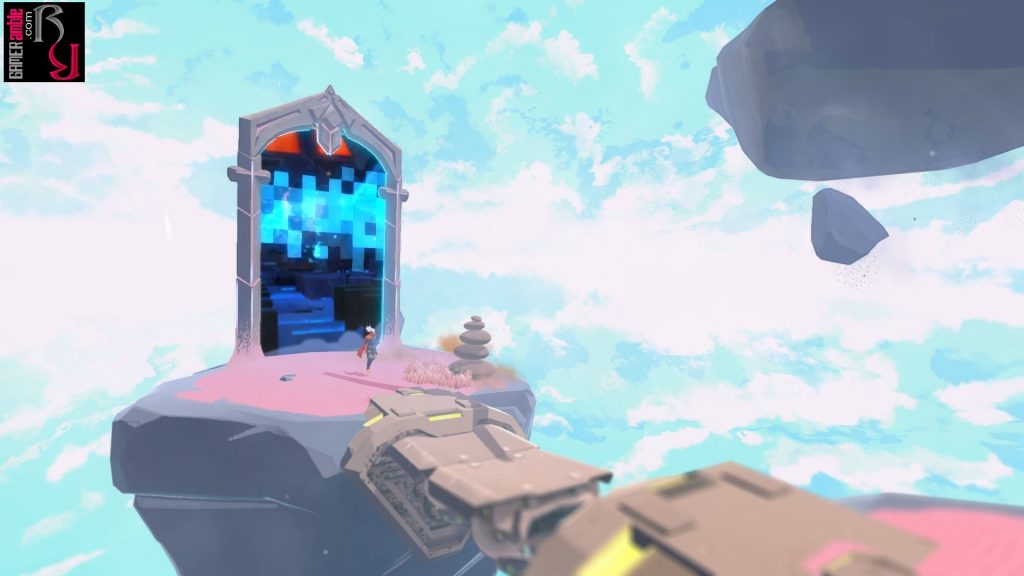
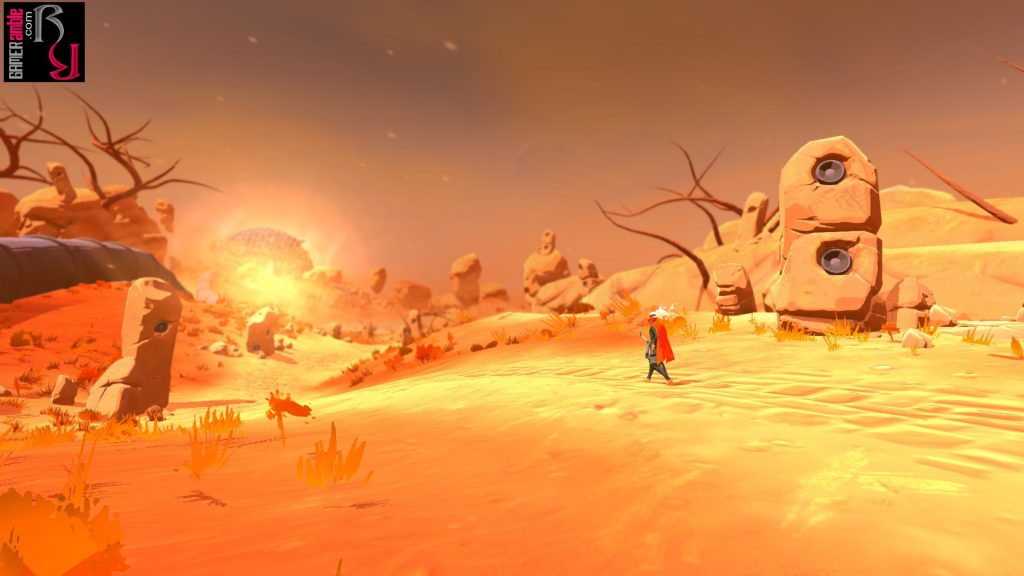
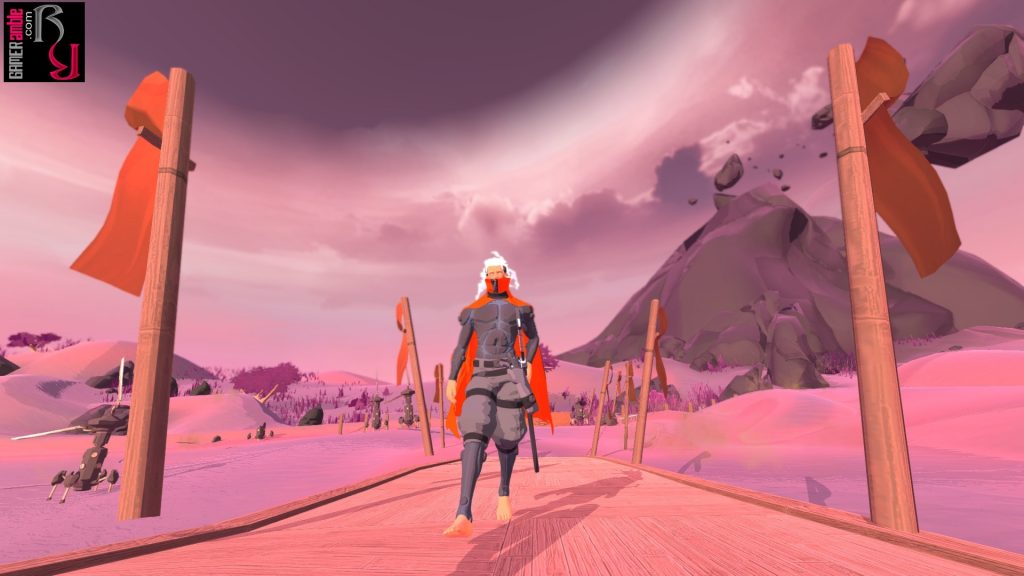
Visually, Furi is an interesting-looking game that fully embraces its weirdness. The retro sci-fi theme is awash with neon colors, and each boss has their own themed island floating in the skies above the planet you are trying to reach. The cel-shaded visuals are not hyper-detailed but make for varied and distinctive opponents. Players do not have direct control over the camera, but it does a good job of keeping up with the action as phases switch between wide-open arenas and close-range combat. The walking sections between fights also look pretty, but there’s nothing to do here except walk along a linear path while listening to the bunny man. Thankfully, the developers have wisely included the option to let your character walk on his own while you catch a breather in preparation for the next fight. One area where Furi does not disappoint is the synth-heavy soundtrack that features contributions from Carpenter Brut, Waveshaper, Lorn, and The Toxic Avenger. The standard of voice acting is pretty high, too, and the bunny man and the bosses more than makeup for the Stranger’s silence with their speeches.
Even though we enjoyed Furi, it is not a game we can recommend to everyone. It is a very niche title that will frustrate most players who are used to more forgiving games. The developers have tried to broaden its appeal with an easier difficulty setting, but it strips the game of all challenge, which isn’t ideal either. Playing on the default difficulty is the only way to earn Achievements, and for the truly dedicated, there’s an even more challenging difficulty as well as speedrun mode to unlock. The inclusion of three different endings adds some replay value, too, but subsequent playthroughs caused us more dread than anticipation as we knew what was waiting for us down the line.
Overall, Furi is going to be a love-it-or-hate-it game for many players. Even after mastering the techniques in the game, we were still regularly pushed beyond our limits thanks to difficulty spikes that can happen when you least expect them. In addition, the story doesn’t make a whole lot of sense until the very end and isn’t quite as deep as it first appears. Nevertheless, players who relish a challenge and aren’t afraid of some repetition will find a worthy contender in Furi. It is the type of game you need to approach with the right mindset, but once everything clicks, you are in for a wild ride.
System Requirements
- OS: Windows 7, 8, 10
- Processor: Intel Core i3 / AMD Phenom II X4
- Memory: 4 GB RAM
- Graphics: GeForce GTX 650 / AMD R7 250 (1GB VRAM min) (for 720p 60FPS)
- Storage: 5 GB available space
- Additional Notes: Controller


Tarryn Lewis February 23, 2021
The Jailers the key
So says the voice
They locked me up there
That was their choice
Block dash parry
They’re within my swords reach
I will kill them all
A fatal lesson I shall teach
GAMERamble February 24, 2021
Phase one – The fight has just begun!
Phase two – Hmm that boss attack is new
Phase three – Uhm maybe I should try and flee?
Phase four – Bombs, lasers, bullets? Please no more!
Phase five – Don’t think I’m getting out of this alive
Phase six – Oh look even more new tricks
Phase seven – The Stranger has gone to heaven