

Kotodama: The 7 Mysteries of Fujisawa
Developer: Art Co. Ltd, PQube Limited | Publisher: PQube Limited | Release Date: 2019 | Genre: Visual Novel / Adventure / Puzzle | Website: Official Website | Purchase: Steam
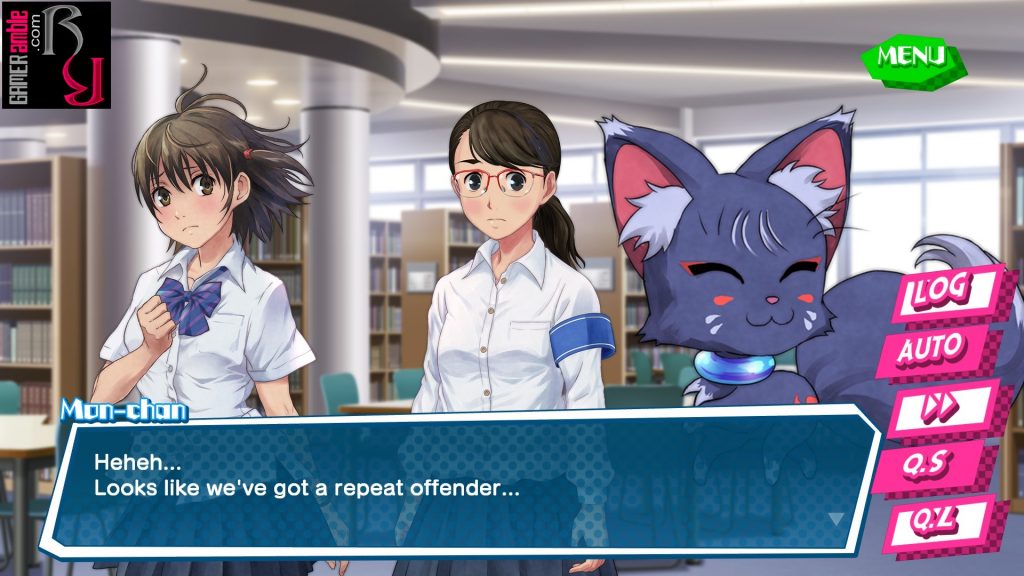
Kotodama invites players to step into the Fujisawa Academy as a newly arrived transfer student. At first glance, it appears to be like every other learning institution with friendly students and helpful teachers, but the reality is a little more mysterious. Fortunately, you are not an ordinary transfer student either, but can wield the power of “Kotodama” thanks to a pact that you have made with a demon fox named Mon-chan. This special power enables you to extract the truth from people who are trying to hide it, which is a skill that will come in very useful at a school where everybody seem to have skeletons in their closet.
Kotodama: The 7 Mysteries of Fujisawa is a brand new game from PQube, but it differs from other titles they have published. This is because they have stepped out of their comfort zone as a publisher and actually became involved with producing the game as well. The result is a visual novel with a great story that mixes in some nice puzzle elements as well as those cute and ecchi elements that has endeared PQube to fans.
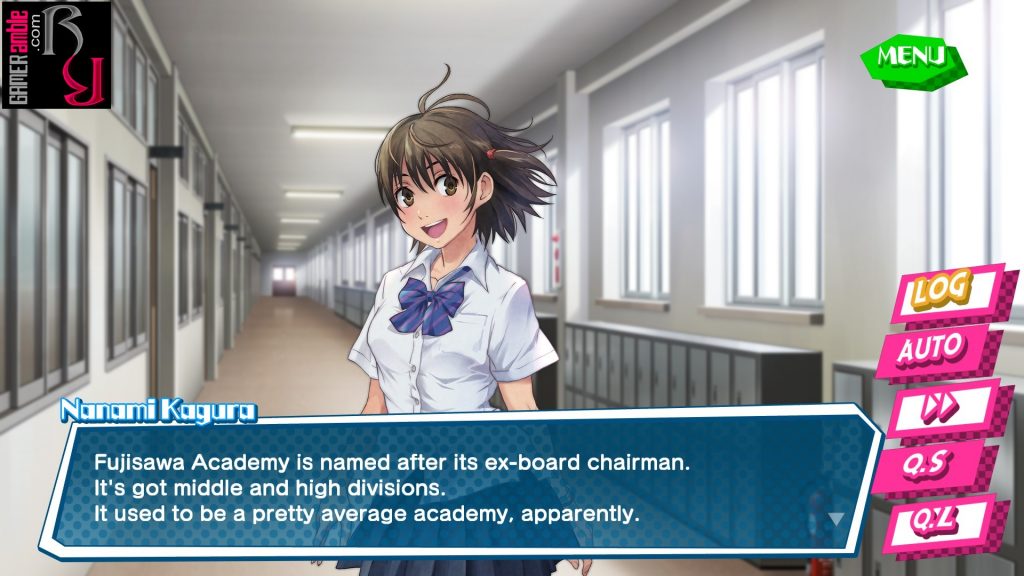
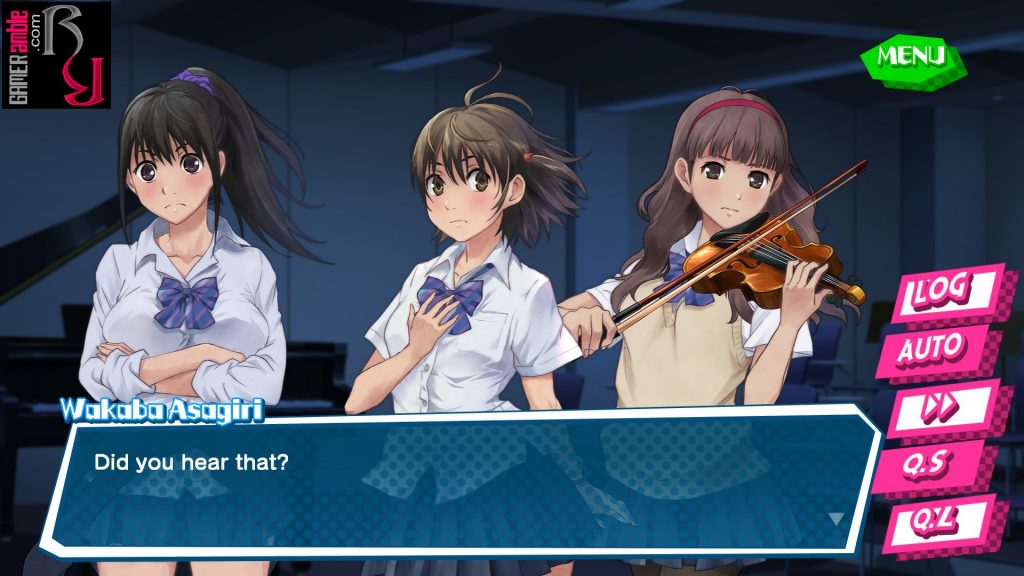
Although high school visual novels have been done to death before, Kotodama managed to hook us right from the start with its interesting story. The game opens with the protagonist receiving a tour of the academy by the energetic Nanimi Kagura. She’s a member of the Occult Research Club and quickly manage to coerce your character in joining as well. The only other person in the club is the girl who runs it, named Wakaba, and their sole purpose seems to be trying to solve the seven mysteries of Jujisawa. These mysteries range from the silly, such as a the fact that nobody appears to have ever met the principal of the academy, to the tragic, such as the death of a student who committed suicide by jumping off the roof. Each of these mysteries receives their own chapter in the game, but uncovering the truth is not as simple as it might look.
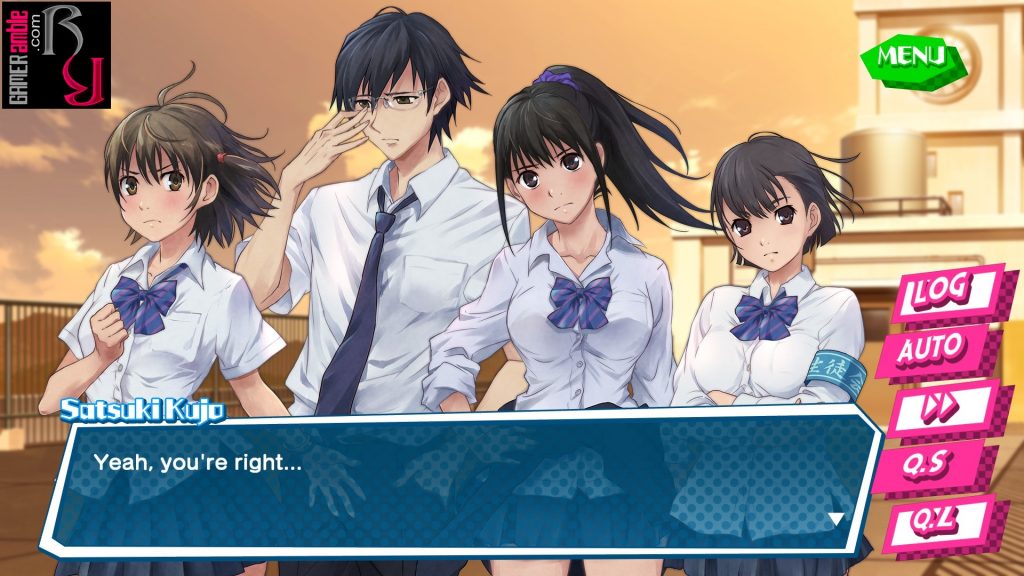
The entire game takes place at Fujisawa Academy and some of the surrounding areas, such as the forest behind the school, but there is rarely a dull moment as you go about trying to solve the mysteries. This is mostly thanks to the cast of interesting characters that you will run into at the various locations. From Nanami’s arch nemesis, Yukino Tsubaka, to the animal loving Honoka Ichinose and the bossy Chinatsu Hachisuka, there is definitely not a lack of people to interact with. Even the track and field ace of the academy, Shuji Toyama, appear to be hiding a few secrets, which is something that he has in common with everyone you meet at the school.


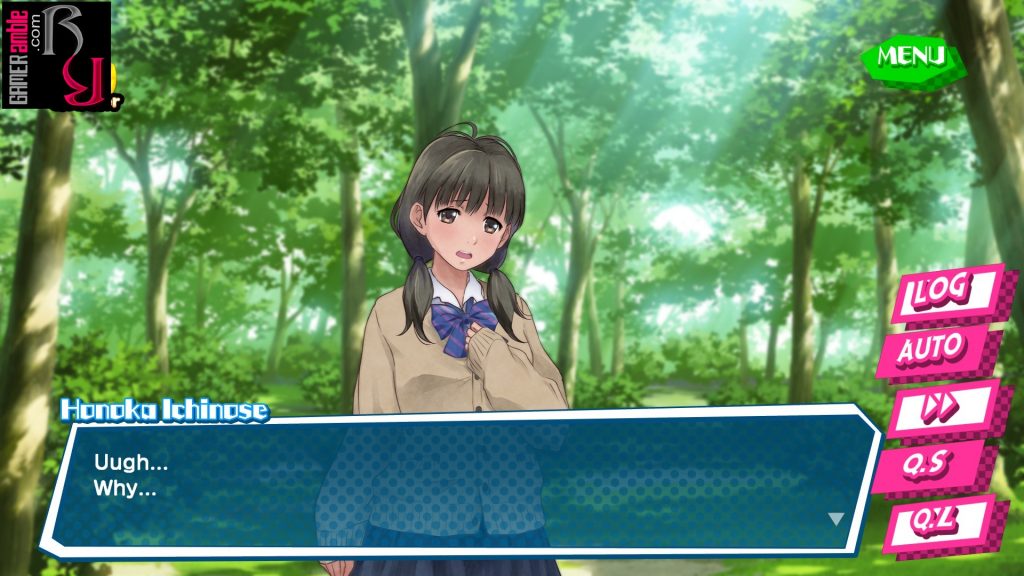
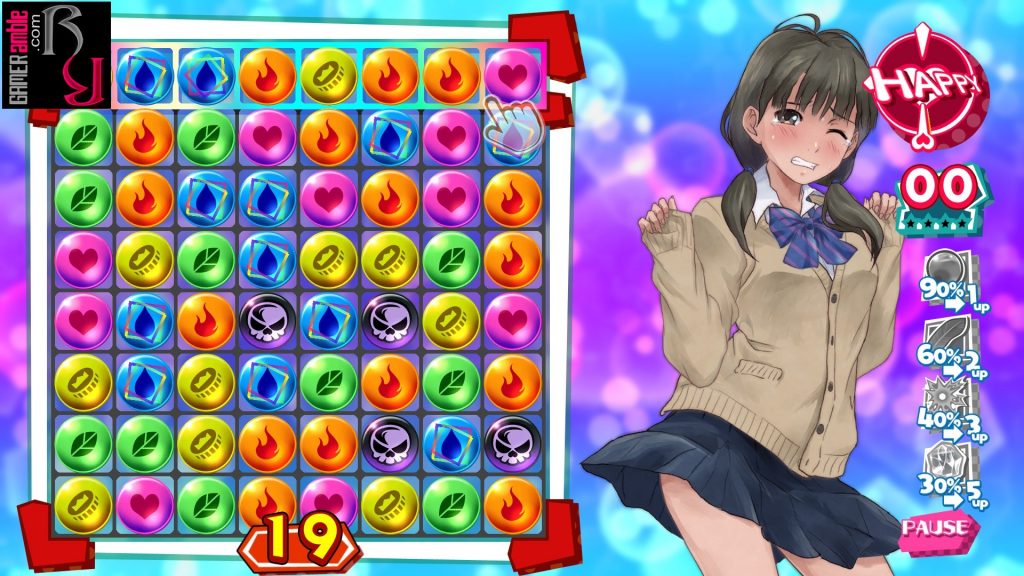
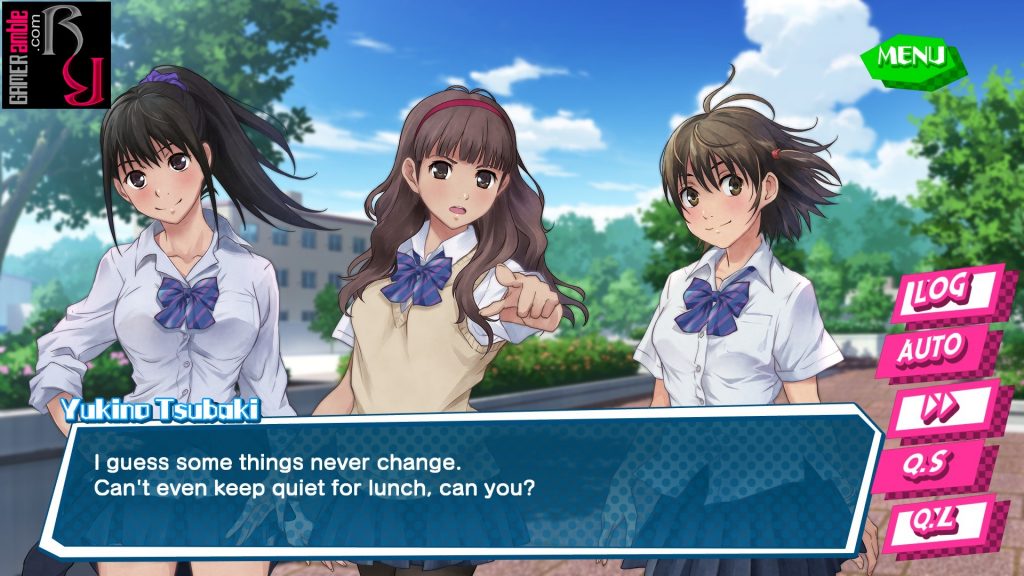
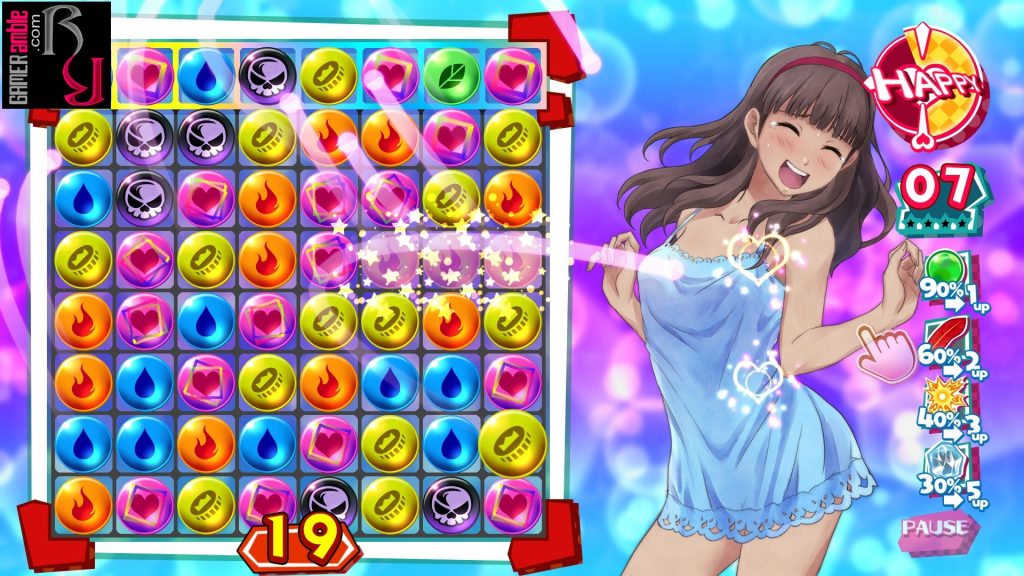


This is where your special power comes in very handy as every now and then the visual novel scenes are broken up by a match 3 mini-game. The purpose of this mini-game is to match three or more elements of the same color, which in turn fills a “Happy” gauge. Each section of the gauge that you manage to fill strips a layer of clothes off your opponent and when they lose everything they will also blurt out the truth. Of course, this stripping of clothes is more something that the protagonist envisions to make the task a little easier, so you are not actually leaving everyone you encounter at the academy standing around in the buff. Hentei fans shouldn’t get their hopes up either as while the game is definitely a little ecchi, there is no outright nudity involved. After stripping characters down to their underwear, the final blow simply shows a close-up of their face and upper chest, but nothing to risqué. It’s not just the ladies that get stripped either as one of the male students at school is also involved in its mysteries.
The idea of the mini-game is to strip all the clothes off your opponent, but this has to be done before you run out of moves. Stringing together combos can grant you power-ups, such as dynamite for blowing up entire rows and columns, or a chains that prevent your moves from decreasing while active. The elements on the board are tied to different attributes, such as fire, tears, greed, peace, and love, with certain characters being more susceptible to certain attributes than others. Matching these will net you challenge points, which can be activated to use slime, feathers, shock, ice on your opponent. If it goes well you gain additional moves, but it can also backfire and activate their hindrance attacks, which makes things harder for you. The other neat thing about this mini-game is that all the elements on the board can be leveled up by finding words associated with their attributes during the visual novel segments. The game keeps track of the ones that you have found in each chapter, but discovering all of them might require more than one playthrough.
We don’t want to give away anything about the story as it is genuinely interesting and features some nice twists and turns that we did not see coming. However, be prepared to play through it more than once as it is impossible to get the “good” ending on your first try. There is a message skip feature, so you don’t have to read text that you have already read before, but it is a good idea to be thorough as it is very easy to overlook something if you are not careful. In fact, Kotodama is one of the few visual novels in recent times that prompted us to bust out a notepad and take notes while playing to try and figure out what we could be missing. The game does help by showing key choices that you have already made in a different color, but some trial and error is still involved.You definitely don’t want to overlook “Quacker” which is the in-game version of Twitter, to learn more information about what is happening at the academy. It can be harsh having to restart from scratch if you miss some vital clues or information along the way, but the game does keep track of what you have already learned, which makes each attempt a little easier. Your character and their little demon fox companion are also aware that they are redoing things, so you can expect them to comment on this fact.
From a technical standpoint, there is not much that we can fault about Kotodama. The visuals are bright, vibrant and all the character designs look great. There are also plenty of backgrounds, from the hallway and library, to the music room, cafeteria, courtyard, sports-field and more. There are no animations for the characters and some more CGs would have been nice, but these are issues that are common to visual novels in general. The soundtrack is catchy and the game also features full Japanese voice acting for all of the characters, apart from the silent protagonist. All the usual options, such as the ability to adjust message speed, and adjusting individual character voice volume levels are also present. The game doesn’t allow you to change the resolution, only choose between full screen or windowed, but looks good on a HD display.
One thing is for sure, Kotodama is not a visual novel that you will want to rush through. You need to take your time, pay attention to what the characters are saying and pick your options carefully if you want to avoid seeing the credits before uncovering the true story. The story is definitely very interesting and the puzzle mini-game isn’t bad either. There is even a practice mode for the mini-game where you can hone your skills and unlock some alternative sets of underwear for the characters. The fact that it is possible to fail and start over from scratch does mean that Kotodama can become repetitive, but the story is so good that you will want to stick with it until you have uncovered all of its secrets. Overall, this is a great first effort from PQube and hopefully not their last.
System Requirements
- Requires a 64-bit processor and operating system
- OS: Windows7/8.1/10
- Processor: Intel(R) Core(TM) i3-2120
- Memory: 4 GB RAM
- Graphics: Geforce VRAM 1GB
- DirectX: Version 11
- Storage: 2 GB available space
- Sound Card: DirectSound
- Requires a 64-bit processor and operating system
- OS: Windows7/8.1/10
- Processor: Intel(R) Core(TM) i5-5440
- Memory: 8 GB RAM
- Graphics: Geforce VRAM 1GB
- DirectX: Version 11
- Storage: 2 GB available space
- Sound Card: DirectSound


