

Pinball FX3 – Williams™ Pinball: Volume 5
Developer: Zen Studios | Publisher: Zen Studios | Release Date: 2019 | Genre: Pinball / Simulation / DLC | Website: Official Website | Purchase: Steam
Pinball FX3 – Williams™ Pinball: Volume 5 follows hot on the heels of the Pinball FX3 – Williams™ Pinball: Universal Monsters Pack and once again Zen Studios delivers with a great selection of tables. For this fifth volume, they have included both Tales of the Arabian Nights and Cirqus Voltaire along with No Good Gofers. All three of these tables date back to the mid-nineties and pinball fans are in for a treat with the digital recreations. As with all the other Williams and Bally tables released by Zen Studios all three tables have been recreated in their classic original form as well as in remastered versions. The latter has features that are only possible in digital pinball, such as animated toys and flashier effects. Let’s take a look at the three tables on offer in the order that they were originally released.
Tales of the Arabian Nights
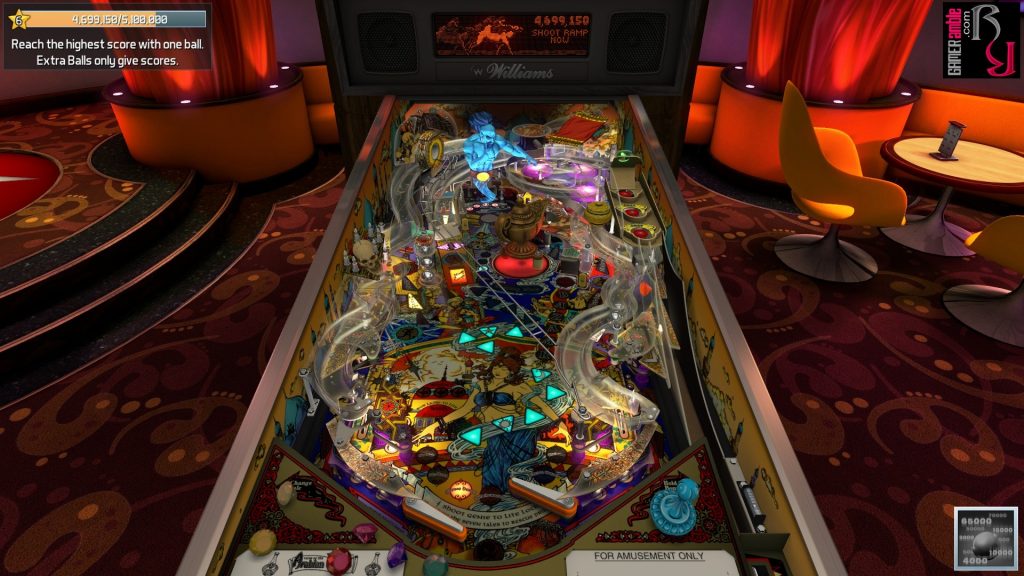
First up is Tales of the Arabian Nights, which was released in 1996 and is based on the collection of Middle Eastern folk tales known as One Thousand and One Nights. It is one of two tables in this pack that was designed by John Popadiuk and while this is not the first time it has been available in digital form, it still plays great. We spent many hours with TotAN back when it was still a free licensed table of The Pinball Arcade, but this Pinball FX3 version still managed to suck is in with its great theme and fun design.
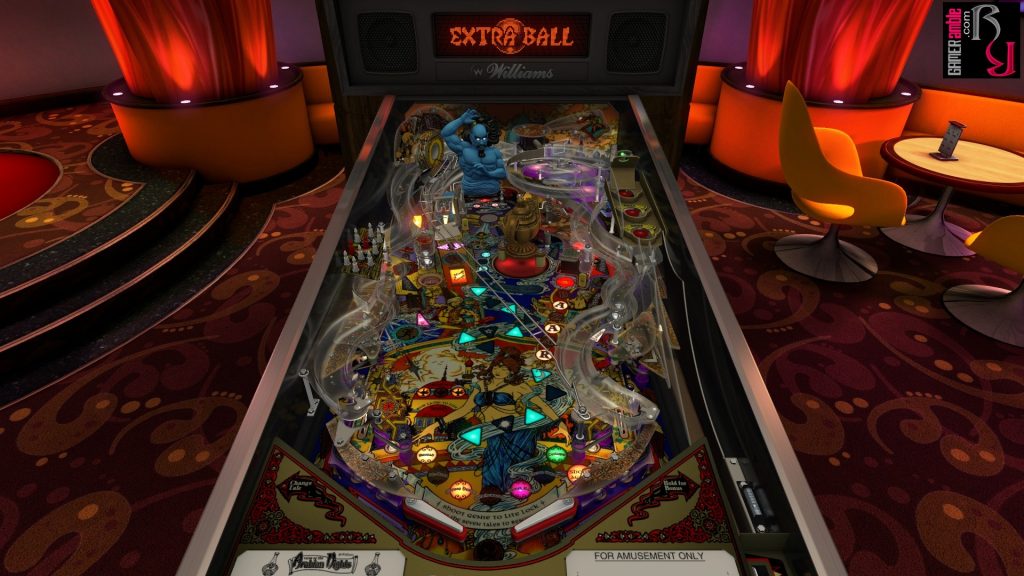
TotAN bases its table goals around seven tales and completing them rewards you with the “Seven Jewels of the Arabian Nights.” Your ultimate goal is to free the Princess who is being held captive inside a bottle by an evil Genie. The standout features of this table are obviously the giant blue Genie as well as the magic lamp that can be hit to spin it around. These elements are impressive enough in the classic version of the game, but playing in remastered mode takes everything to a whole new level. Not only is the Genie more menacing, but features such as the pinball turning into a fireball for certain modes are quite neat.
TotAN is quite a newcomer-friendly table as you don’t even have to complete all the tales to collect the jewels needed for the wizard mode. Instead, players can use the Bazaar scoop as a shortcut for the jewels. Completing the tales is fun though, and none of them are time-limited. In fact, they carry over from ball to ball, so this is really a nice table to hone your skills and reach the wizard mode.


Cirqus Voltaire
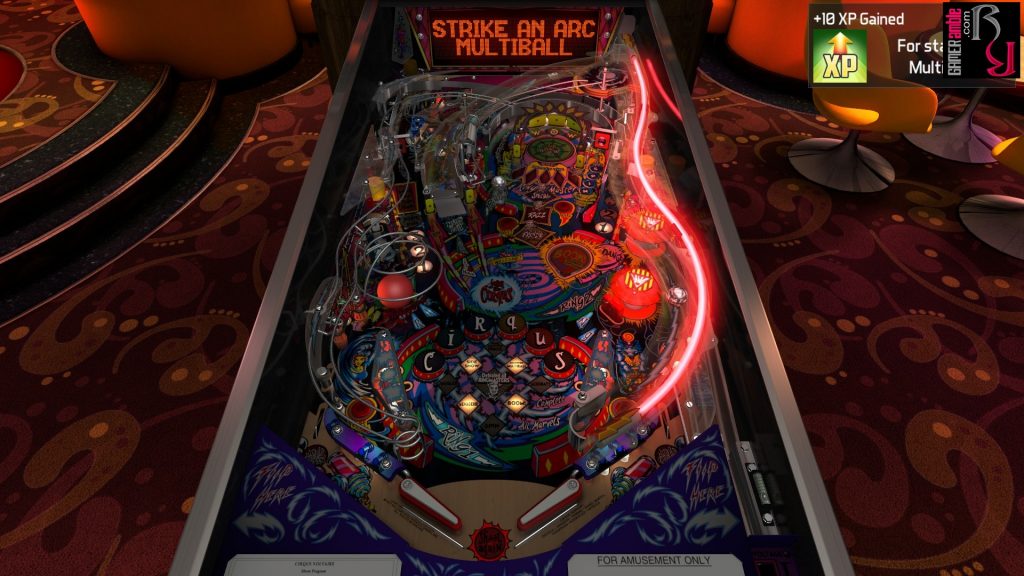
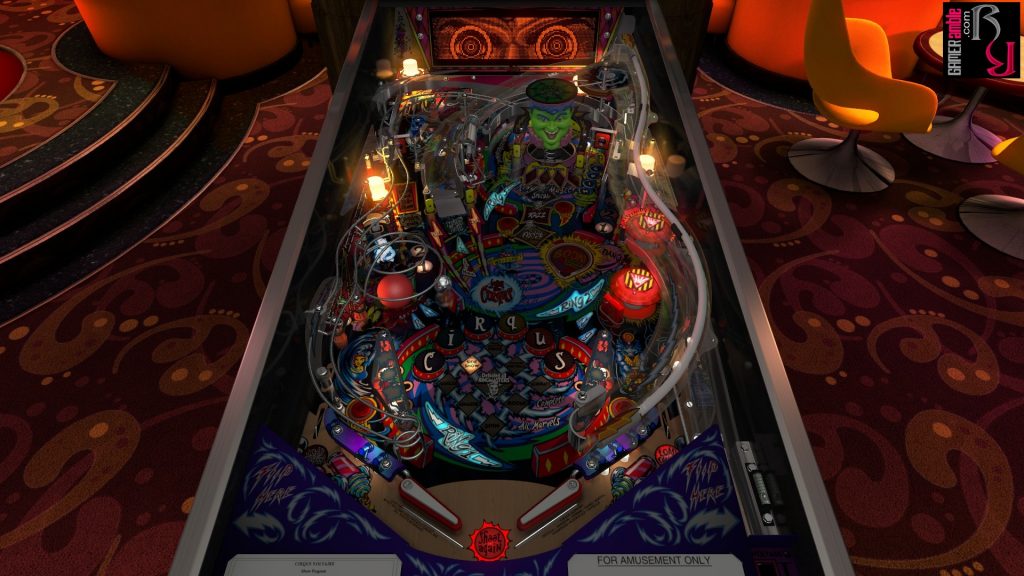
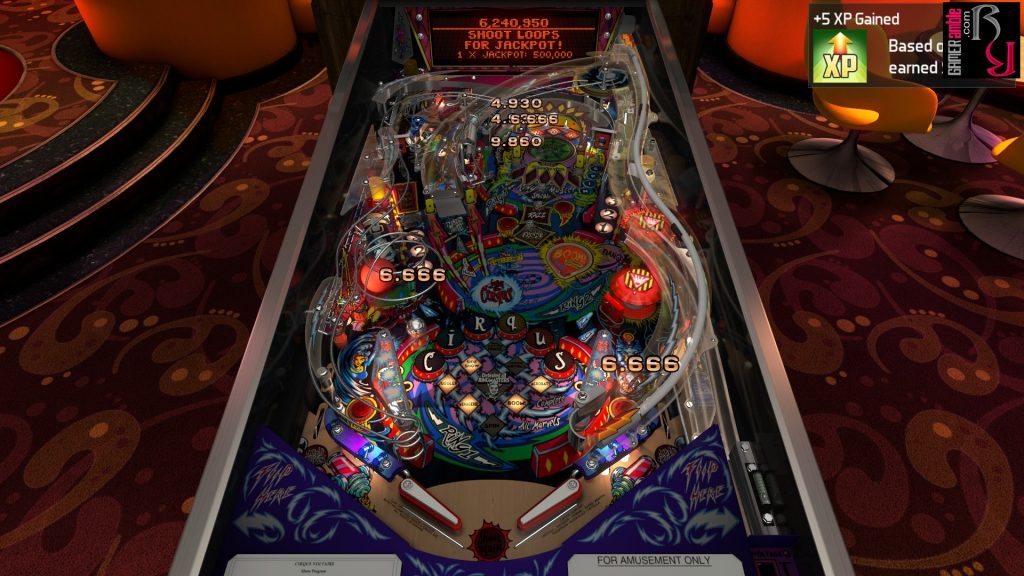
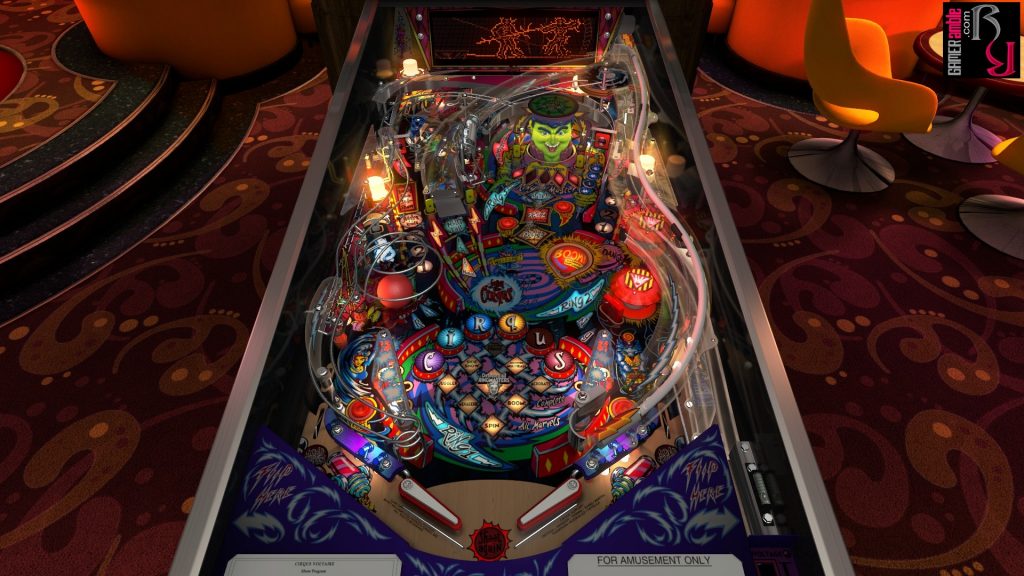
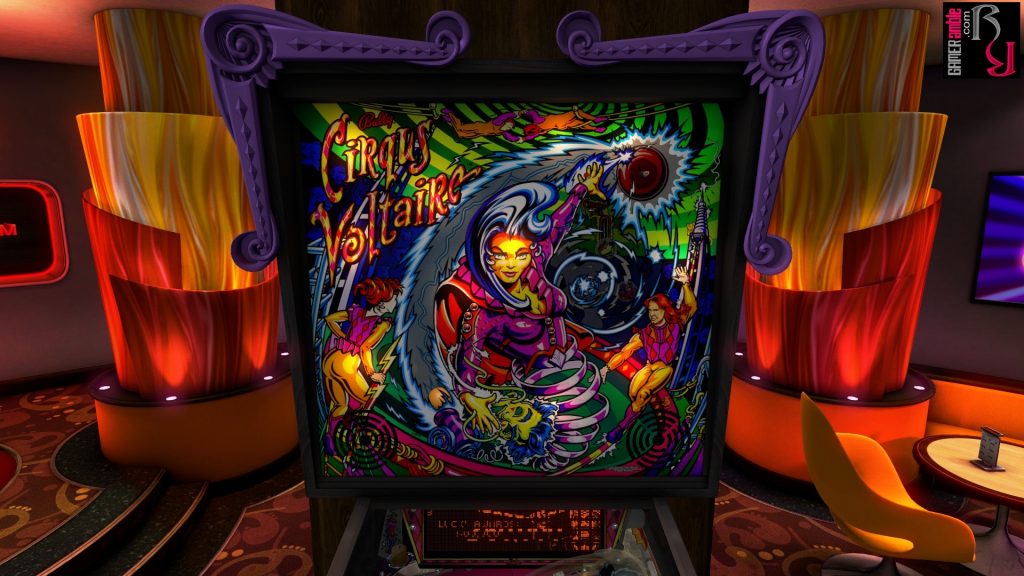
Cirqus Voltaire is another table designed by John Popadiuk and was released in 1997. As much as we love Tales of the Arabian Nights, this table comes very close to being even more addictive to play. The table is themed around a circus with the ultimate goal being to join them, provided you can complete the nine necessary marvels.
Cirqus Voltaire has a ton of multiball modes, which makes it a lot of fun to play if you enjoy the chaos of dealing with a bunch of different balls at once. It’s also not as complicated as it initially looks and completing the nine marvels to reach the wizard mode should be within reach of most players. The most impressive feature of the original table is the Ringmaster with a large toy of his head that pops up out of the playing field for you to try and hit. This looks even better in the remastered version and the ringmaster also appears as an animated 3D character dancing around and taunting you from the sidelines. The original pinball machine certainly caught the eye with a bright neon light that runs along the right-hand ramp and this has been recreated in the digital version. Players can also choose the color of this light before play begins, which is a neat touch.
One thing worth mentioning about Cirqus Voltaire is that it is one of the few tables where the dot-matrix display is actually right in the cabinet instead of on the backbox. This was apparently done in an effort to prevent players from being distracted during gameplay but does make things a bit awkward for players who make use of cabinet mode and use the backglass for the DMD.
No Good Gofers
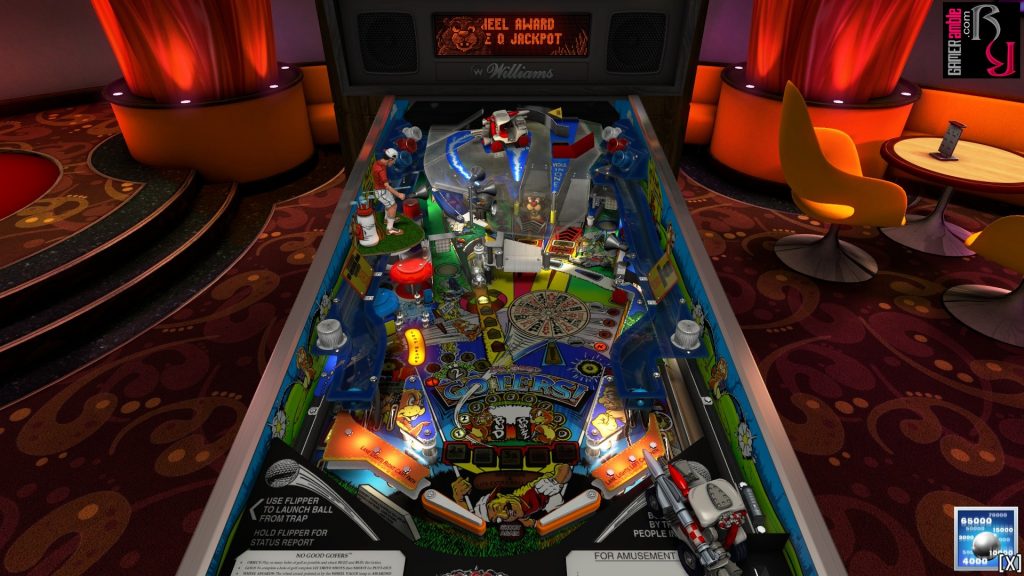
Last, but certainly not the least, is No Good Gofers, which was originally released late in 1997. It was the final design that Pat Lawlor, who also designed the hugely successful The Addams Family table, did for Williams before their closing. NGG uses a golf theme, with players pitted against two gophers named Buzz and Bud. These two critters don’t take kindly to golfers invading their turf and will regularly taunt players. Players will need to complete the “9th hole” to reach the wizard mode for this table, but it’s not as easy as it looks.
Along with Buzz and Budd, who frequently pop up out of the table, No Good Gophers also has a neat “slam-ramp” feature that can be used for a “hole-in-one” shot that is truly impressive, but very challenging. Instead of creating animated versions of Buzz and Budd for the remastered table, Zen Studios instead included a golfer character who reacts very angrily to the shenanigans of the gophers. Watching him bend his golf club and fling it out of the table when the ball drains is particularly amusing, especially when it bounces back and hits him in the face. Other 3D animated elements for this table range from piles of golf balls falling down to the rocket launching golf cart actually shooting rockets when the multiball is activated.
Overall, we have nothing but praise for the three tables that are included in this volume of Williams Pinball. Combined they will keep casual players as well as pinball wizards busy for hours and each table is unique enough that you can rotate through them in turn without getting bored. Of course, being able to choose between the original Zen physics and the new “arcade-perfect” simulation modes also boost the replay value. Playing in “Classic” mode also allows you to forgo the wizard powers and table upgrades if you want to instead focus on a “pure” pinball experience.
In conclusion, Pinball FX3 – Williams™ Pinball: Volume 5 looks great, sounds great and plays great, so if you are a fan of pinball then this should be added to your collection immediately.
System Requirements
- OS: Windows 7 / Windows 8 / Windows 10
- Processor: Intel i5-4590 or AMD equivalent
- Graphics: NVIDIA GTX 970 / AMD 290X
- DirectX: Version 11
- Sound Card: DirectX compatible sound card / integrated


