

Hocus
Developer: Yunus Ayyildiz, Sho Ohhira | Publisher: Yunus Ayyildiz | Release Date: 2015 | Genre: Puzzle / Casual / Indie | Website: Official Website | Purchase: Steam
Everyone should be familiar with the “Penrose Triangle” that featured prominently in the art of M. C. Escher. This seemingly impossible shape, that mess with the natural instinct our brains have to view 2D images as 3D ones if certain angles and shadows represent has been fascinating people for ages. It is also a concept that has been very popular with puzzle games and the latest title to join their ranks is hocus. Hocus is a perspective illusion puzzle game with levels that look like something Escher would have doodled and it presents players with the simple goal of navigating a red square to the marked red location on the line drawing.
Right from the start it is very obvious that hocus is a port of a mobile title. The current puzzle is displayed in portrait mode in the center of the screen while the previous and next puzzles are shown to the left and right of it. In fact, during the tutorial level, the game even tells you to “swipe” your cube to move it. Usually these would all have been bad signs for a PC game, but hocus manages to sidestep any criticism with its reasonable price tag and the fact that it really doesn’t need any “enhancements” for PC. As simple and basic as it is, it is still a lot of fun.
Unlike most other mobile titles hocus doesn’t complicate the experience with timers, ratings, and other nonsense. Instead, you are presented with 100 puzzles and can complete them all at your leisure. There’s no goofy story to try and justify why your red cube is trying to reach its destination and no whimsical characters to attract younger players. This makes for a refreshing experience where you can just dip in and out of the puzzles at your own leisure. The puzzles have to be completed in sequence, though, so you will be unable to move on to the next one until you have solved the one that you are busy with. However, while some levels are a bit harder than others, it shouldn’t take too long to get through a puzzle and many of them can be solved in a matter of seconds.
Hocus uses very minimal visuals, but the effect is rather striking. The puzzles only use shades of black and grey, displayed on a white background, so the only splashes of color are your red cube and its destination. All of the levels are static, which keeps things simple. This does mean that sometimes your view can be blocked, depending on the position of your cube, but a handy icon at the top of the screen always indicates the possible directions in which you can move. This does mean that a lot of the levels can feel more like mazes than puzzles, as it is possible to reach the exit using only trial and error.
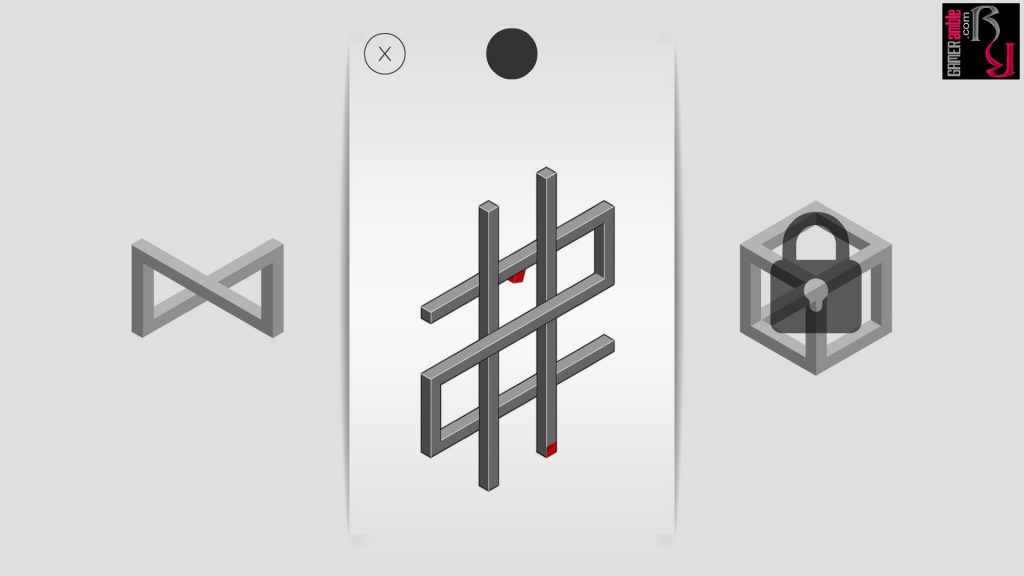
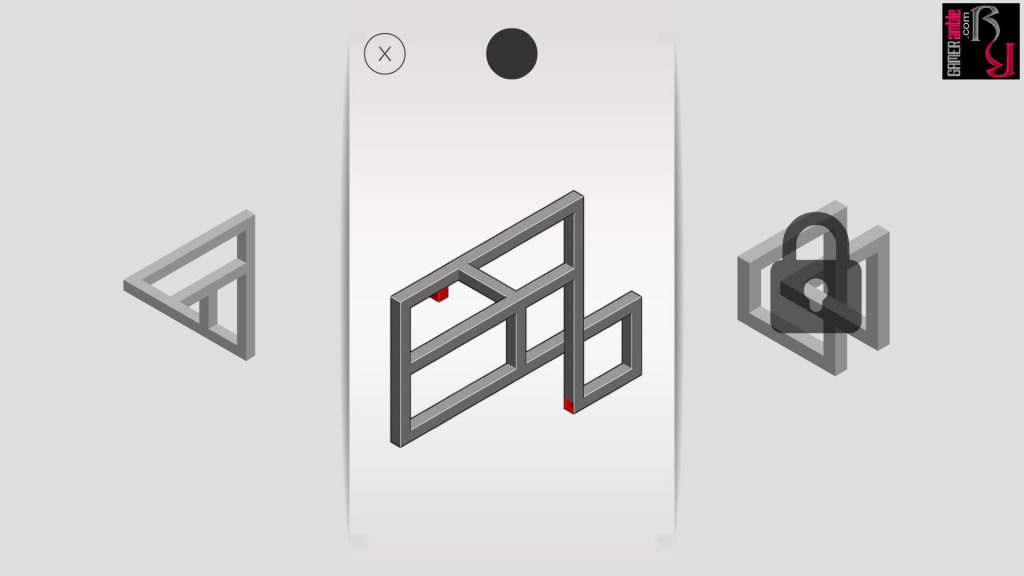
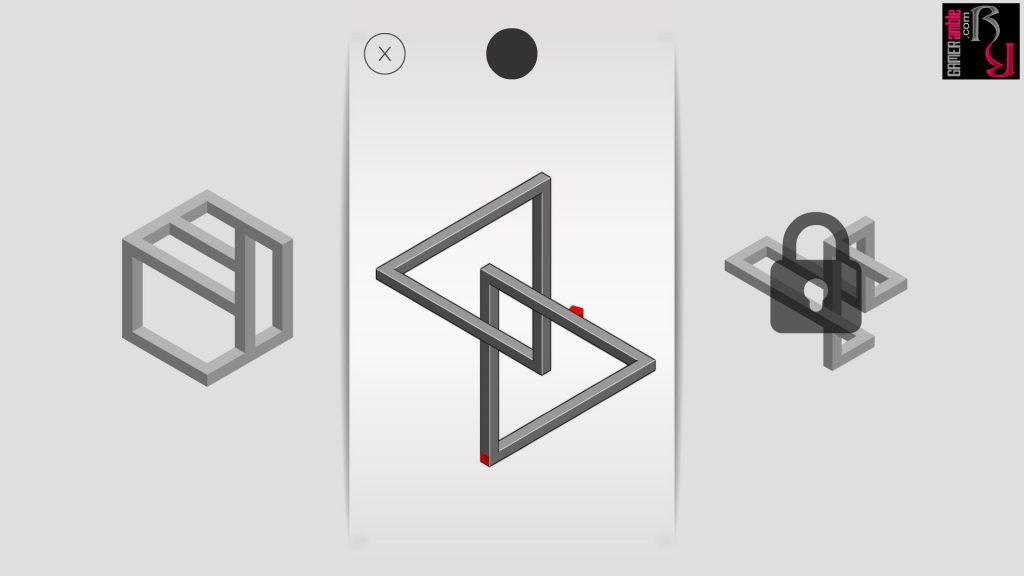
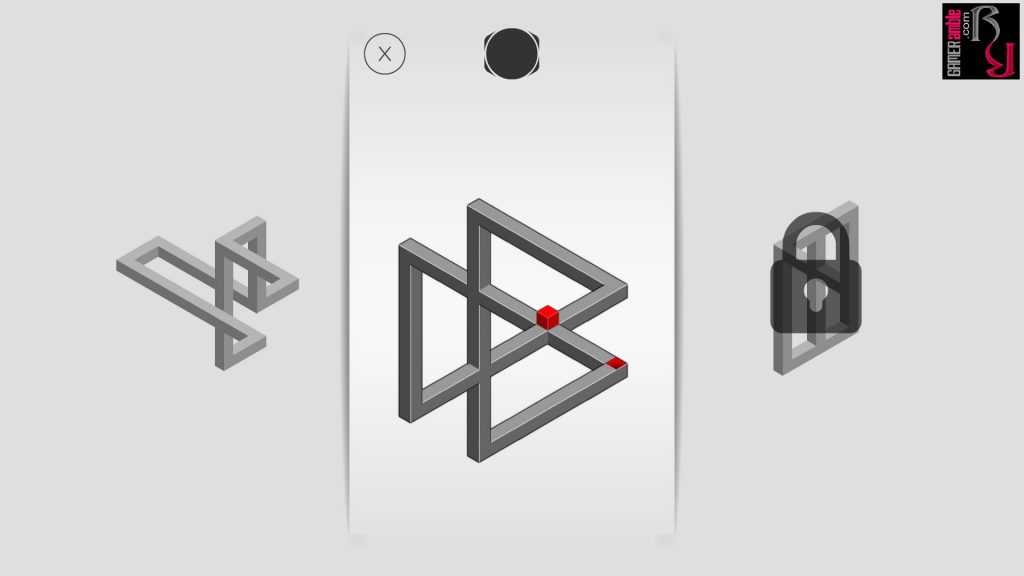

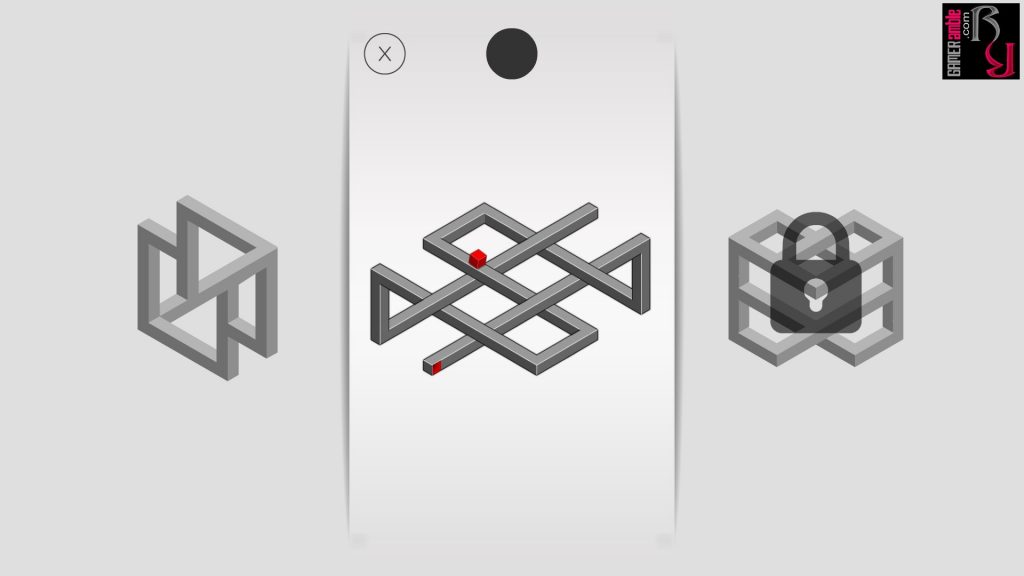
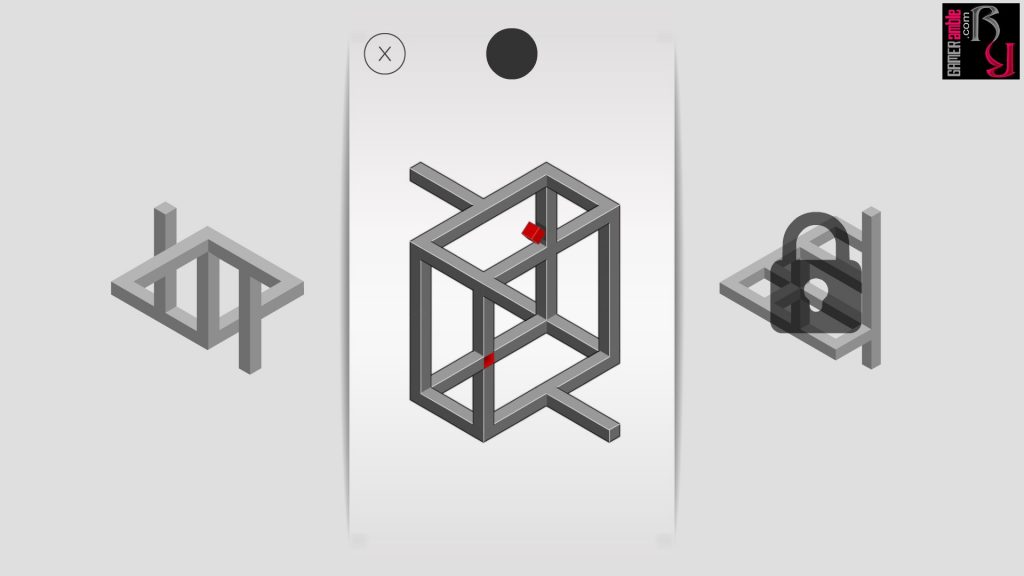
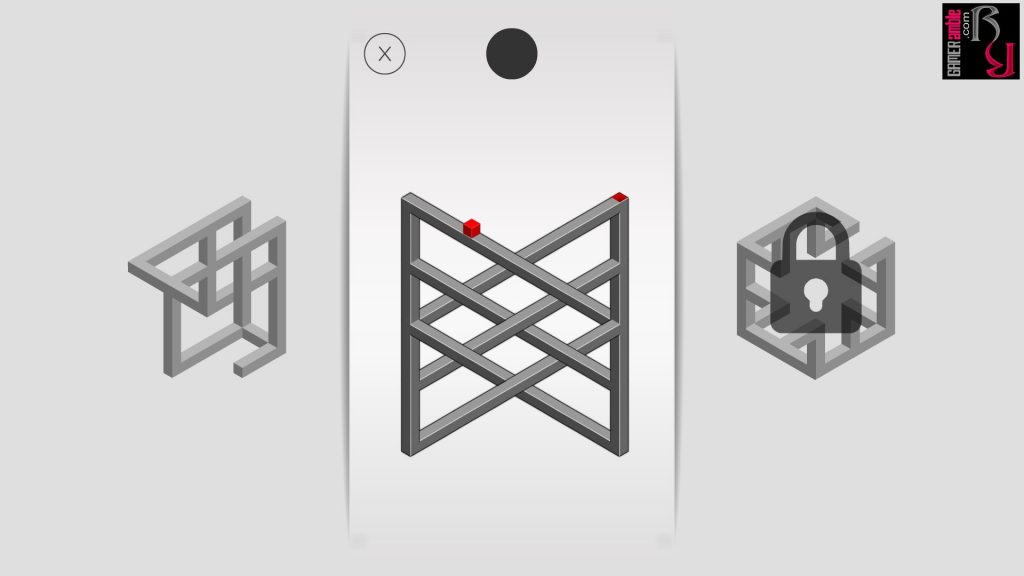
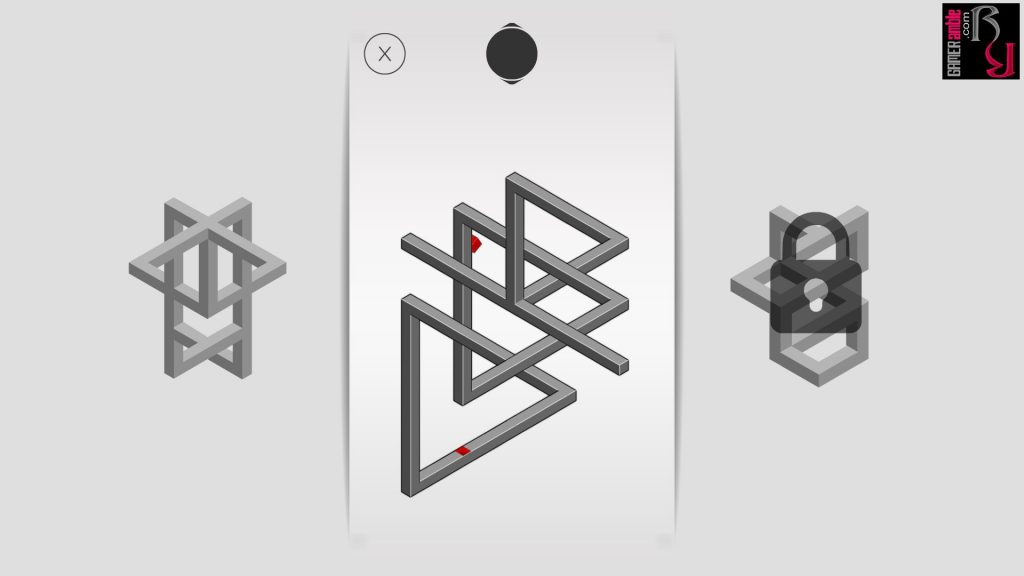


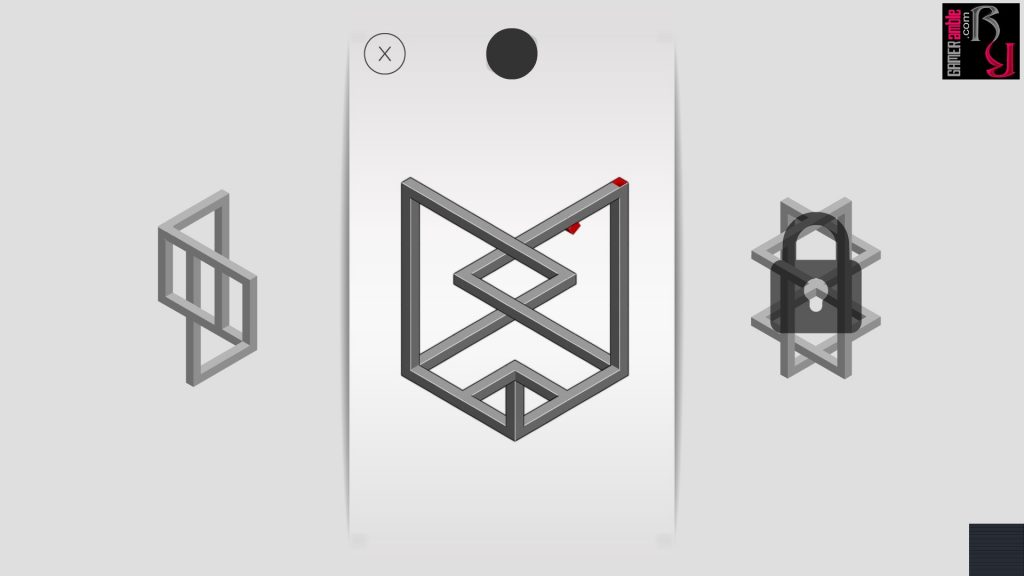
The audio in hocus follows the same trend as the visuals and keeps things very simple. The soundtrack consists mostly of chimes and while it can be relaxing at first, the fact that the music never changes can eventually become a bit annoying. One thing that is definitely annoying is the clicking sound that your cube makes while moving, so switching this off immediately is highly recommended. Since hocus was originally designed with touch screens in mind, it is easy enough to control using a mouse. You simply click where you want your cube to move and it will travel along a straight line until it reaches a junction. The game suggests using a gamepad with analog sticks and this works well, but it isn’t really essential. You’ll definitely want to stick to a mouse for the level editor, though, but creating your own levels is fairly easy. It’s a pity that the game doesn’t have support for the Steam Workshop, as it would have made it much easier for users to share their levels.
Hocus is a nice and relaxing puzzle game that works just as well on PC as it did on mobile. It’s more of a game where you complete a couple of puzzles whenever you have a few spare minutes, which means it is probably better suited for mobile devices. However, it is also possible to get caught up in the puzzles and lose track of time as you work your way through them, so it doesn’t feel out of place on PC. It’s not a perfect game, the music and sounds are definitely not as relaxing as claimed and some of the levels are much easier than others, but it is hard to fault a title that offers so much entertainment for such a low price. If you love puzzle games and enjoy playing them on PC instead of mobile, then you really can’t go wrong with hocus.
System Requirements
- Minimum PC System Requirements
- Recommended PC System Requirements
- Minimum Mac OS X System Requirements
- Recommended Mac OS X System Requirements
- Minimum SteamOS + Linux System Requirements
- Recommended SteamOS + Linux System Requirements
- OS: Windows XP SP3
- Processor: Intel Core 2 Duo 2.0Ghz or equivalent
- Memory: 2 GB RAM
- Graphics: Intel Core HD Graphics 3000/4000, NVIDIA 8800 GT, ATI Radeon HD 4850 or better
- DirectX: Version 9.0
- Hard Drive: 3 GB available space
- Sound Card: DirectX 9.0c compatible sound card
- Additional Notes: NOT SUPPORTED: ATI Radeon X1600, Intel GMA950, NVIDIA Geforce 7050
- OS: Windows 7, Windows 8
- Processor: Intel Core i5 2.8Ghz or equivalent
- Memory: 4 GB RAM
- Graphics: NVIDIA GeForce 450, AMD Radeon HD 5670 or better
- DirectX: Version 9.0
- Hard Drive: 3 GB available space
- Sound Card: DirectX 9.0c compatible sound card
- OS: Snow Leopard 10.6.8 or newer
- Processor: Intel Core 2 Duo 2.0Ghz or equivalent
- Memory: 3 GB RAM
- Graphics: Intel Core HD Graphics 3000/4000, Nvidia GeForce GT 330M, ATI Radeon HD 4850 or better (ATI Radeon X1600 NOT SUPPORTED)
- Hard Drive: 3 GB available space
- Additional Notes: NOT SUPPORTED: ATI Radeon X1600, Intel GMA950
- Processor: Intel Core i5 2.8Ghz or equivalent
- Memory: 4 GB RAM
- Graphics: GeForce GT 650M, AMD Radeon HD 6750M or better
- OS: Ubuntu 12.04 or newer, other unsupported distros may work
- Processor: Intel Core 2 Duo 2.0Ghz or equivalent
- Memory: 3 GB RAM
- Graphics: Intel Core HD Graphics 3000/4000, NVIDIA 8800 GT, ATI Radeon HD 4850 or better (Open Source Drivers NOT SUPPORTED)
- Hard Drive: 3 GB available space
- Sound Card: lib32-alsa-plugins or libasound2-plugins:i386 and libasound2-plugins-extra:i386 may be required.
- Additional Notes: NOT SUPPORTED: ATI Radeon X1600, Intel GMA950, NVIDIA Geforce 7050
- OS: Ubuntu 14.04
- Processor: Intel Core i5 2.8Ghz or equivalent
- Memory: 4 GB RAM
- Graphics: NVIDIA GeForce 450, AMD Radeon HD 5670 or better
- Hard Drive: 3 GB available space


