

Scathe
Developer: Damage State Ltd | Publisher: Kwalee | Release Date: 2022 | Genre: Action / First Person Shooter / Bullet Hell | Website: Official Website | Purchase: Steam
A battle of wits is raging between The Divine Creator, ruler of eternal light and all that is pure, and his brother, Sacrilegious, the commander of the underworld who rules over chaos. Players enter this battle as Scathe, a warrior tasked by The Divine Creator to strike down Sacrilegious and steal his staff. Doing so will allow The Divine Creator to upset the balance and bathe chaos in his light. However, to accomplish this, Scathe will have to conquer a deadly bullet hell labyrinth filled with all manner of demonic entities.
At first glance, Scathe is a first-person shooter that looks like a dead ringer for the Doom series. The game drops players into hell, where they must fight legions of demons using an arsenal of powerful weapons. As with earlier Doom entries, the story also takes a backseat to the all-out action. However, what sets Scathe apart from the rest of the infernal-themed first-person shooter pack is its focus on bullet hell gameplay and non-linear level progression. Instead of traveling from point A to B while killing everything en route, Scathe consists of a giant maze with interconnected zones. Each zone can have multiple exits, so players must ensure they are headed the right way. This has been made much easier thanks to the “Guiding Light” update, which improved the world map, added new maps for each zone, and added the ability to travel fast to previously reached zones. Prior to this update, it was a chore to get around the maze, especially when backtracking to reach a weapon or boss on the other side of the world map.
Another feature that makes Scathe more enjoyable is the inclusion of drop-in/drop-out co-op. Up to four Scathes can run around causing havoc, and taking down the demonic hordes is a lot more fun with a squad than going at it solo. However, along with the added firepower comes the caveat that all players share the same pool of ten lives. Back when fast travel was not a feature, this was a lot more annoying, as running out of lives meant getting booted back to a previously reached boss or weapon zone. Now, it simply means having to redo the zone, which is a much less harsh penalty.
Gameplay-wise, Scathe is all about shooting enemies while dodging the barrage of their bullets heading your way. Each enemy is capable of spewing a string of bullets in your direction but makes up for this by the projectiles moving a bit slower than in other first-person shooters. However, this means players can’t simply rush in and have to dodge or take cover lest they want to see their health bar whittled away in seconds. Health also doesn’t replenish by itself, so players need to seek out stationary health pick-ups or use the healing relic ring. The healing ring is one of a handful of magical relics players can discover while exploring the maze, and each has its unique ability. From freezing enemies to slowing down time, the rings can be immensely useful, especially if each team member chooses to specialize in one. Using magic consumes demon souls, though, which must be replenished by killing demons. This prevents players from abusing the rings too much, but some of them can be lifesavers if used at the correct times.
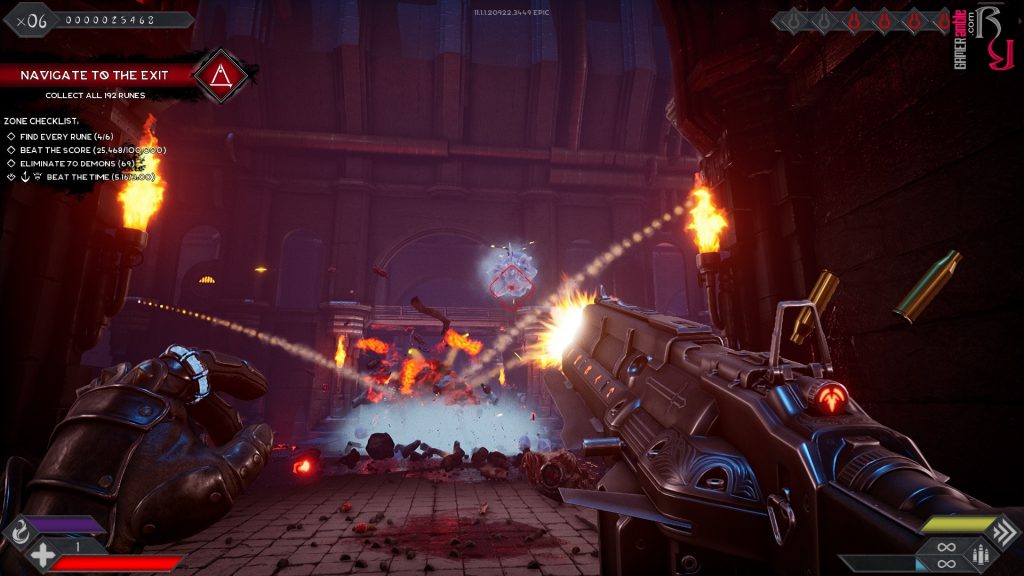
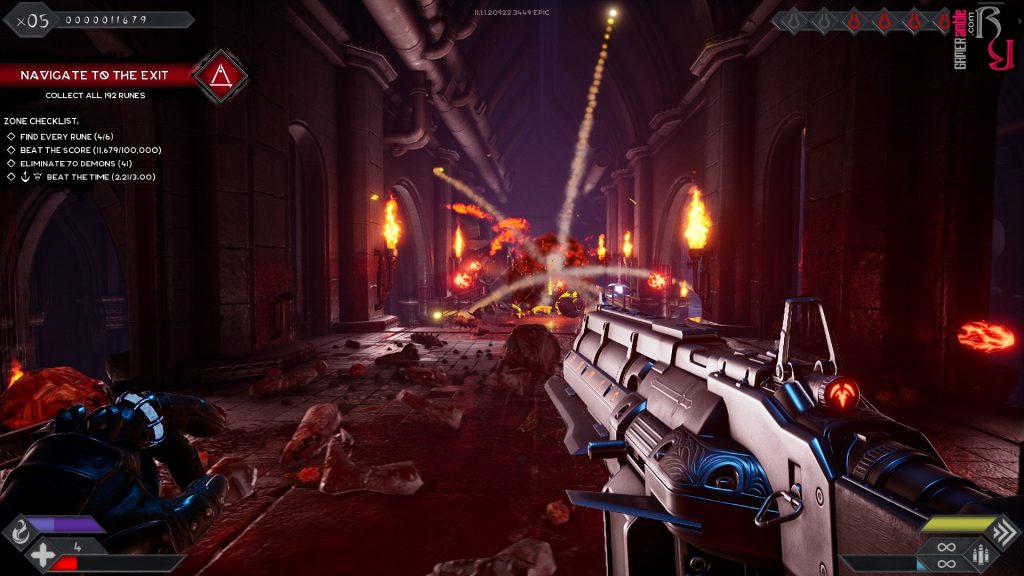
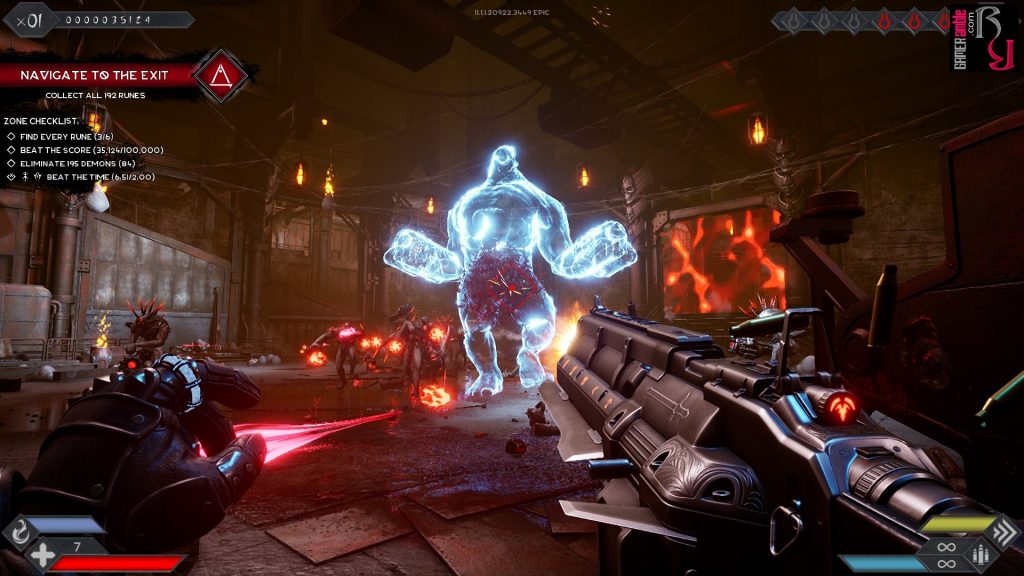

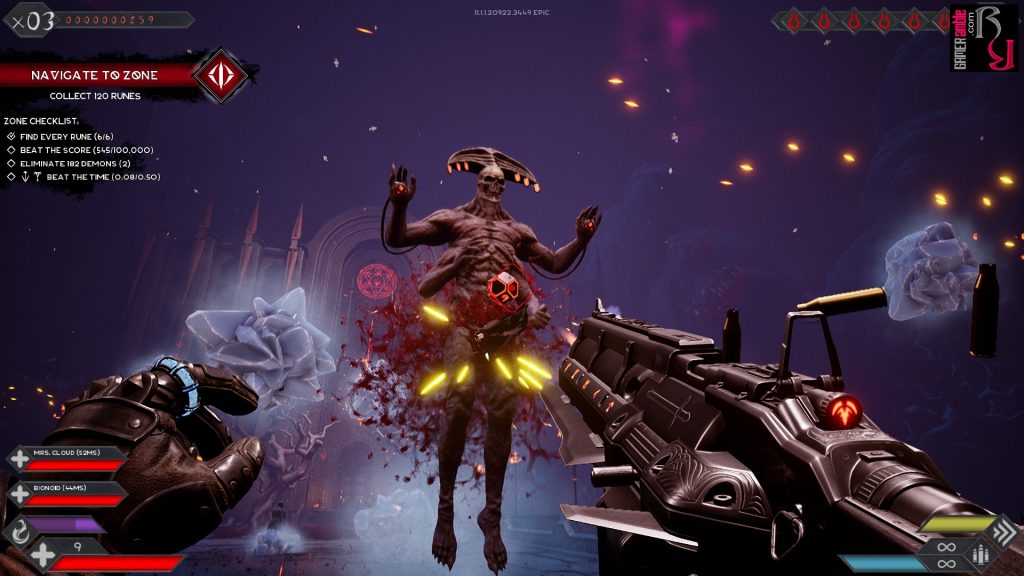
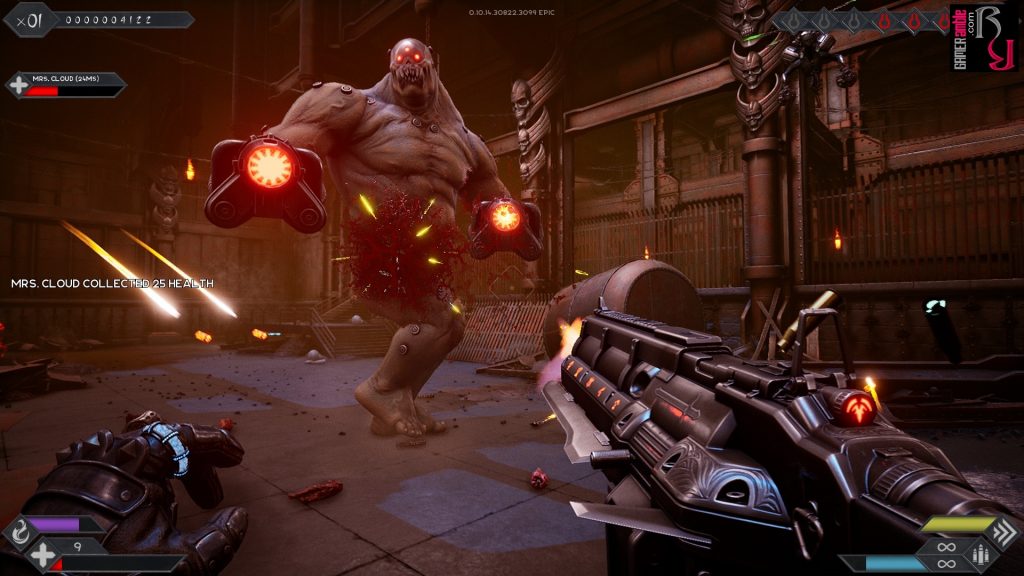
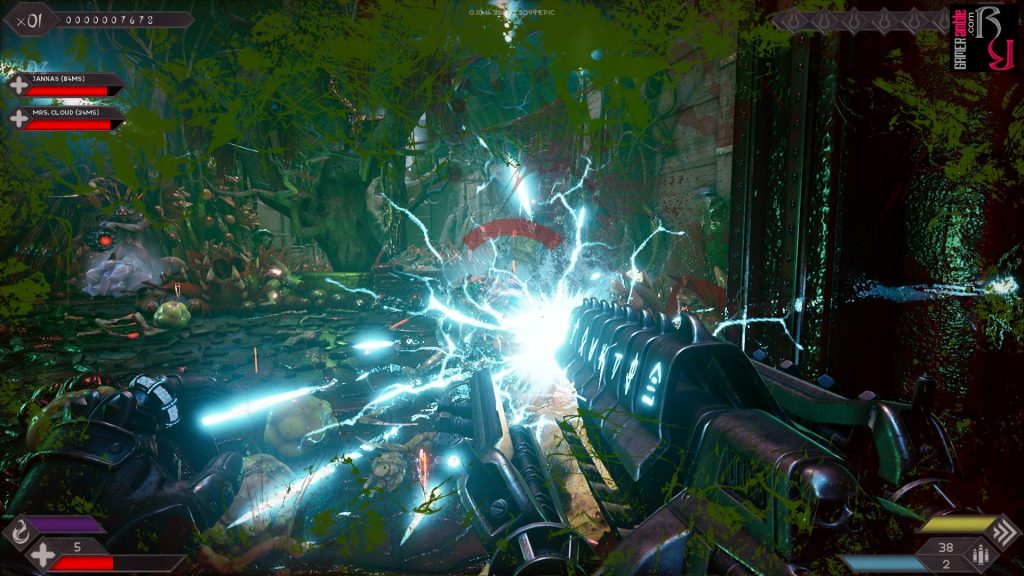
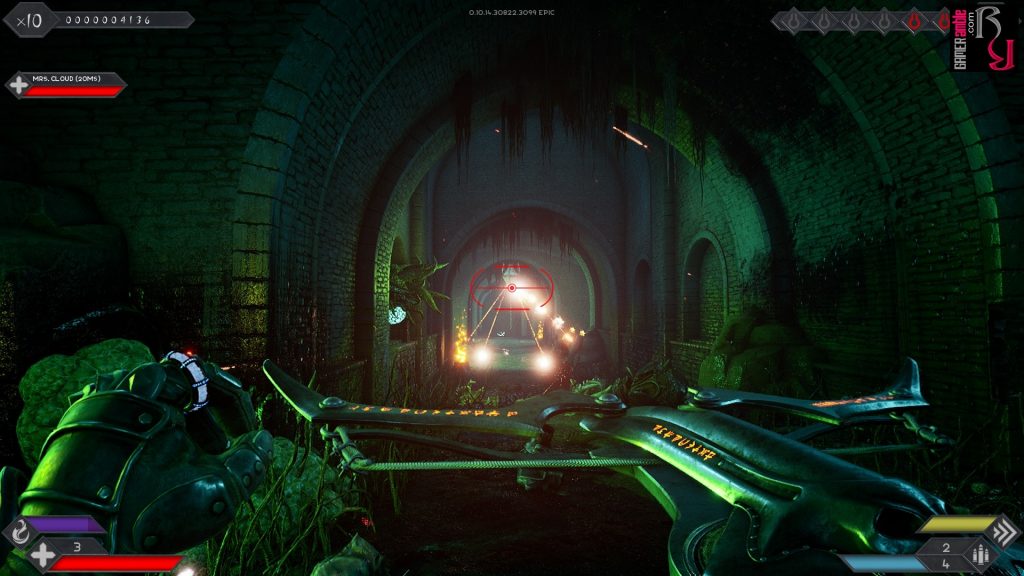
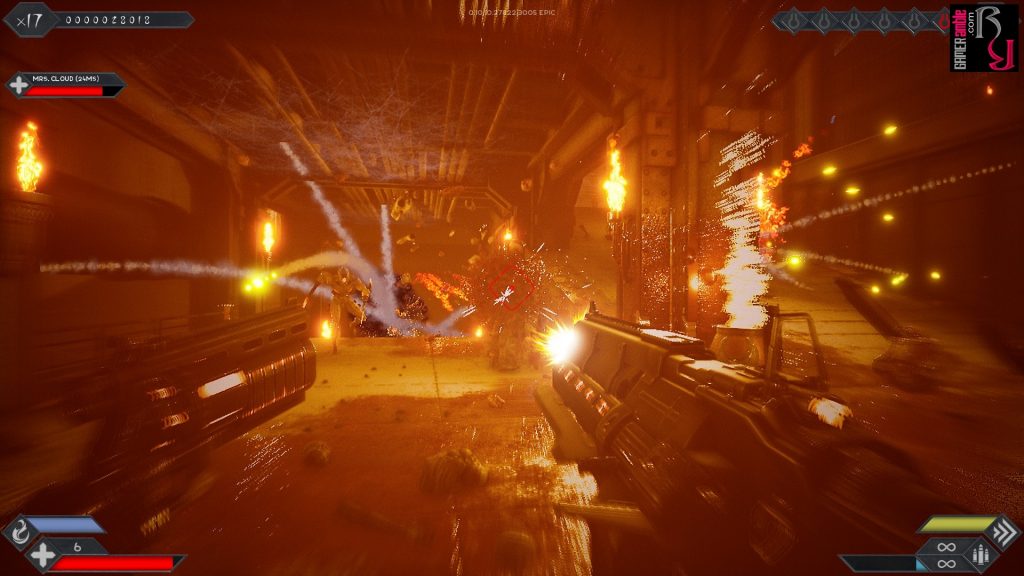

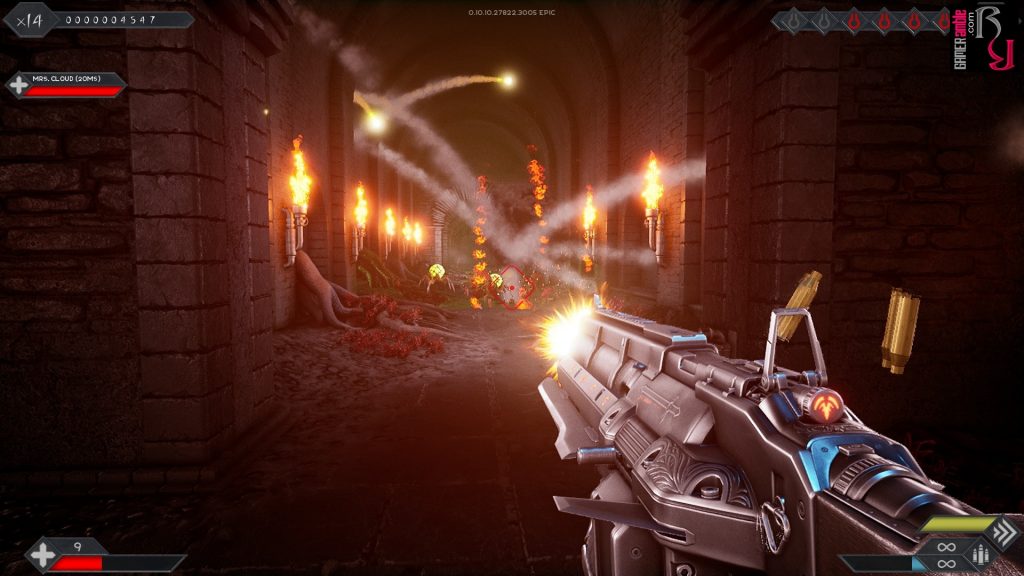


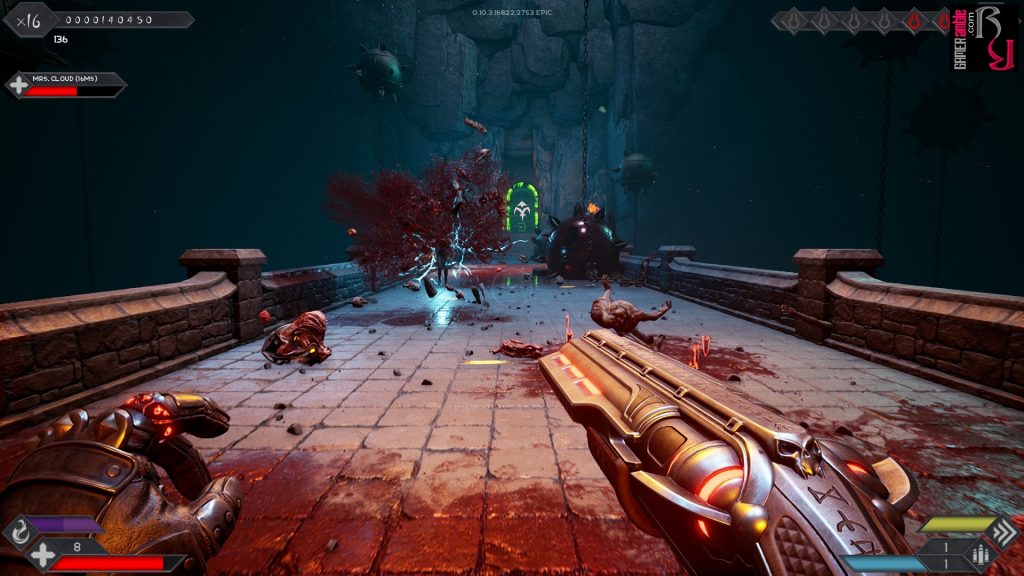


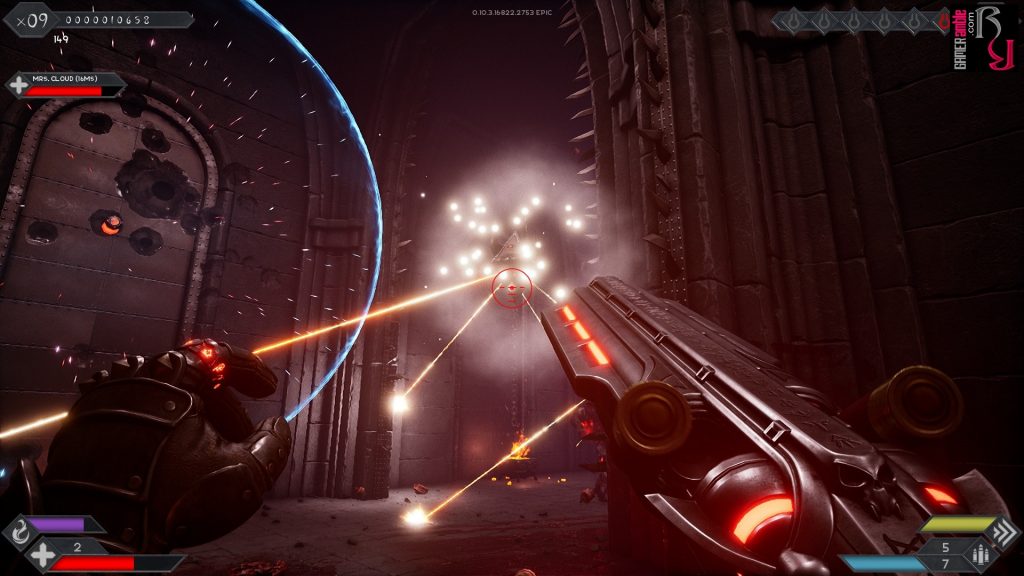
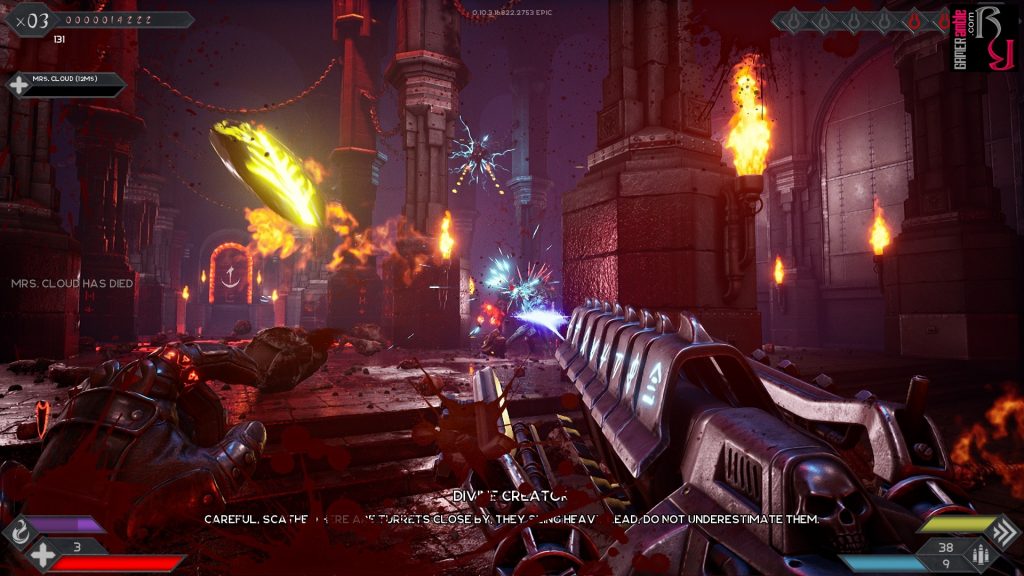
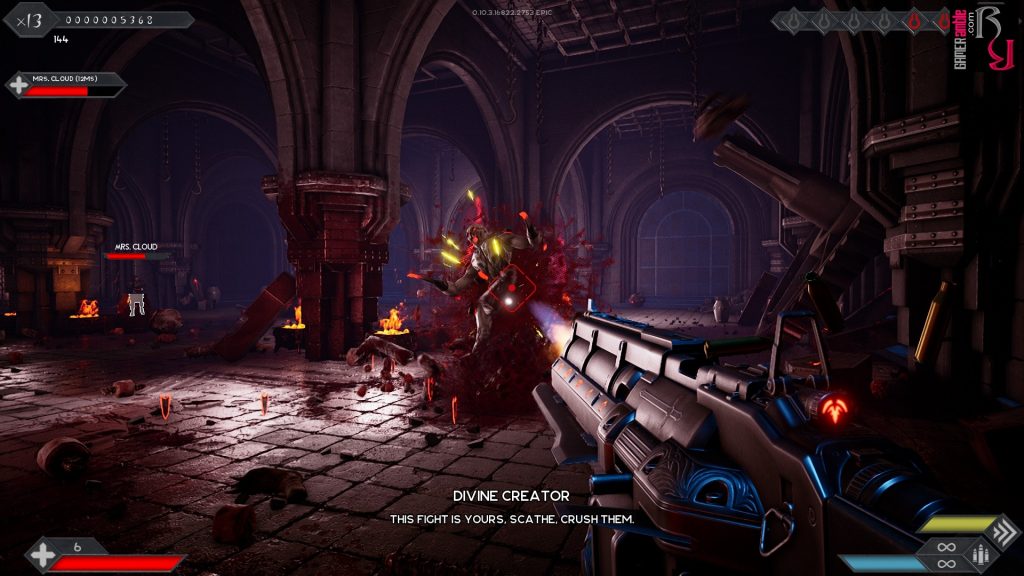
As helpful as the rings are, the primary means of attacking in Scathe is weapons, and there are quite a few neat ones available. Players start with the Hell Hammer, an inaccurate but rapid-firing machine gun with infinite ammo and no reloading times. An obligatory shotgun named Ripper is also available, along with the Bow Blade, Hot Hatch, and Thunderbolt. All of these weapons, including the Hell Hammer, have an alternate fire mode. The secondary weapons must all be acquired first by reaching the marked zones on the map and, unlike the Hell Hammer, require ammunition pick-ups. We enjoyed some of these weapons but found that they ran out of ammo a little too quickly for our liking, and pick-ups are not shared, so there’s nothing stopping some players from hogging everything. The only exception is the Raven, a six-shot revolver that can be dual-wielded with other weapons and is powered by demon souls instead of ammunition.
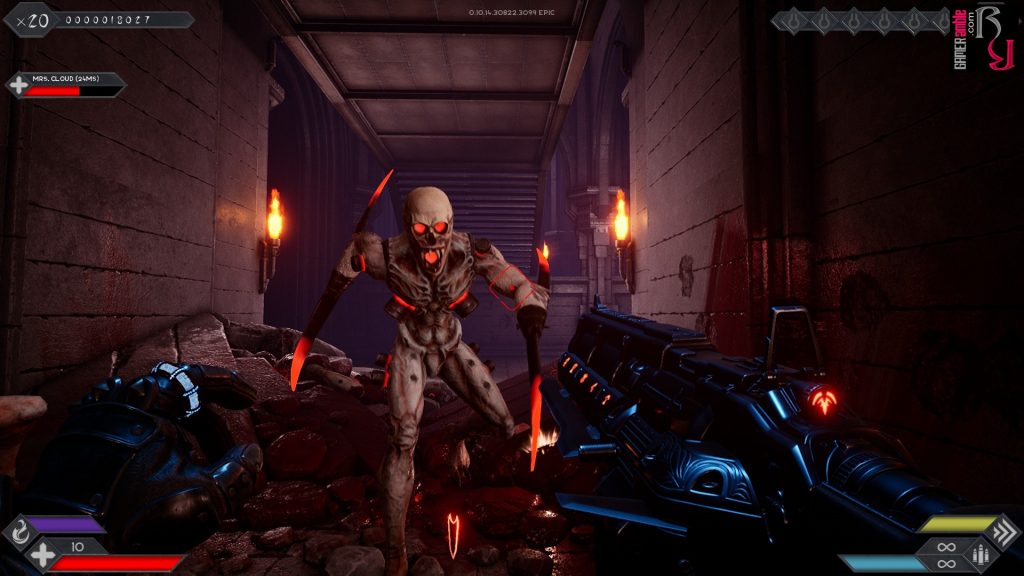
Scathe provides players with plenty of targets to shoot at, and enemies come in all shapes and sizes. They can also be found stomping about, flying in the air, or jumping out of lava, so players must be aware of their surroundings at all times to avoid getting shot. This is easier said than done, as enemies also tend to spawn out of thin air instead of the typical monster closets found in the genre. Some enemies, such as the bouncing flesh balls of death, announce their presence by screaming, but others can quietly appear behind players for some cheap deaths. The enemy designs are pretty neat, with everything from shadow demons and seekers to reapers, spitters, razorbacks, and even turrets to contend with. Some enemies are variations of others, too, depending on the biome players find themselves in.
There’s more to Scathe than just shooting the seemingly infinitely spawning enemies and locating the correct exit. Most zones are also home to cleverly hidden runes players must collect. These runes are needed to unlock the doors to the boss zones, and players dedicated enough to find all of them will also have access to an extra ending. In addition, after the Guiding Light update, the game now makes the optional objectives, such as killing a certain number of enemies or beating the speedrun time for each zone, a little more obvious.
Visually Scathe is a great-looking game, and everything from the levels to the enemies is meticulously designed. The attention to small details is excellent, and the smoke and debris-filled explosions are some of the best-looking we’ve seen in a game of this type. Levels are also awash with glowing lava, flickering fires, and scores of enemy projectiles. The different types of biomes prevent the game from looking too samey, and the enemy variations are a neat touch. Cranking up the graphical options can make it hard to see what is happening at times between the dust, explosions, and blood, but it makes the experience much more visceral. Somewhat humorously, the game has a dedicated button for wiping blood or acid from your face, but players who find it annoying can disable this feature.
The audio in Scathe doesn’t fare quite as well as the visuals, unfortunately. The soundtrack sounds great initially, with what sounds like Nordic Viking music punctuating the action. Unfortunately, the music tends to become repetitive quite quickly or fizzle away, leaving players running around searching for runes or secrets in near silence. We would also have liked for the weapons in the game to sound as imposing as they look. Instead, many of them sound rather underwhelming, and shooting enemies lacks the audio impact needed to make them memorable. Finally, while Scathe is a silent protagonist, both The Divine Creator and Sacrilegious constantly make quips or offer advice, which can grow old very quickly. Making one of the enemies sound like a baby screaming constantly was perhaps not the best choice, especially as they tend to get stuck in spots that make them hard to find and kill. Thankfully, the game has plenty of audio options for players to customize the experience to their liking. We found the controls to be very responsive, albeit maybe a bit too responsive when it comes to jumping, especially as falling in blood or lava means instant death. Some of the runes require players to complete timed platforming challenges, which can lead to a lot of avoidable deaths due to the jumping feeling so imprecise. The rest of the controls are straightforward but don’t expect to be able to crouch or perform melee attacks. Instead, players have access to a rechargeable dash move that can instantly kill enemies that are close enough. Of course, getting that close to enemies in a bullet hell shooter can end in disaster if players are not careful.
Overall, the best description that we’ve heard of Scathe is that it is a more serious Serious Sam. It features massive, clunky weapons, legions of enemies to blast, and levels that can be explored meticulously for all the runes or simply sped through to find the next exit. The branching nature of the levels is a nice touch, and all the challenges give players plenty of reasons to come back for more. Scathe is definitely at its best when played with friends, especially ones that are able to synergize their spells and weapons with others. There’s nothing like having a friend freeze one of those annoying bouncing ball enemies inches from your face to prevent certain death or getting a well-timed heal in the thick of a boss fight. Of course, the game is not perfect and can become repetitive sometimes, but it has already come a long way since its initial release. The Guiding Light update, in particular, fixed most of our most vocal concerns about the game, and it is great to see the developers truly take feedback to heart and make the kind of changes the community wants. It might not be the brightest star in the galaxy of first-person shooters on the market, but it still offers plenty of compelling reasons for fans of the genre to give it a go.
System Requirements
- Requires a 64-bit processor and operating system
- OS: Windows 7, Windows 8.1, Windows 10 (64-bit)
- Processor: Intel i7-4770K @ 3.5GHz | AMD Ryzen 5 1500X @ 3.5GHz
- Memory: 8 GB RAM
- Graphics: NVIDIA GTX 760 2GB | AMD R9 280 3GB
- DirectX: Version 11
- Network: Broadband Internet connection
- Storage: 30 GB available space
- Sound Card: –
- Additional Notes: Medium Settings.
- Requires a 64-bit processor and operating system
- OS: Windows 7, Windows 8.1, Windows 10 (64-bit)
- Processor: Intel i7-6700K @ 4.00GHz | AMD Ryzen 5 2600X @ 3.6GHz
- Memory: 16 GB RAM
- Graphics: NVIDIA GTX 1070 8GB | AMD RX 5700 8GB
- DirectX: Version 12
- Network: Broadband Internet connection
- Storage: 30 GB available space
- Sound Card: –
- Additional Notes: Epic Settings.


bionoid October 9, 2022
Not enough Runes, Scathe !
GAMERamble October 9, 2022
Nooooooo!