

Warhammer® 40,000: Dawn of War® – Game of the Year Edition
Developer: Relic Entertainment | Publisher: SEGA | Release Date: 2006 | Genre: Real Time Strategy | Website: Official Website | Purchase: Steam
As thrilling as the real-time strategy can be there’s no denying that resource gathering can be boring. Watching a bunch of minions gathering untold resources before you are allowed to get to the good stuff certainly doesn’t appeal to everyone. This is where Warhammer® 40,000: Dawn of War excels as it not only allows you to get to the action right away but encourages it.
This should come as no surprise to Warhammer 40,000 fans as the focus of the franchise has always been the bloody conflicts. For those not familiar with the license, it is set in a far-flung future where humans are locked in never-ending, violent conflict with a bunch of other aliens. The campaign mode for Dawn of War takes place on the planet Tartarus where a squad of space marines is sent to take down the Orks making a nuisance of themselves. However, things take a turn for the worse when the Eldar and forces of Chaos also make an appearance. You don’t need to be a fan of the Warhammer universe to enjoy the game, but the campaign will make more sense if you are. While the game teaches you the basics of how to play, it doesn’t go into any depth when it comes to the different races and what they stand for. This is understandable as there is a vast amount of lore for the franchise, but some elements of the story make more sense if you know the franchise.
If all you care about is causing as much damage and destruction as possible, then you are in luck as this is something that Dawn of War has in spades. The 11 mission campaign mode serves as a good introduction, but unfortunately, it only allows you to play as the Space Marines. While you will be fighting against the Orks, Chaos and Eldar forces during the campaign, you will have to jump into the skirmish mode or multi-player to control them. This is a bit strange as most real-time strategy games allow you to play through their campaigns with the side of your choice. However, with three difficulty settings and about 12 hours of playtime, the campaign is quite enjoyable.
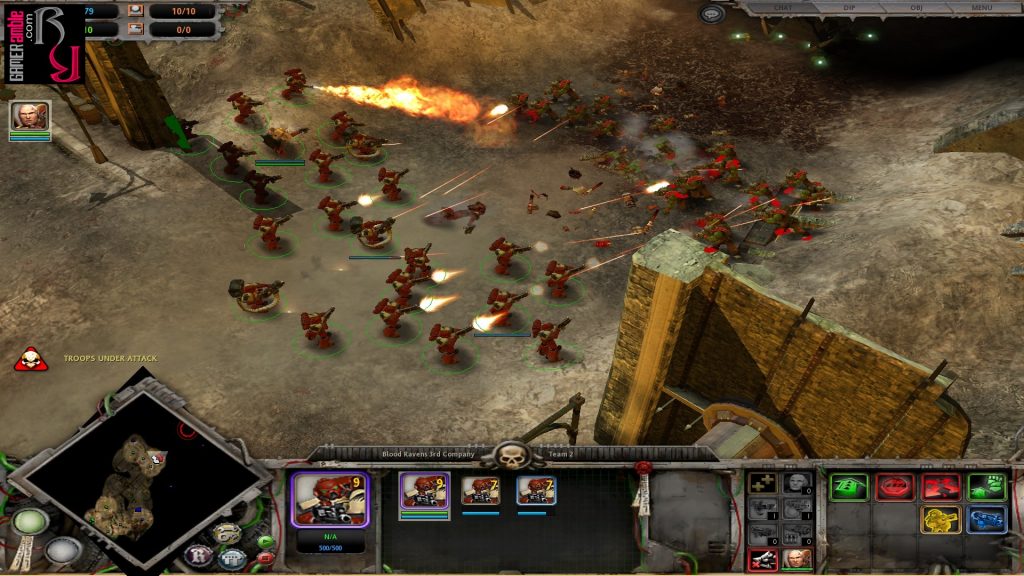
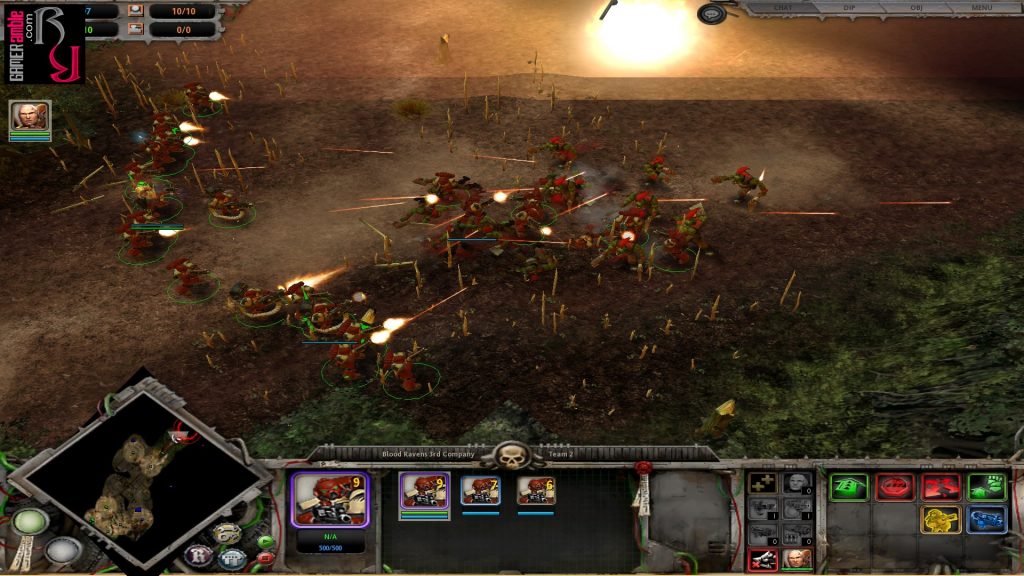
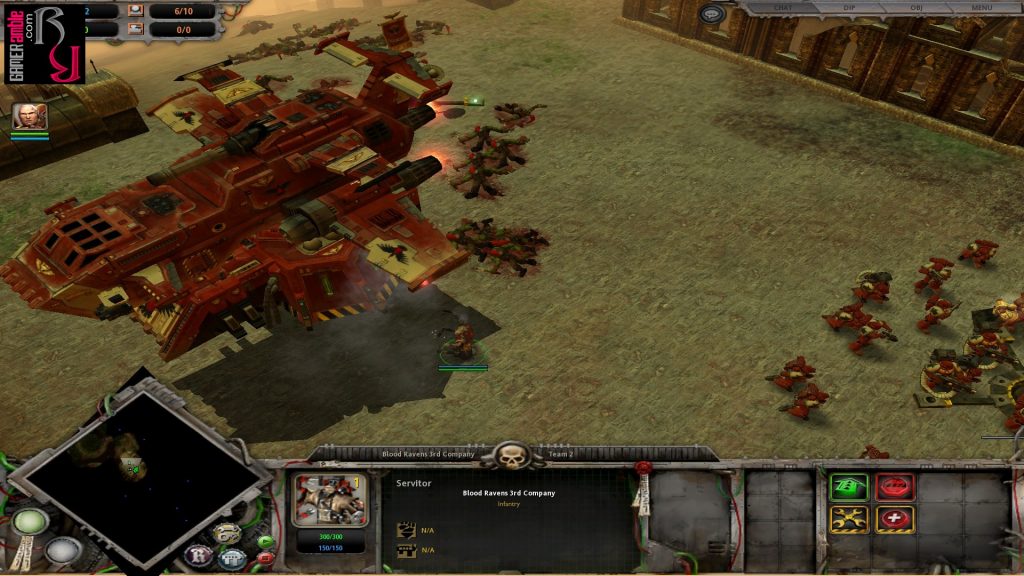

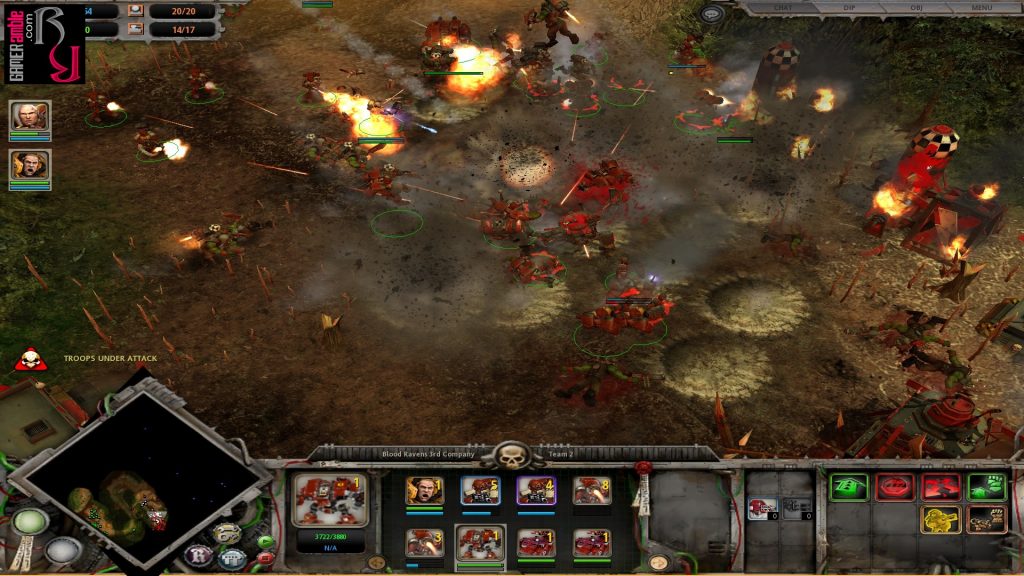
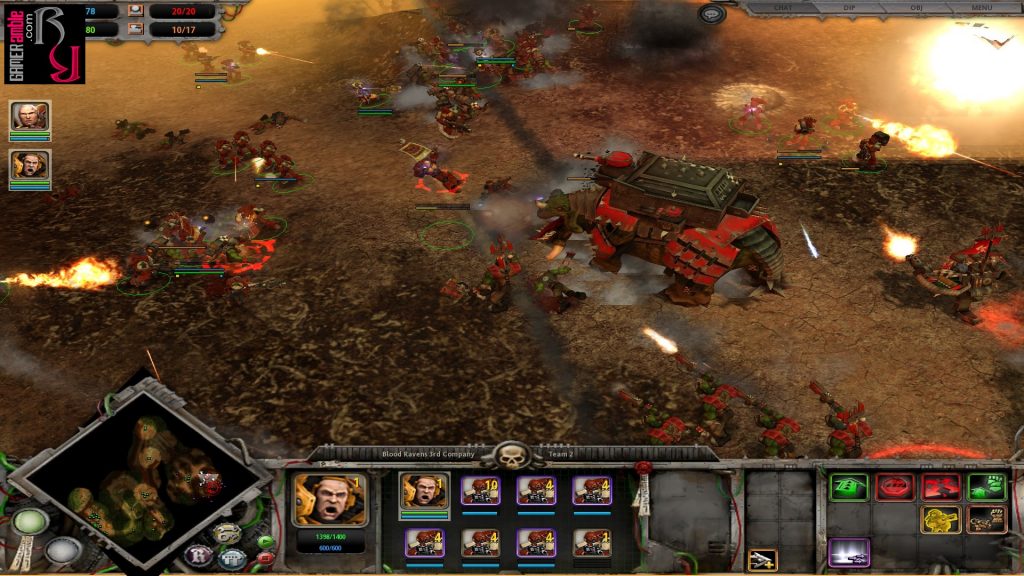
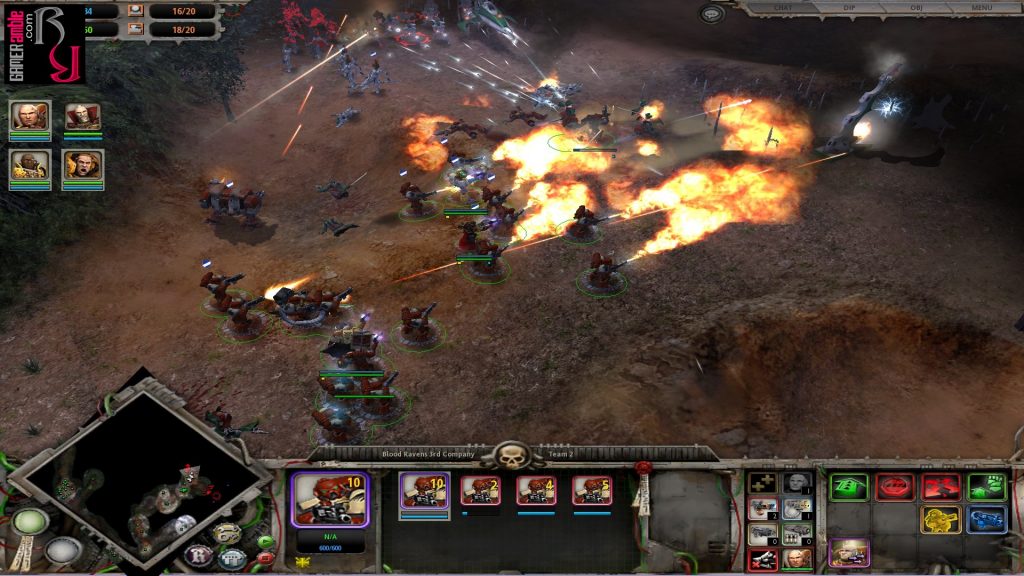
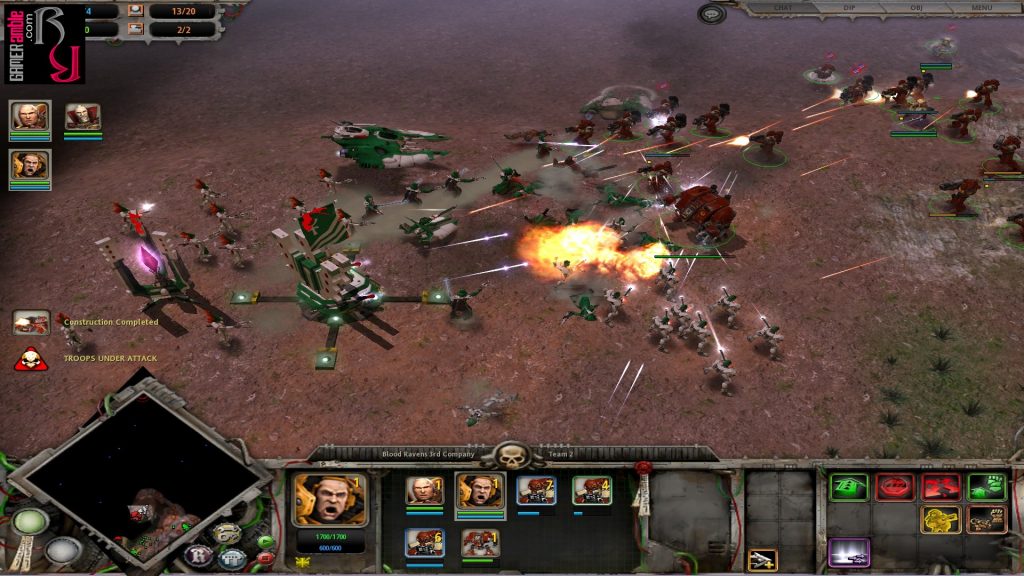
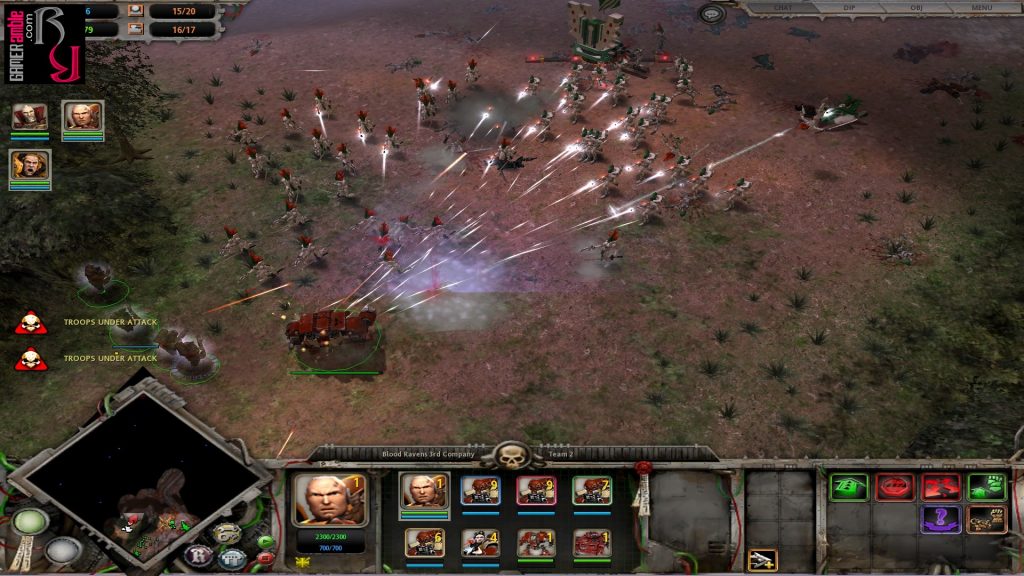
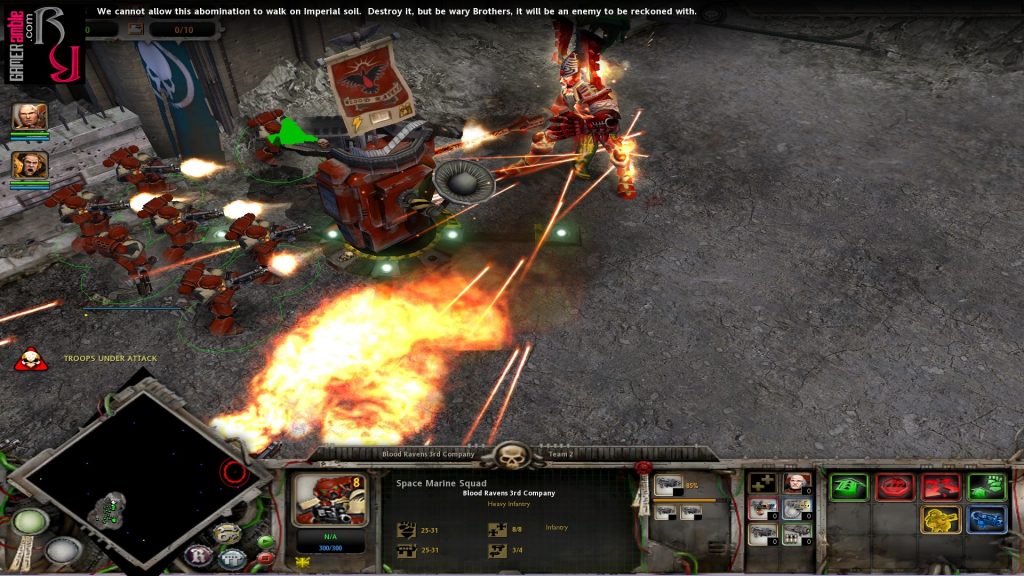
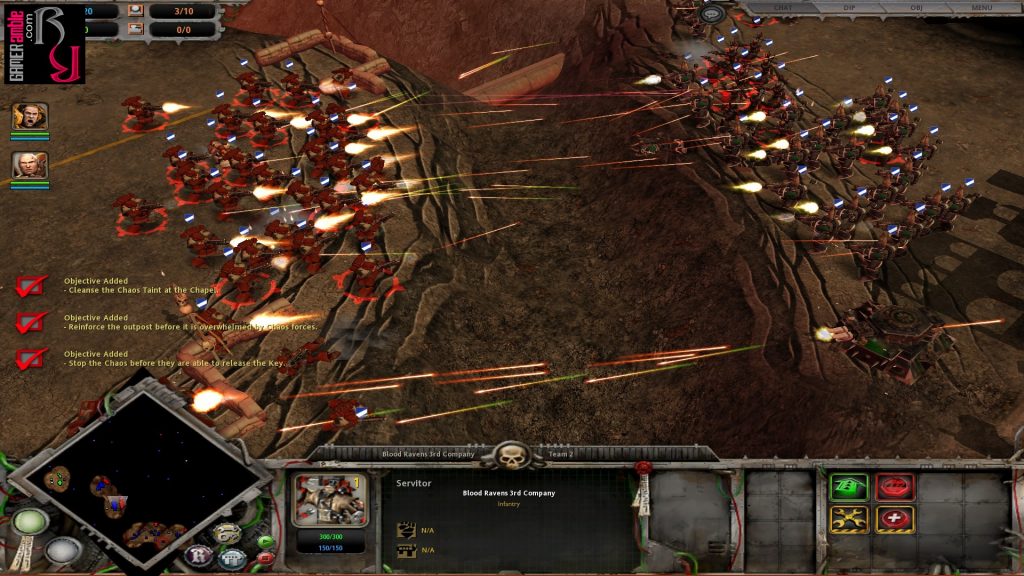
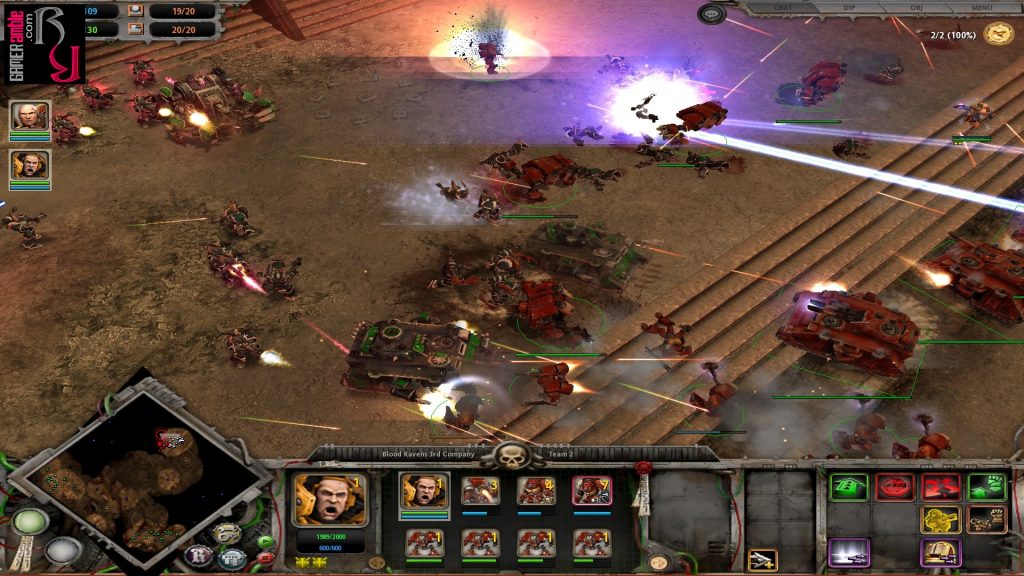
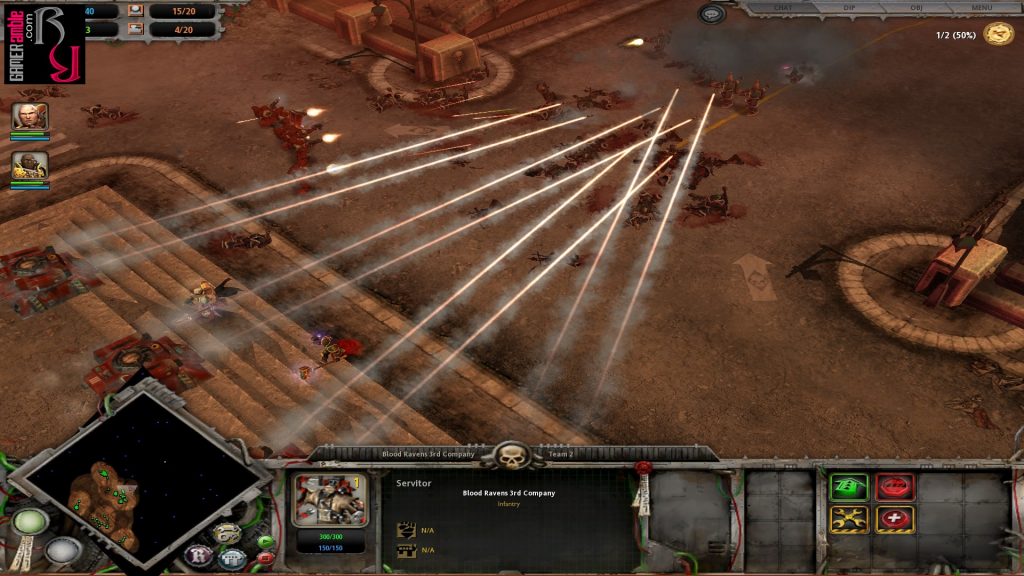
One of the things that make Dawn of War so much fun is that it constantly challenges you to play aggressively. If you are used to hunkering down at your base and amassing a huge army before venturing out, then Dawn of War might not be for you. Instead of resource gathering, you have to capture “Strategic Points” in this game, which then rewards you with “Requisition” to spend on buildings, units, and upgrades. Once you capture a strategic point you also have to hold it or else it might fall back into enemy hands. This means that you are constantly trying to push forward as far as you dare to get your hands on strategic points and deny access to them for your enemies.
The game also streamlines the building enemies by only featuring a handful of structures. All of them can be built relatively quickly and they are all very useful. Once the structures are up you can also spend requisition on upgrading them as well as unlocking new upgrades for your units. Speaking of units, instead of controlling individual solders, you take command of squads. These squads can then be upgraded with different types of weapons, depending on what you have unlocked. Having squads with the right combination of weapons can be the difference between steamrolling over an enemy or watching your soldiers lose morale as their numbers are decimated. The morale system is particularly interesting as units that lose all their moral are useless in combat and have to be withdrawn to recover. If squad members die you can reinforce their numbers again with the click of a button, provided you have enough requisition points. It’s a nice feature that keeps the action flowing as you don’t have to march units all the way from the barracks to get them back to the front lines.
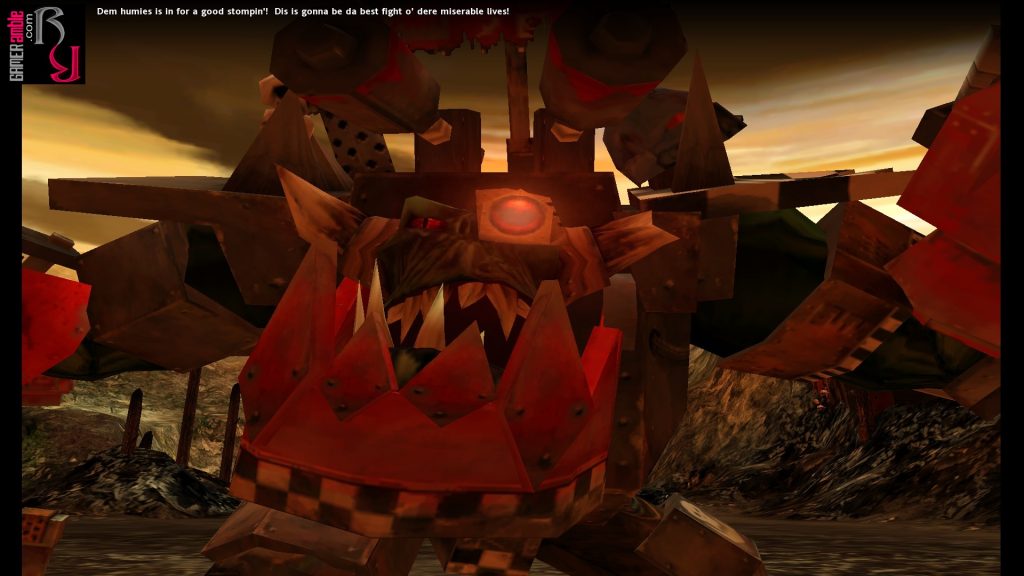
The visuals in Dawn of War are quite dated at this point but were quite impressive back when the game was first released. Warhammer fans will appreciate the ability to customize your units by changing their insignia, banners, colors, and names. Some elements, such as the way units can get knocked off their feet by huge explosions and the gory finishing moves performed by larger units are also still impressive. However, most of the maps are just wastelands with no real points of interest and the textures in the game also lack a lot of detail. We also had to do some file editing to get the game to run in a widescreen resolution. Then there is the camera, which has to be controlled with the arrow keys and the “alt” button, which isn’t exactly intuitive. While it provides a nice close-up view of all the action, it did feel too zoomed-in at times when we were trying to get a better overview of all our units. The interface is straightforward and easy to use, though.
Dawn of War features a very fitting soundtrack that perfectly complements the dark and gritty nature of the story. The sound effects are also very good with the explosions in particular being excellent. The voice acting on the other hand can be a little over the top, but also fits the game. Each unit has a phrase or two when you select them, but some are a little more annoying than others in this regard. Although you can perform all of the actions in the game with your mouse you still need to use your keyboard to manipulate the camera. The game also features a handful of useful hotkeys for selecting and upgrading units.
Overall, there is a lot that we really liked about Dawn of War. It’s the type of game where there is always something that requires your attention and you’ll hardly ever sit around waiting for something to finish. Thanks to some preset behavior options you can leave your units to their own devices while you focus your attention elsewhere, but battles look spectacular enough that you’ll want to witness them. The limited fortification options might deter those who love playing defensively, but once you embrace the aggressive play-style required to succeed the game is a lot of fun. Sure, time hasn’t been kind to it and the cut-scenes featuring the in-game character models look particularly rough, but the gameplay has held up well. The fact that all the races play very similarly also means it’s easy to jump into skirmish or multi-player after finishing the campaign without having to relearn how to do things. Whether you are a fan of Warhammer 40,000 or enjoy real-time strategy games, Dawn of War is a game that deserves your attention.
System Requirements
- Windows 2000/XP, 1.8 Ghz Intel Pentium III or equivalent AMD Athlon XP, 256 MB RAM,
- 4.5 GB free hard drive space,
- 32 MB DirectX 9.0c compatible AGP video card with Hardware Transformation and Lighting,
- 16-bit DirectX 9.0b compatible sound card,
- Mouse, Keyboard
-
- 2.4 GHz Intel Pentium 4 or equivalent,
512 MB system RAM (required for 8-player multiplayer games),
- nVidia GeForce 3 or ATI Radeon 8500 or equivalent with 64 MB of Video RAM
REQUIRED FOR MULTIPLAYER:
- Internet: Cable modem, DSL modem, or 56.6 kbps modem for online multiplayer play; Network: TCP/IP compliant network


