Mind Spheres
Gameplay 5
Graphics 6
Sound 7

Mind Spheres is an interesting combination of physics puzzles, mini-golf and pinball, that is unfortunately a little too short and easy for its own good. The game is quite relaxing and perfect for killing some time when you are not in the mood for more involved games, but it does suffer from a rather nasty memory leak, which requires frequent restarts. If you can put up with all of this, you’ll find a game with levels that are satisfying to solve, but don’t expect it to keep you busy for long.

Gameplay: An interesting concept, but the fifty levels are over before you really feel challenged.

Graphics: Very minimal, but it still looks fine.

Sound: The piano tunes are quite soothing, but they do feel somewhat out of place

Summary 6.0 Above Average
Gameplay 0
Graphics 0
Sound 0
Summary rating from user's marks. You can set own marks for this article - just click on stars above and press "Accept".
Accept
Summary 0.0 Terrible

Mind Spheres

Developer: Microblast Games | Publisher: Microblast Games | Release Date: 2016 | Genre: Casual / Sports / Indie | Website: Official Website | Purchase: Steam

There’s no denying that the premise behind Mind Spheres from Microblast Games is a rather intriguing one. The developers describe it as a mash-up between physics puzzles, mini-golf and pinball, which is accurate, but not quite as exciting as it sounds. We really like the idea, which is getting your sphere from the starting point to the goal, but the way in which it is accomplished is perhaps a bit too simple.

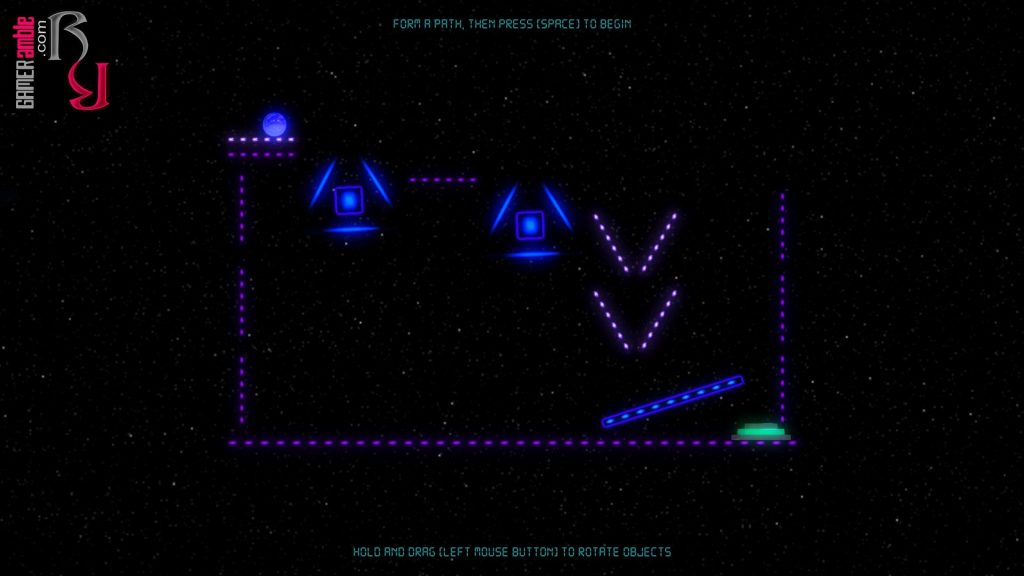
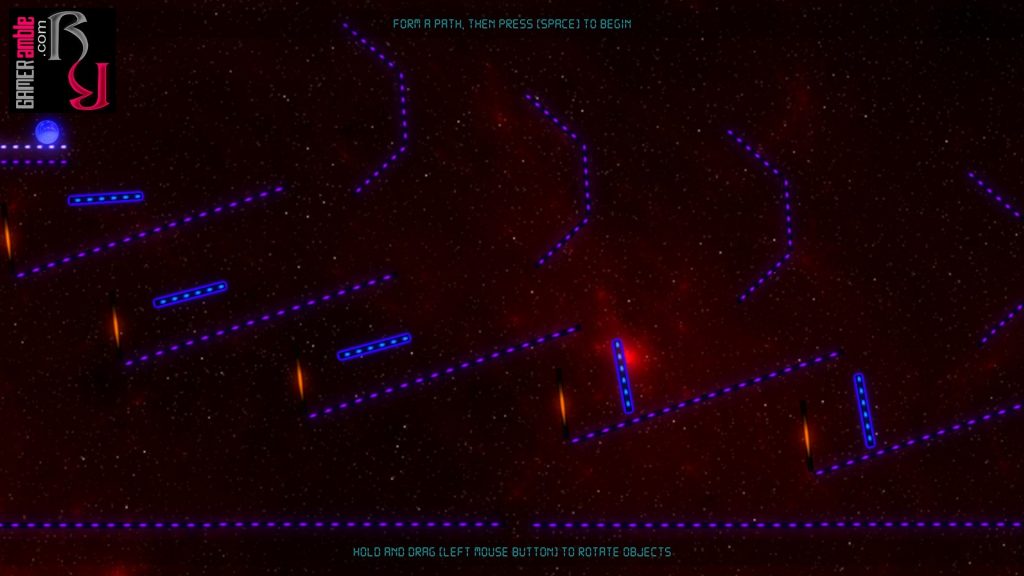
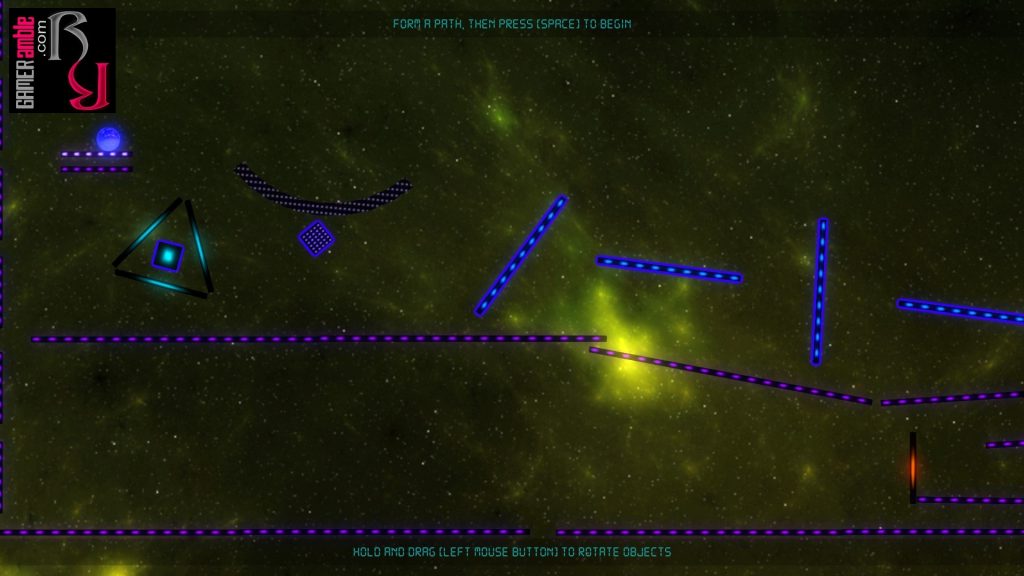
Mind Spheres features 50 levels to complete, split up into five sets of ten. These sets have names like “Energy,” “The Mind Gears,” “Taste of Space” and “Great Schematics,” but each only introduces one new item to work with. In this game you don’t have direct control over your sphere, but instead you have to manipulate certain objects on each level before setting everything in motion. Once in motion, you have no input, so you can only sit back and watch to see if your careful planning paid off. If you were right, the sphere will drop into the goal area, but if it runs into some obstacle you did not foresee, then it’s back to the drawing board. The game makes use of physics simulations, so there is a certain amount of unpredictability when it comes to things like the sphere bouncing around or glancing corners, but overall it is quite an easy title to complete.

The main reason why Mind Spheres is so easy is the fact that you can’t really move any of the objects found on a level around. Instead, they are all in fixed positions and you can only rotate them. Typically, it is very obvious where the sphere will be heading and how you need to orient objects in order to keep it going in the right direction. Later levels become larger and more complicated with more parts to manipulate, but even these can be solved with a bit of trial and error. We managed to complete most of the levels in the game on our first try and only a few required more than two or three restarts. This results in a game that is quite short and doesn’t offer much in the way of replay value. There are a couple of Steam Achievements to aim for, but all of these can be earned just by completing all the levels.

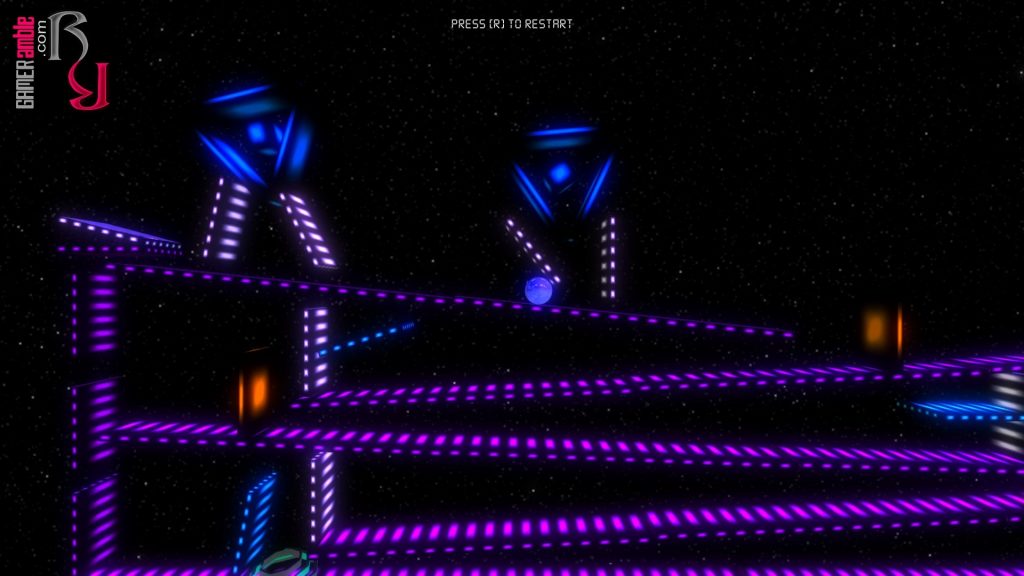
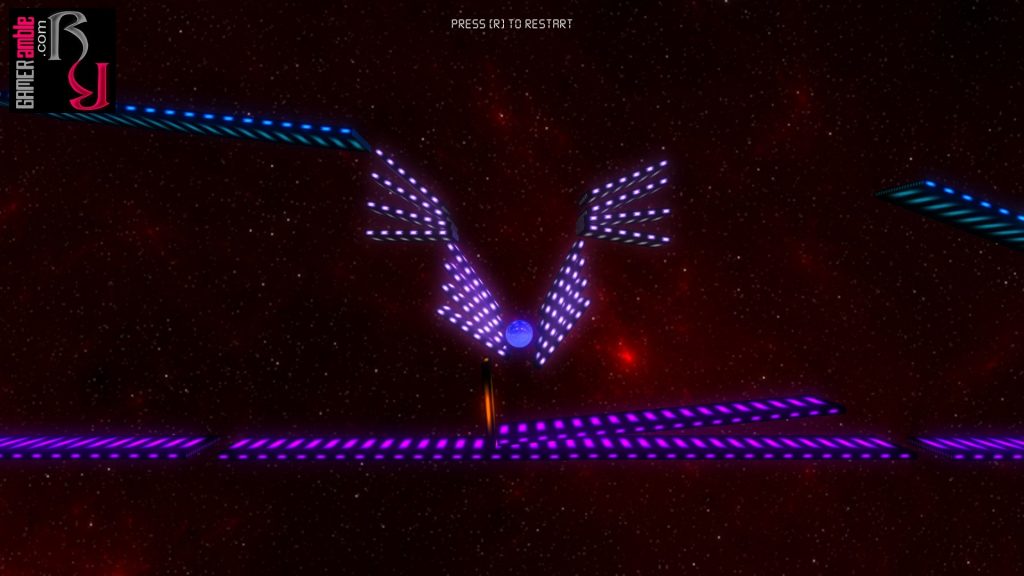
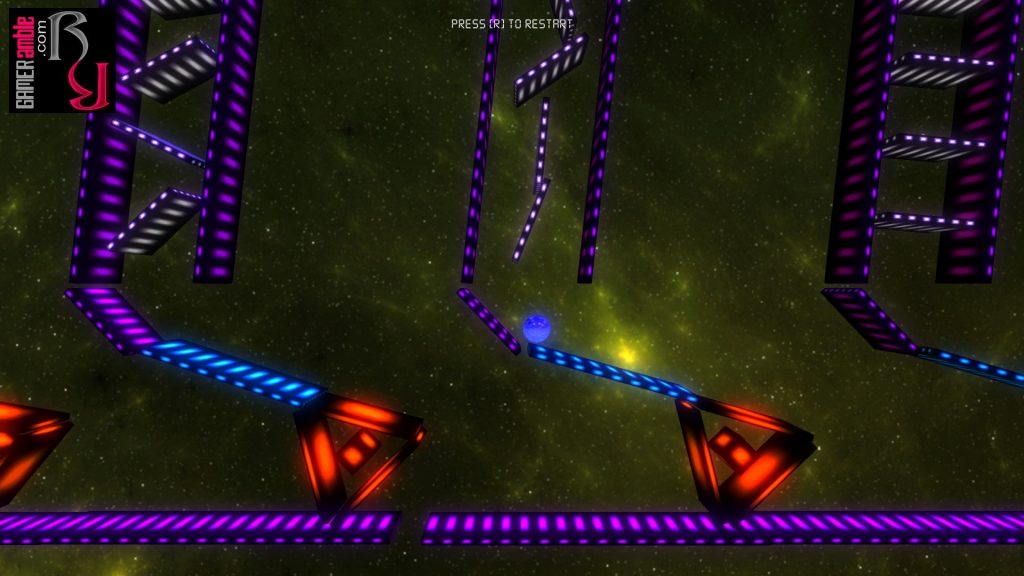
There’s not much to say about the visuals as it features a very minimalist style. The levels consist mostly of glowing blue or purple platforms that are suspended in space. Each new object that is introduced has a different color, so you can see at a glance what they do.

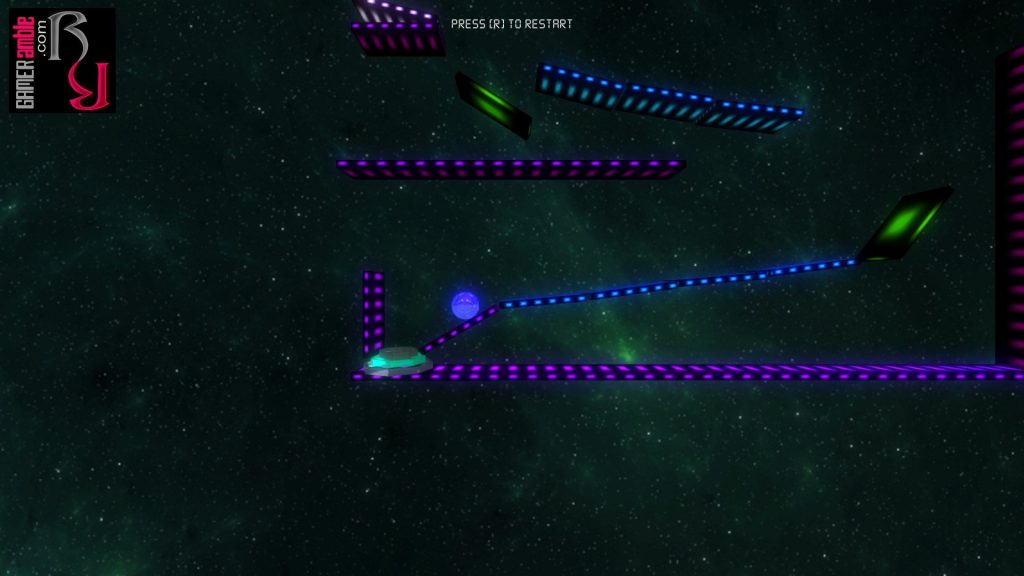
Overall, the visuals look pleasant enough, especially the glowing effects, but this is not a game that is going to tax your GPU much. The same can be said about the soundtrack, which features some nice piano music. The tunes are quite soothing and relaxing, but feel a bit out of place with the whole neon and space style of the graphics. The controls are very simple and interacting with objects in the game is as simple as clicking and dragging in the direction that you want to rotate them. This works well enough apart from the triangular objects that have to be rotated from the center, which can be very finicky. Setting the sphere in motion is done by pressing “Spacebar” and the level can be restarted at any point by pressing “R.” Restarting a level retains the layout that you have already created, so you only have to tweak the problem areas and not everything again.

Although there is nothing truly special or remarkable about Mind Spheres, it is still a relatively enjoyable title. It is very short and can be completed in a single sitting, but it is hard to fault this considering how low the price tag is. What is a little harder to stomach, though, is the bugs in this game that spoil the experience somewhat. The most annoying is a pretty major memory look that the game appears to suffer from. It is almost impossible to play longer than five to ten minutes before programs running in the background begin to crash due to low memory. If you continue playing the game will also end up running out of memory and crashing. This means that you have to restart it every now and then to prevent it from crashing while you are in the middle of solving a level. The levels are fairly short, but it is still quite a nuisance. We also encountered one situation where the game kept reverting to the “Retry” screen despite the fact that the sphere was seconds away from reaching the goal area.

At the end of the day there is still fun to be had with Mind Spheres, provided you are not looking for something with a challenge. It is a relaxing game and the lack of scores, time limits and unnecessary complications are refreshing, but this is ruined somewhat by the bugs. However, since it can be bought for next to nothing, we would still recommend it for puzzle fans looking for something calming to while away the minutes between more challenging games.

System Requirements

  • OS: Windows 7/8/8.1/10 or compatible
  • Processor: 2.0 GHz
  • Memory: 2 GB RAM
  • Graphics: NVIDIA GeForce GT 240 (or better)
  • Storage: 300 MB available space
  • OS: 10.9 or compatible
  • Processor: 2.5 GHz Intel Core i5
  • Memory: 2 GB RAM
  • Graphics: Intel HD Graphics 4000 1024 MB
  • Storage: 300 MB available space

Related posts

A Plague Tale: Innocence

A Plague Tale: Innocence

A Plague Tale: Innocence is not only a great looking game with a unique setting, but the strong narrative focus makes it very engrossing too. The combination of stealth and puzzle-solving could easily have been very annoying, but barring a few frustrating sections the game is actually quite entertaining. It is also unrelentingly grim, which might deter some players, but between all the horror there’s also some heartwarming moments. Single-player narrative focussed games such as A Plague Tale: Innocence is becoming rarer, so don’t miss out on the opportunity to play this one. Gameplay: A nice mixture of stealth and puzzles that never really veers too far in either direction. Graphics: The visuals are extremely detailed and the environments surprisingly varied. Sound: Good voice acting and some soaring tunes.

Hellblade: Senua’s Sacrifice

Hellblade: Senua's Sacrifice

Hellblade: Senua's Sacrifice might not have the best combat or puzzles in the genre, but it is hard to beat in terms of storytelling and immersion. There are not many other games on the market that can hold a candle to it when it comes to visuals and animation, while the way it realistically portrays psychosis is also groundbreaking. The game still features plenty of combat, but it is not the primary focus, so players expecting something closer to previous Ninja Theory titles will probably be a little disappointed. However, if you can appreciate something with a strong narrative focus and willingness to tackle subjects that few others dare, then Hellblade is your game. Gameplay: The combat and puzzles are a bit weak, but the overall experience is superb. Graphics: Although the game is very bleak overall, the detail and animations are top notch. Sound: This is definitely a game that must be played with headphones thanks to the awesome binaural sounds.

Fallout 3 – The Pitt

Fallout 3 - The Pitt

The Pitt offers a more compelling story and better gameplay than Operation: Anchorage which is good news for Fallout 3 fans craving more of what makes the game so great. The new areas are interesting to explore and less linear than the narrow corridors of Anchorage. While not very long there is some replay value and even a scavenger hunt with loot rewards to keep you coming back for more. Gameplay: More of what makes the base game so much fun. Graphics: Only one new enemy, but the new locations are quite cool. Sound: Good but nothing to rave about.

Time Mysteries 3: The Final Enigma

Time Mysteries 3: The Final Enigma

Time Mysteries 3: The Final Enigma is the strongest entry in the trilogy and a far cry from the rough first game. The portable time machine is once again used well, the visuals are attractive, and the mix of hidden object scenes, mini-games, and time manipulation puzzles remains enjoyable. While the story is not especially memorable and the challenge level is fairly low, it is still a polished and worthwhile conclusion for fans of the series. Gameplay: A good mix of hidden object scenes, mini-games, inventory puzzles, and time-travel mechanics, although most of it is fairly easy. Graphics: Attractive hand-painted locations and a significant improvement over the first game. Sound: Solid music and much better voice acting than the original, even if some performances remain melodramatic.

EVERSPACE

EVERSPACE

Everspace might not have millions of systems to explore or an open-world galaxy of possibilities, but it does have action-packed dogfights, procedurally-generated levels, roguelike elements, and stellar visuals. The result is a game that is highly addictive and offers buckets of replay value. Like all roguelike titles it can feel like a grind at times, but with three very different ships and plenty of perks to upgrade, each new run is very entertaining. If you are a fan of pretty visuals, addictive gameplay, and plenty of action, then you don’t want to miss out on Everspace. Gameplay: The game is very polished and highly addictive. Graphics: Space has never looked more spectacular. Sound: Everspace features decent voice acting and great sound effects, and the soundtrack isn’t half bad, either.

Fort Meow

Fort Meow

Adorable cats and addictive physics-based puzzle adventuring is a winning combination and ensures that Fort Meow will keep players hooked to the end. Building pillow forts out of all kinds of odds and ends is a blast, and the physics-based gameplay keeps things interesting. While initially a little short for our liking, the free Challenge Mode added after release offers a great excuse to keep playing after completing the campaign. Gameplay: Very addictive and features enough items to keep the fort building interesting. Graphics: The adorable children's book style visuals look great. Sound: Some very catchy tunes to accompany the wacky action.

Leave a comment

10 + five =